 smallroomly
Small Entryway Ideas for a Tiny Home: First Impressions in a Few Square Feet
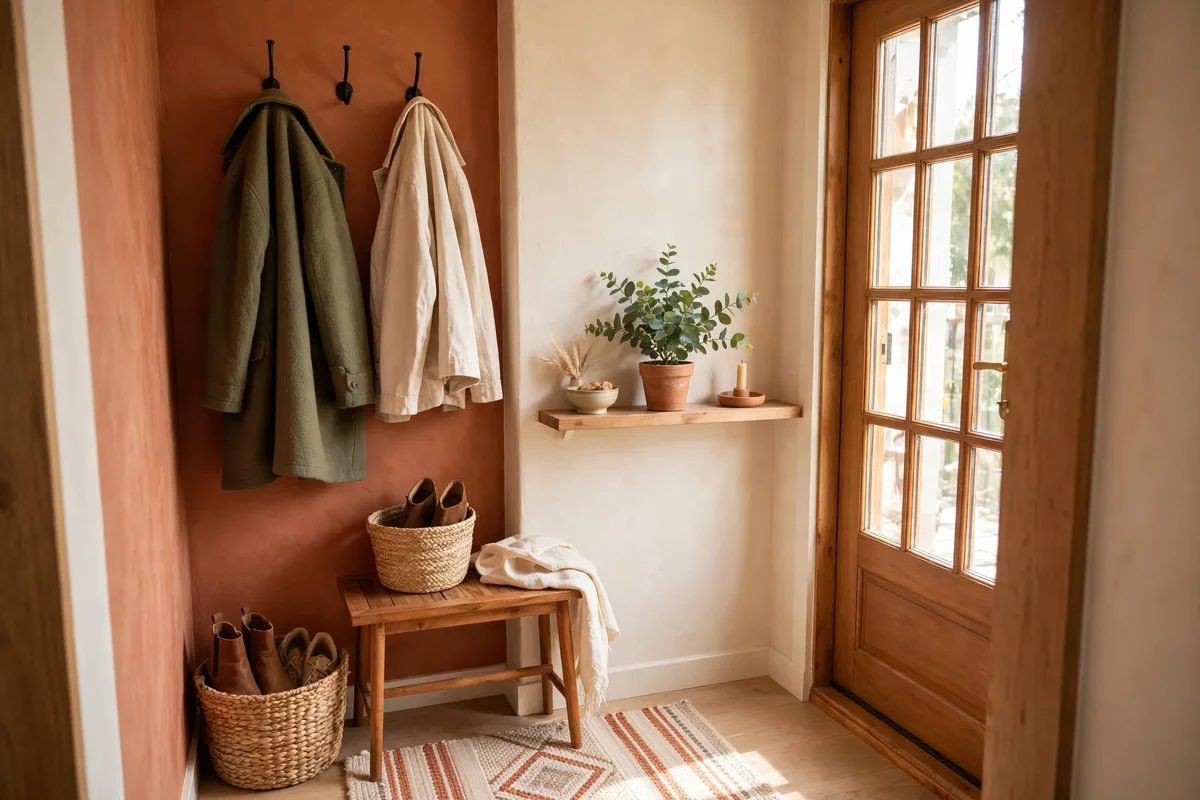
Your entryway is small. It may be only a strip of wall by the front door. It may be a corner you pass in two steps. Yet it does more work than any other spot in your home. It greets you when you come home. It greets guests before they see the rest of the house. It holds coats and shoes and keys and bags. When it works, the whole home feels calmer. When it fails, clutter spills into the living room. This guide is about small entryway ideas for a tiny home. You do not need a hallway. You do not need a mudroom. You need a few clear choices in a few square feet.
Start with one landing spot
A tiny entryway fails when everything lands in one pile. Coats land on a chair. Shoes land by the door. Keys land wherever your hand opens. Bags land on the floor. The pile grows each day. Then the first thing you see at home is mess. A landing spot stops that pile. It is one small zone by the door where arrivals belong. You do not need a big zone. You need a clear one.
Pick the wall beside the door. That wall is your landing spot. Put hooks at a height you can reach without stretching. Put a tray or a small basket below for shoes. Put a bowl on a shelf for keys. Now each arrival has a job. Coats go up. Shoes go down. Keys go in the bowl. Bags go on a hook or on the bench. When you come home tired, you do not have to think. Your hands know where things go.
Keep the landing spot small on purpose. One row of hooks beats two rows of hooks in a tiny home. Two rows invite more coats than you wear. One row forces a choice. Keep the coats you wear this week on the hooks. Move the rest to a bedroom closet. A landing spot works when it holds this week, not the whole year.
A bench that earns its floor space
A bench feels like a luxury in a tiny home. Floor space is scarce. A bench takes some of it. Yet a bench can earn that space back. You sit to put shoes on. You sit to take boots off. You set a bag down while you find keys. Older guests sit too. Guests with small kids sit too. A bench turns a doorway into a welcome. Without a bench, you hop on one foot by the door.
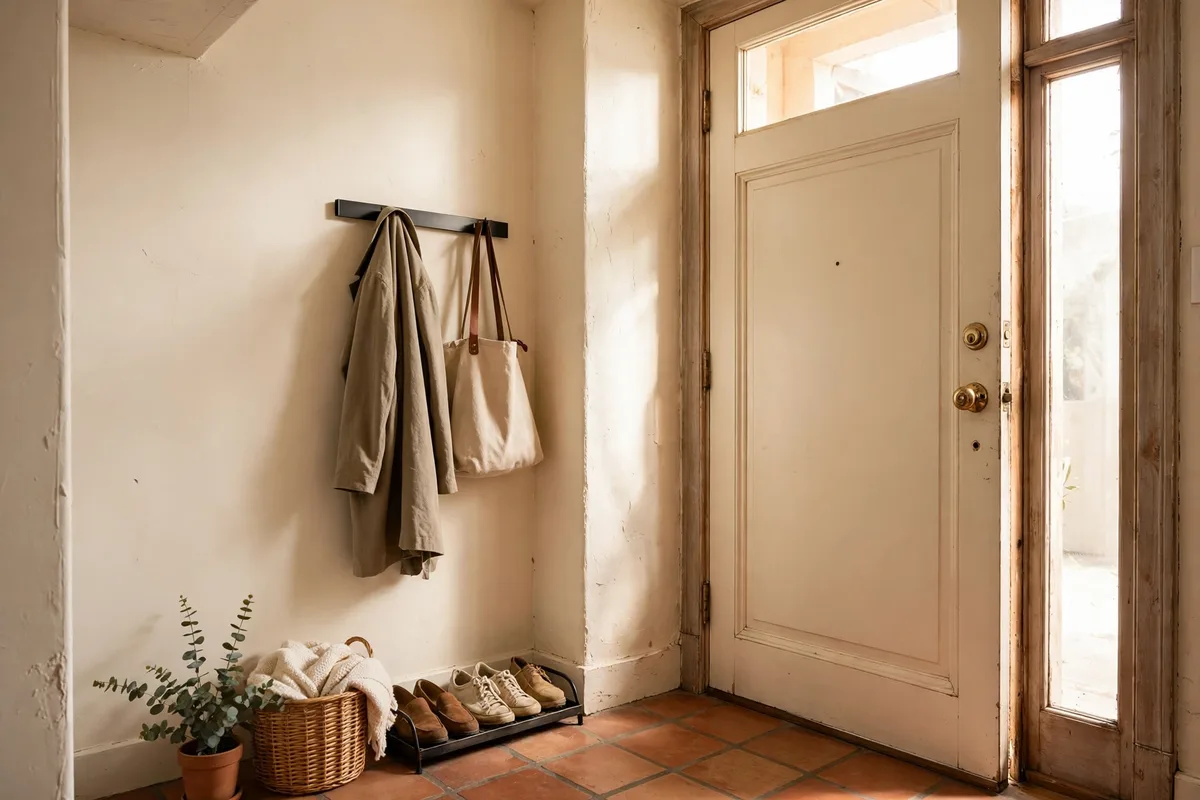
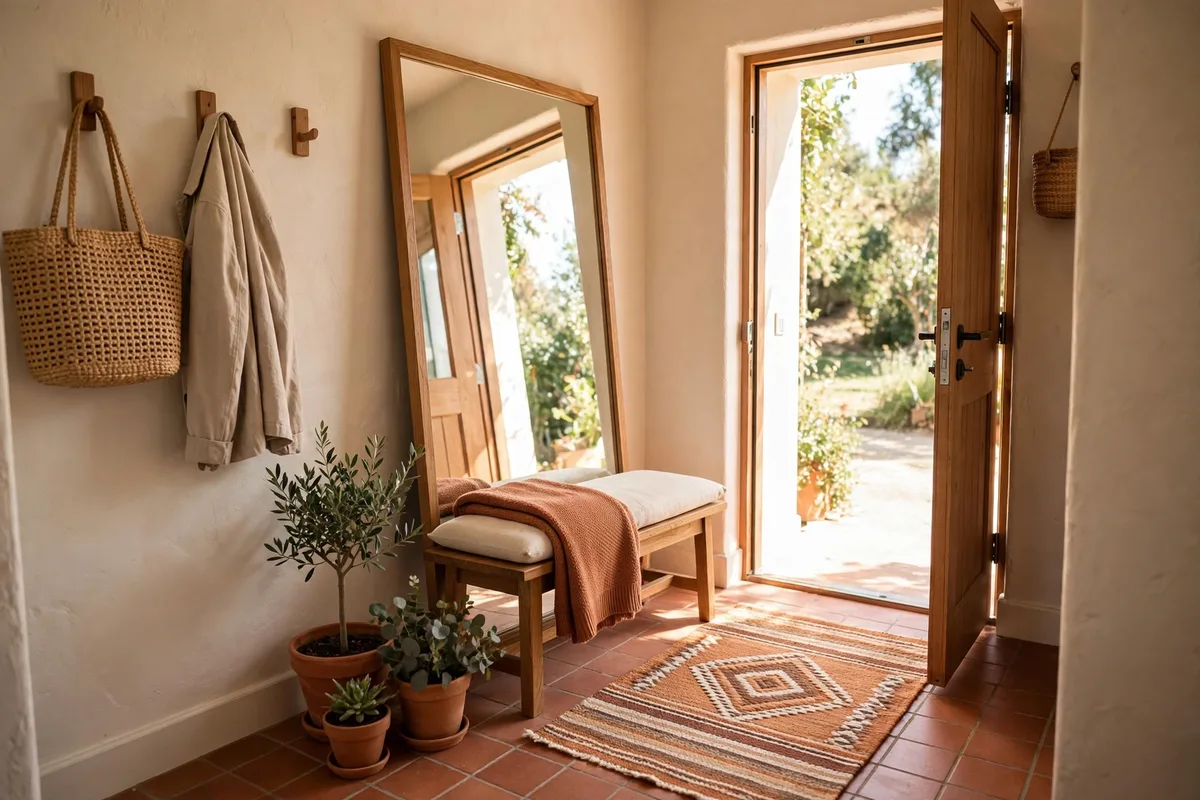
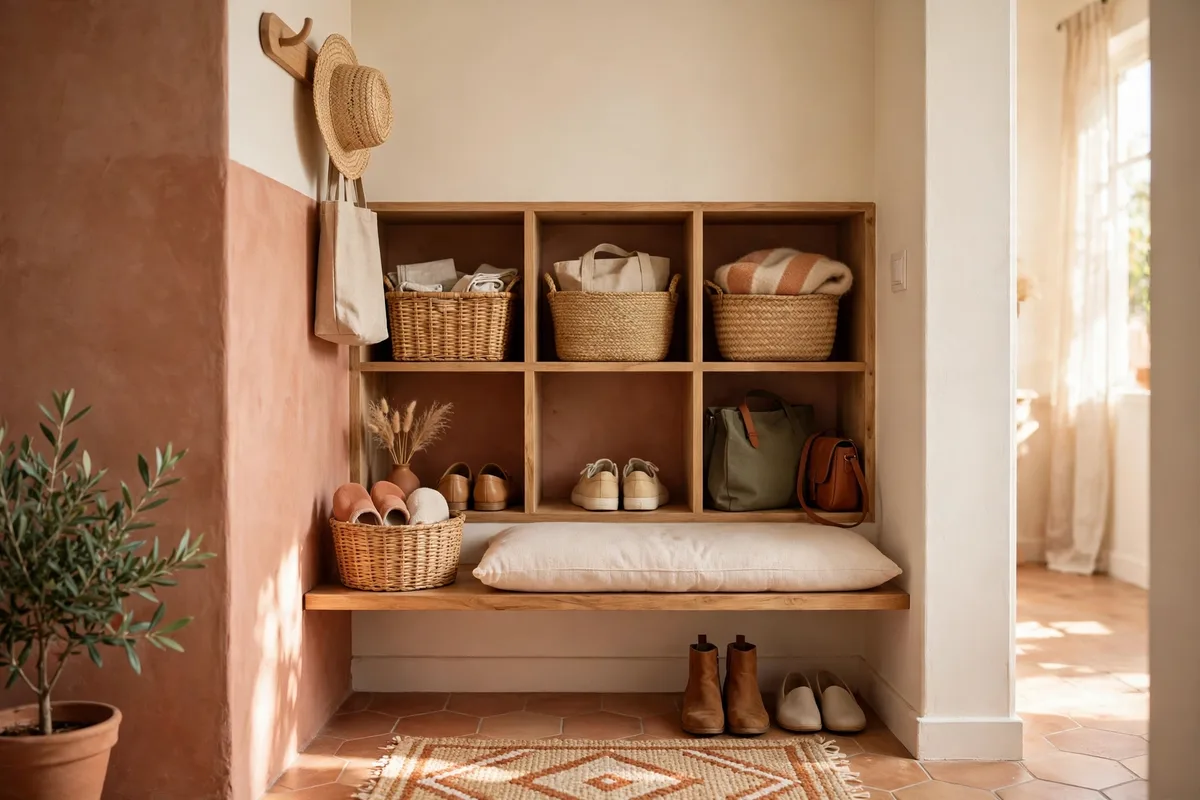
Choose a bench that stores things. A bench with baskets below hides shoes and bags. A bench with a shelf below holds boots in wet months. A bench with a lid hides odds and ends. Storage turns a bench from a seat into a system. The bench in the image below holds shoes in baskets. The top stays clear for sitting. That is the test. If the bench top stays clear, the bench works.
Size matters more than style here. Measure the wall before you shop. Leave room for the door to swing open. Leave room to walk past the bench without turning sideways. A bench that blocks the path is worse than no bench. A slim bench fits most tiny entryways. A deep bench fits few. When in doubt, pick the slimmer bench. Your shins will thank you.
A mirror and a shelf do the welcoming
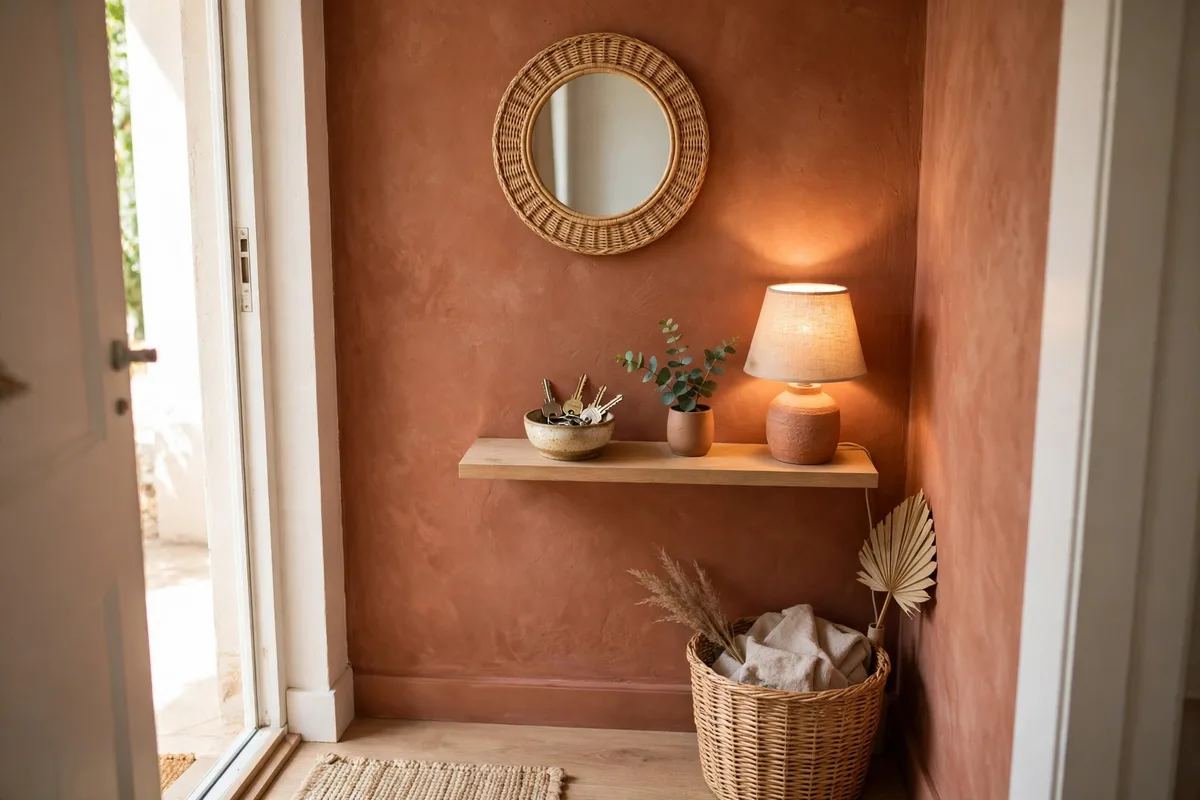
A mirror is the fastest way to lift a tiny entryway. It bounces light around the space. It lets you check your coat before you leave. It makes a narrow entry feel less tight. A mirror above a small shelf is a classic pair. The shelf holds keys and sunglasses. The mirror hangs above it. Together they make a tiny station. You stop at the station on the way out. You stop there on the way in. The entryway gains a purpose.
Hang the mirror where it catches light. A mirror facing a window or a lamp doubles the glow. A mirror facing a blank wall does little. A mirror facing clutter doubles the clutter. Check what the mirror shows before you fix it to the wall. Stand where guests stand. Look at the reflection. If you see light and a tidy shelf, the spot is right. The guide to make a small room look bigger uses mirrors the same way. Light and reflection open a small space.
A larger mirror can help even more in a narrow entry. A tall mirror leaning on the wall draws the eye up. It shows more of the room. It makes the entry feel wider than it is. Lean it safely if you rent. Use a wall anchor or a non slip pad at the base. A leaning mirror must not slide when the door closes. Test it with a firm push before you trust it.
Shoes need a closed home
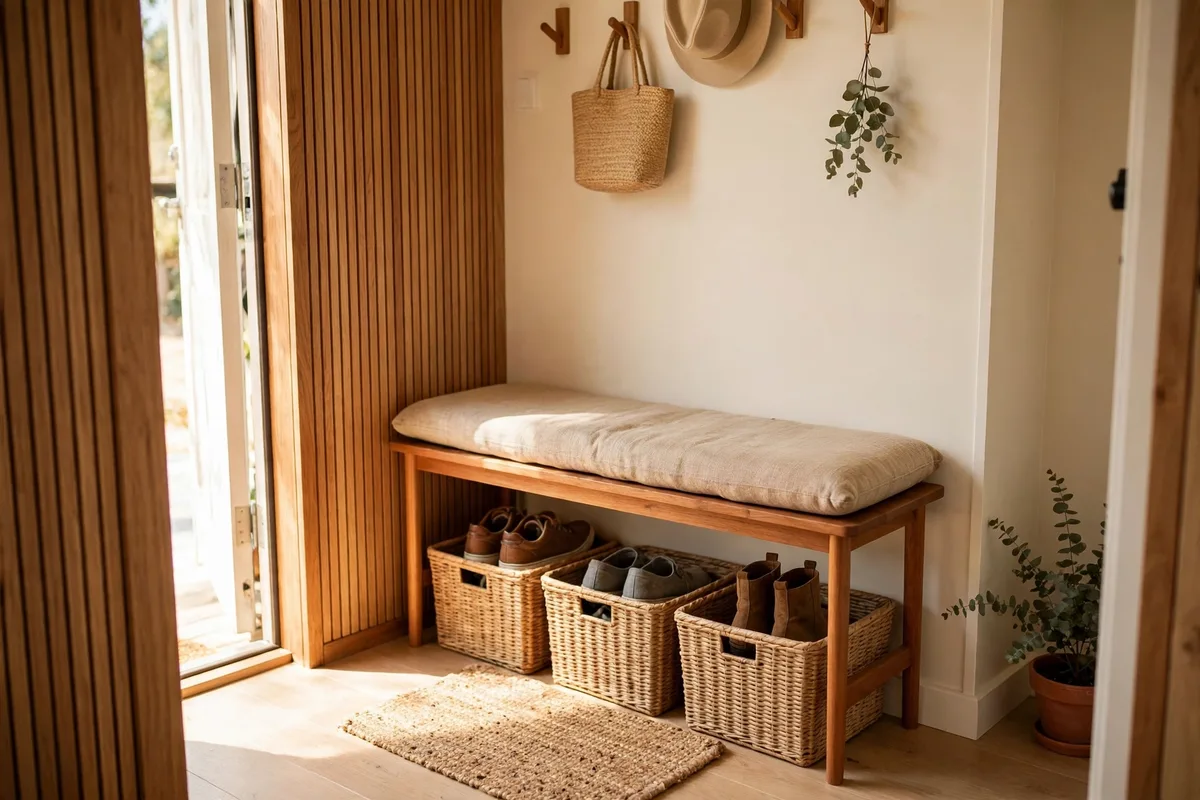
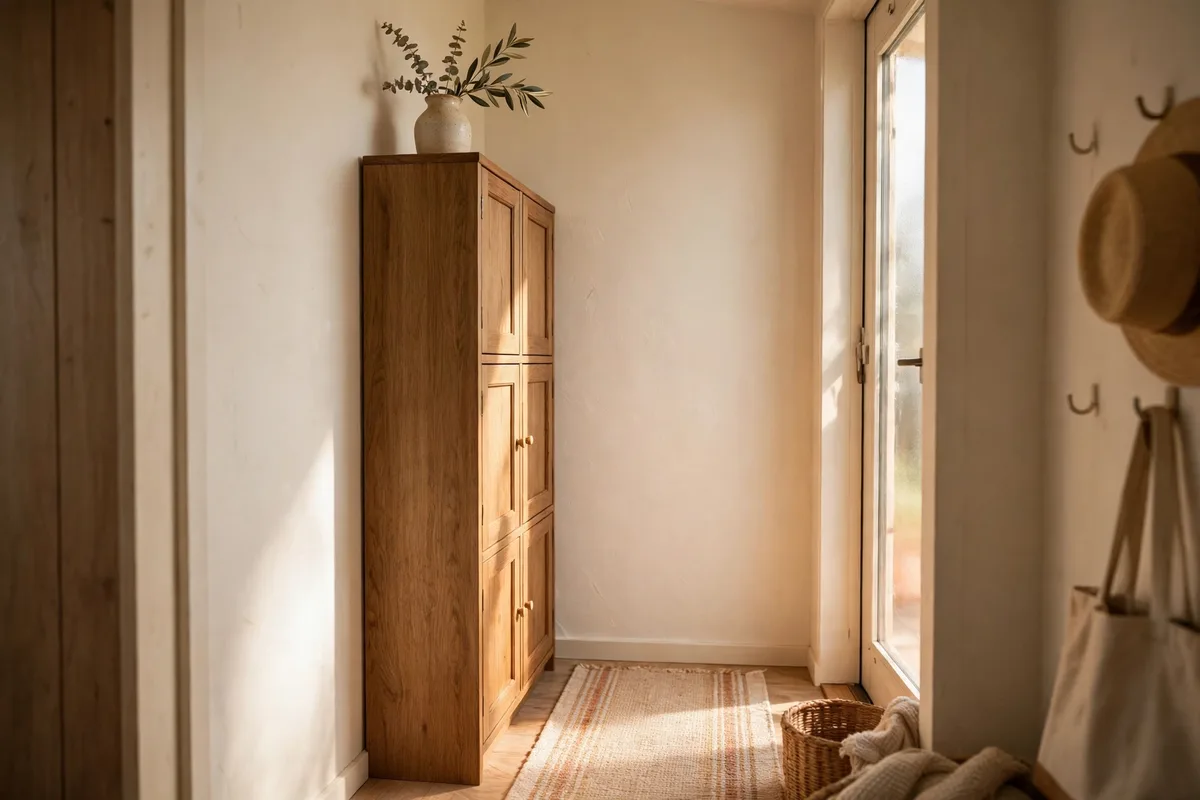
Shoes cause most entryway mess. Each person adds a pair a day. A household of two adds fourteen pairs in a week. An open rack shows every pair. Dust settles on every pair. The entry starts to look like a shoe shop. A closed cabinet changes that. Doors close. Shoes vanish. The entry looks calm even when it holds six pairs. Closed storage is kind to small spaces. It hides the daily pile.
Pick a slim cabinet that fits the wall. A tall narrow cabinet holds many pairs in little floor space. A low cabinet doubles as a shelf. Put a small vase or a tray on top. Now the cabinet looks like furniture, not storage. Keep only weekly pairs inside. Store off season pairs elsewhere. The guide to storage without drilling helps when you rent and cannot fix heavy units to the wall. Freestanding units keep your deposit safe.
Open cubbies suit a busy household too. Kids can see their shoes. Guests can find a spot fast. Cubbies work when each person owns one cubby. One cubby per person stops the pile. Label each cubby if kids share the entry. Baskets inside cubbies hide the mess a little. The rule stays the same. One pair in and one pair out keeps cubbies calm.
Small things need small homes too
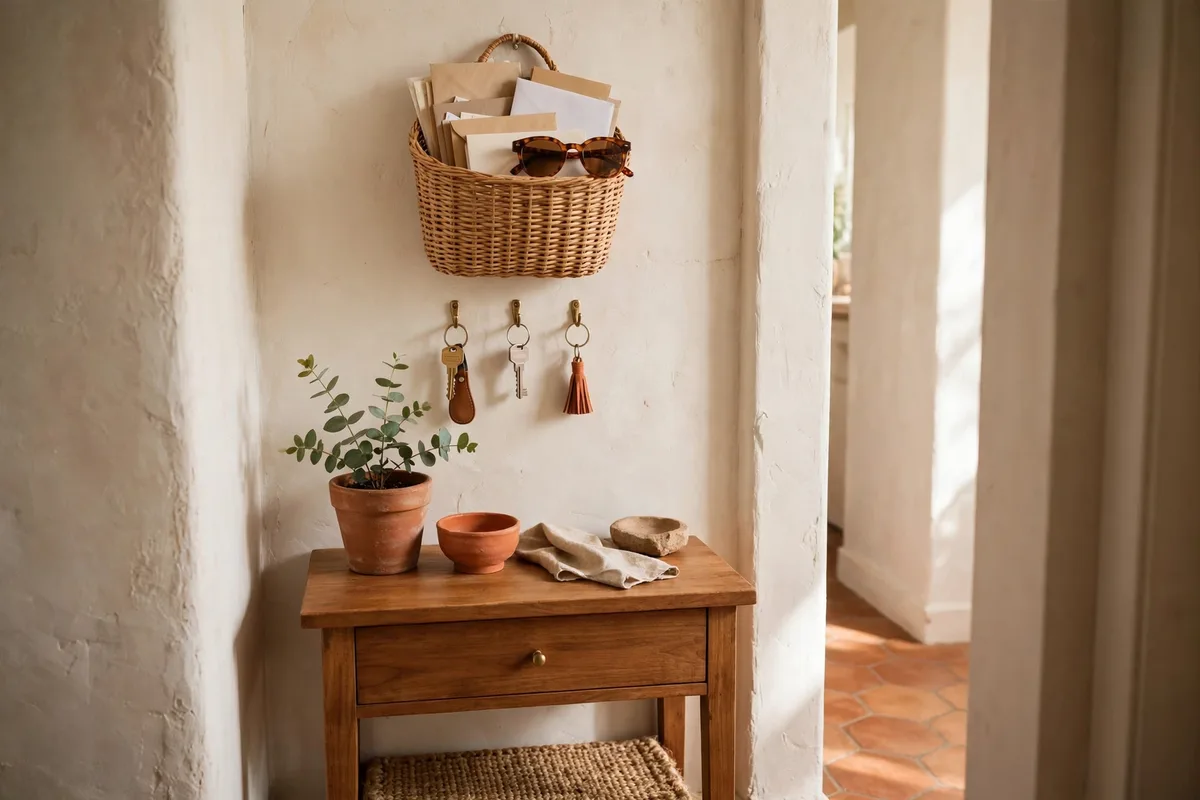
Keys and mail and sunglasses cause a different kind of mess. They are small. They vanish into pockets and piles. You lose ten minutes hunting for keys. You miss mail under a coat. Small things need small homes by the door. A bowl for keys. A basket for mail. A hook for sunglasses. Each home is tiny. Together they save real time each morning.
Put the key bowl where your hand lands first. For most people, that is the shelf by the door handle. Put mail in a wall basket, not on a chair. A wall basket keeps mail upright and visible. Sort it once a week. Recycle junk mail at once. Sunglasses go on a hook or in the bowl. The test is simple. Can you leave the house without hunting? If yes, the small homes work.
Keep the small homes visible but not crowded. One bowl beats three bowls. One basket beats a pile of trays. Each new container invites new clutter. A tiny entry cannot hold many systems. Pick one system for keys. Pick one for mail. Then stop adding. A calm entry has few containers. Each container has one job.
Light the entryway like a welcome
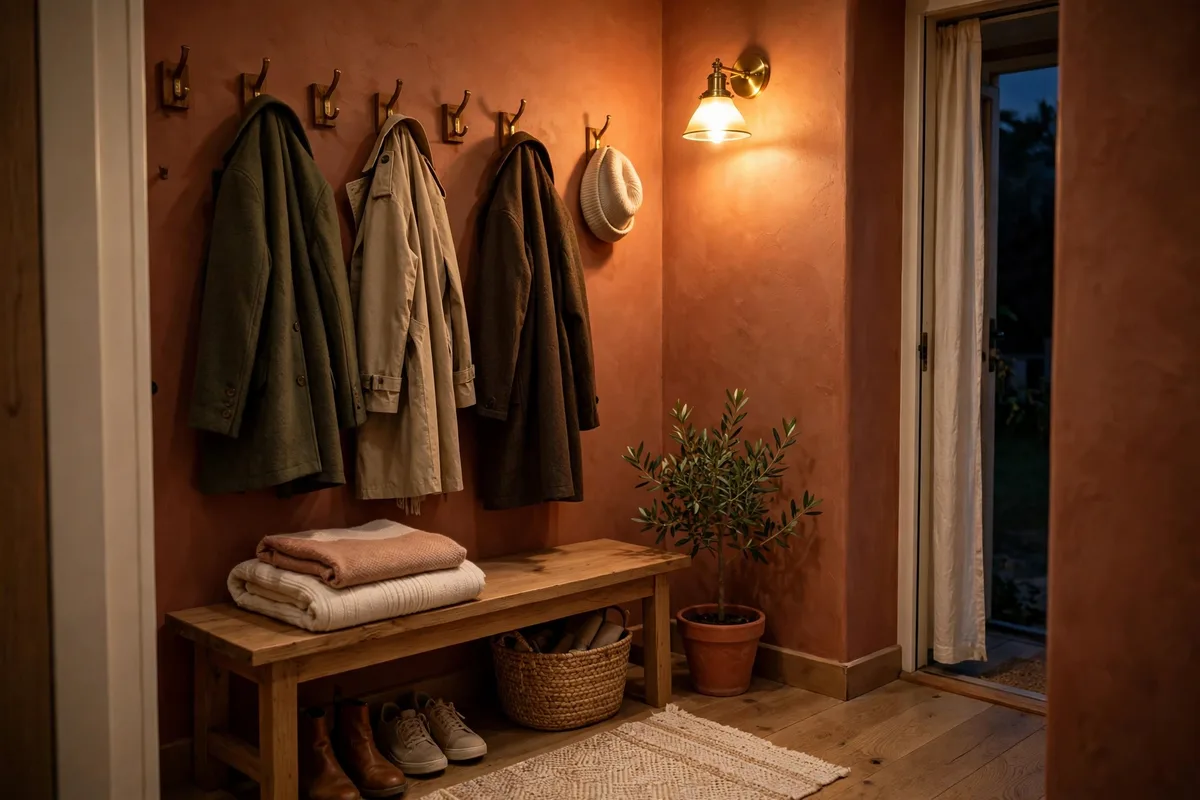
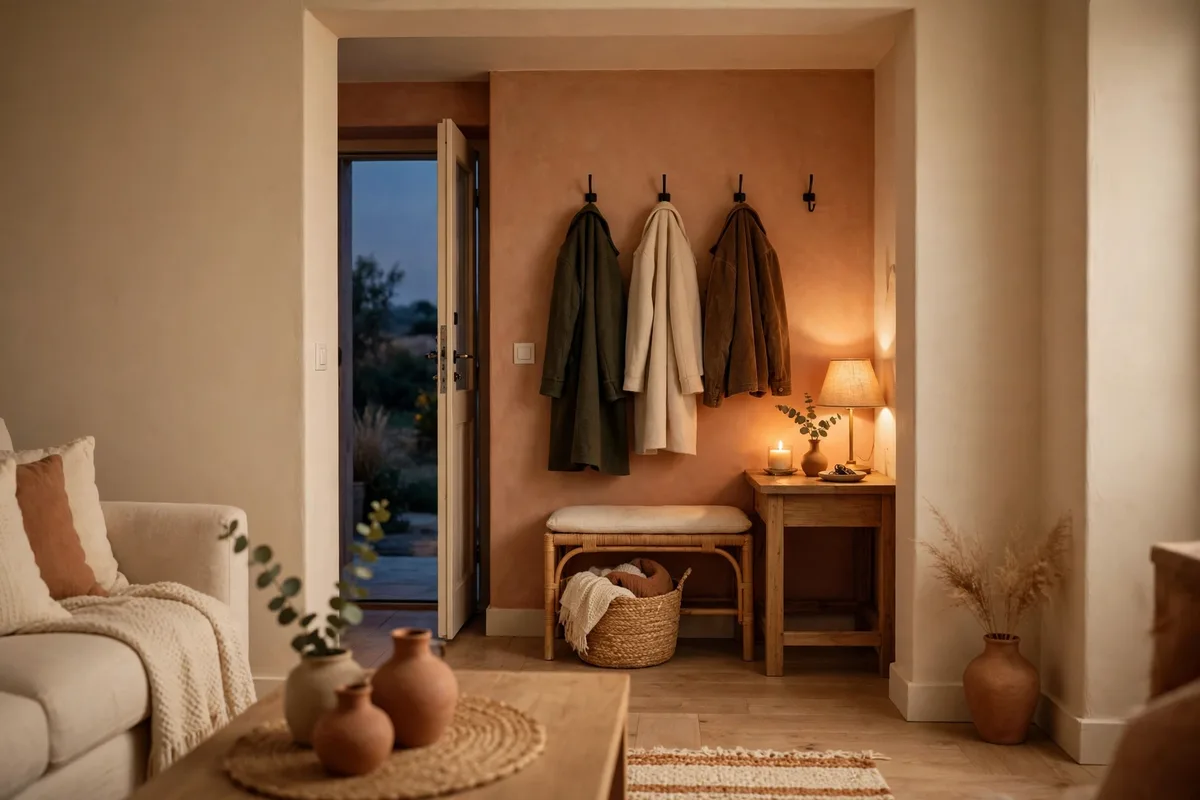
Many tiny entryways have no window. The front door opens into a dim corner. Dim light makes a small space feel smaller. It also hides the tidy work you did. Warm light fixes that. A wall lamp by the hooks makes the entry glow. A small lamp on a console makes it feel like a room. Light tells guests they are welcome. Dark tells them to hurry past.
Use warm light, not harsh white light. Warm light flatters wood and cream walls. It makes coats and baskets look soft. Harsh light shows every scuff. Put the lamp on a timer if you can. The entry glows before you get home. Coming home to light feels good in winter. The guide to light a room with no overhead lighting covers plug in lamps that suit renters. No wiring changes are needed.
Evening light matters most in a tiny entry. Guests arrive after dark in winter. You come home after dark too. A lit entry at dusk feels safe. It also shows the way in. Keep one lamp on in the evening. Keep the path to the door clear. Light plus a clear path is a welcome. No decor can beat that pair.
The floor sets the tone
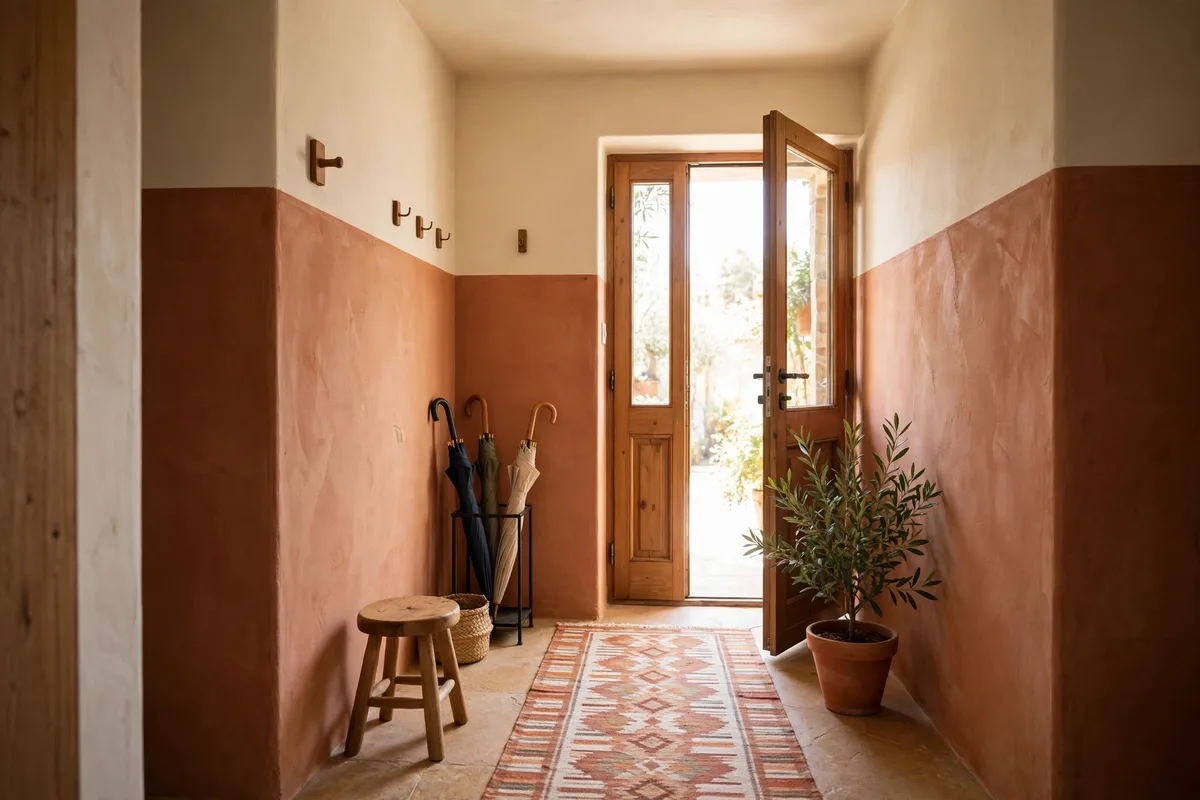
The floor of a tiny entry takes a beating. Wet shoes cross it. Mud lands on it. Grit scratches it. A runner protects the floor and sets the tone. A runner says this is a room, not a passage. It adds colour and warmth. It catches dirt before it reaches the living room. Pick a runner you can wash. A washable runner is a working runner. A runner you fear to dirty is decor, not help.
Add a tray or a stand for wet days. An umbrella stand in the corner stops drips on the floor. A boot tray by the door holds wet boots. Both are small. Both save cleaning time. Keep the tray near the door, not in the middle of the path. A tray in the path trips people. A tray by the wall helps people. Small choices like that decide whether an entry feels easy or awkward.
Check the layout with the free room planner. Enter your entry size and test a bench, a cabinet, and a runner before you move furniture. The planner shows what fits in your few square feet. It stops you buying a bench that blocks the door. Measure first, then buy once. That order saves returns and regret.
Frequently asked questions
What is the first thing to fix in a tiny entryway?
Fix the landing spot first. Give coats one row of hooks and shoes one closed place. Keys need one small bowl by the door. When those three things have homes, the entryway stops spilling into the living room.
Can a tiny entryway hold a bench, or does a bench waste floor space?
A bench works when it stores things too. Pick a bench with baskets or a shelf below it. You can sit to change shoes and hide shoes at the same time. A bench with no storage just takes floor space.
How do you stop shoes from taking over a tiny entryway?
Keep only the pairs you wear each week by the door. Put the rest in a bedroom or a closet. A closed cabinet hides shoes better than an open rack. Fewer pairs by the door means a calmer first impression.
Where should a mirror go in a tiny entryway?
Put a mirror where it catches daylight or lamplight. A mirror above a small shelf works well. A larger mirror on the wall can make a narrow entry feel wider. Do not hang it where it faces clutter.
How do you keep a tiny entryway tidy when guests arrive?
Clear one hook and one seat before guests arrive. Put your own coats and shoes out of sight for the evening. Guests need a hook, a place for shoes, and a clear path in. A tidy welcome takes five minutes, not a big clean.