 smallroomly
📦 Small Bedroom Storage Without Drilling: 10 Renter-Friendly Ideas That Won't Cost Your Deposit
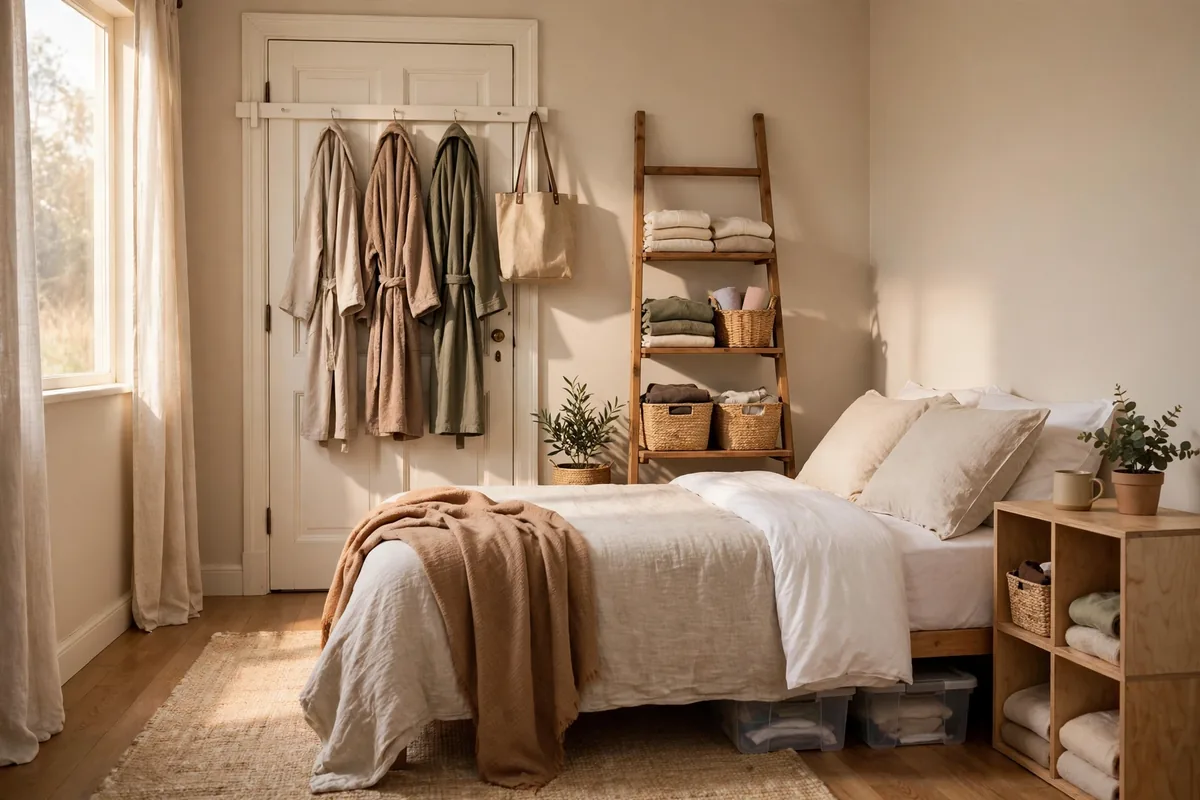
Most bedroom storage advice starts with drilling shelves into the wall. That advice is no good when your lease says no holes. It's risky even when drilling is allowed. A small bedroom has little wall to spare. Every hole is a repair at move out time. So start somewhere better. Use storage that stands on its own. Use storage that hangs over a door. Use storage that rolls. You can move it. You can rearrange it. You can take it with you when you leave. In a small bedroom this isn't a compromise. Freestanding storage is often easier to reach. It's easier to change when your clothes or routine change. And it's far kinder to your deposit.
Measure the room and the door and the walkway first
Before you buy a shelf or a cube unit or a cart, measure three things. First measure the width of the door you plan to use. Next measure the clear walkway beside the bed. Then measure the height under the bed frame. A usable walkway beside a bed is 30 to 36 inches. The tight minimum is 24 inches. That's enough to get in and out. It's enough to change the sheets too. If new storage narrows that path below 24 inches, you'll hate it daily.
Check the door itself as well. The free room planner helps you test bed and storage footprints against your real room size. This planning step is part of the wider small bedroom storage without drilling approach. It's storage that fits the room you have.
Over-door rails: the easiest storage in a small bedroom
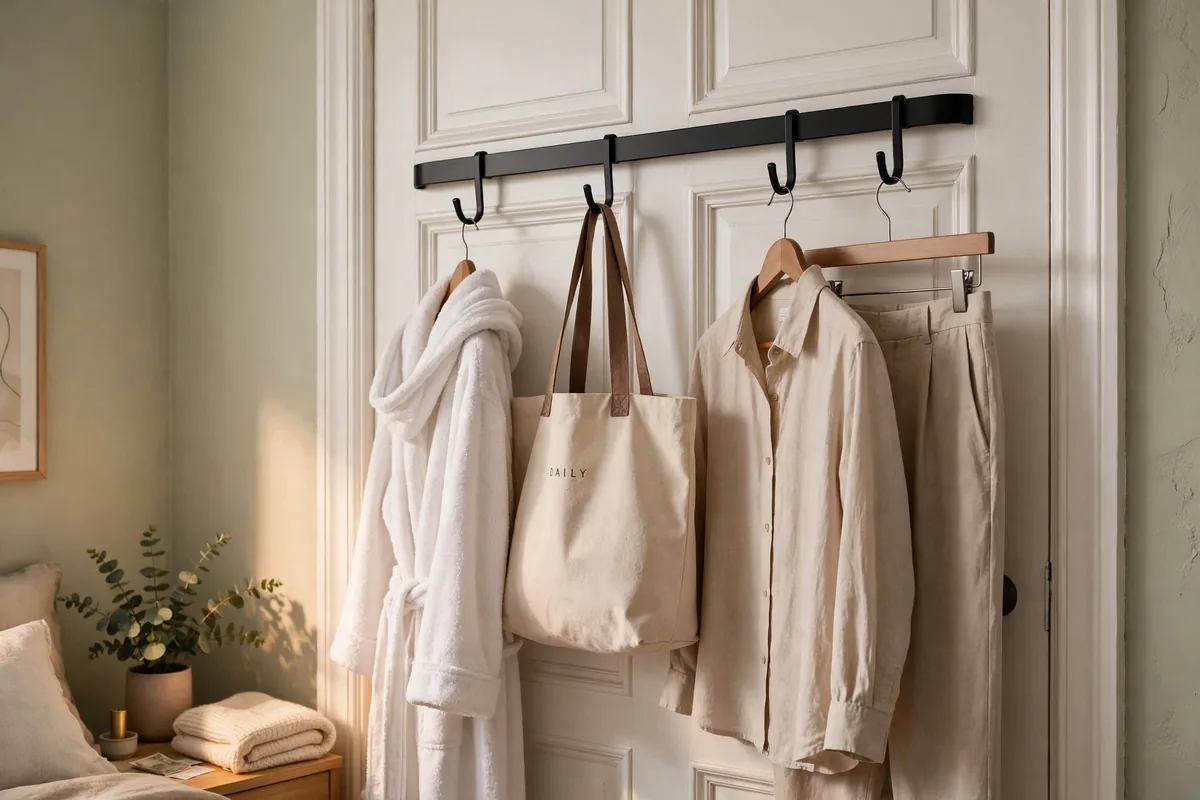
An over door rail is the fastest no drill win. Hang robes and bags and tomorrow's outfit on the bedroom door. Or use an organiser on the inside of a closet door. That spot works well for shoes and belts and small items. Keep the heaviest items low. Keep them close to the hinges too. That's where the door carries weight best. Don't hang a full week of coats on one rail.
Here's the mistake to avoid. Don't treat the door as a wardrobe. If the door rubs the frame, take weight off first. If it won't latch, take weight off first. If it swings shut on its own, take weight off first. Then check the hinges before you blame the rail. That small rule keeps door storage looking intentional. It pairs well with the system in our guide to organize a small bedroom with no closet. There, hanging space is planned in zones.
Tension rods inside wardrobes and narrow gaps
A tension rod inside a wardrobe gives you a second hanging level. Fit it below the existing rail. It works for shirts and trousers and children's clothes. You need no bracket and no screw. Measure the inside width at the height you want. Buy a rod that covers that span with room to tighten. Twist it until it resists a firm push. Only then should you hang anything. A rod that slides in easily by hand is too loose. It will drop the first time you pull a hanger.
Tension rods also work across a narrow gap. Try one between a wardrobe and a wall. Use it for scarves and ties. Use it for a curtain that hides open storage. They don't work well on slick surfaces. They don't work well on uneven surfaces. They don't work well on crumbling surfaces either. They also fail across a span so wide that the rod bows in the middle. If the rod bows, shorten the span. Or use a thicker rod. Or switch to a freestanding rack.

Leaning shelves and tall freestanding pieces
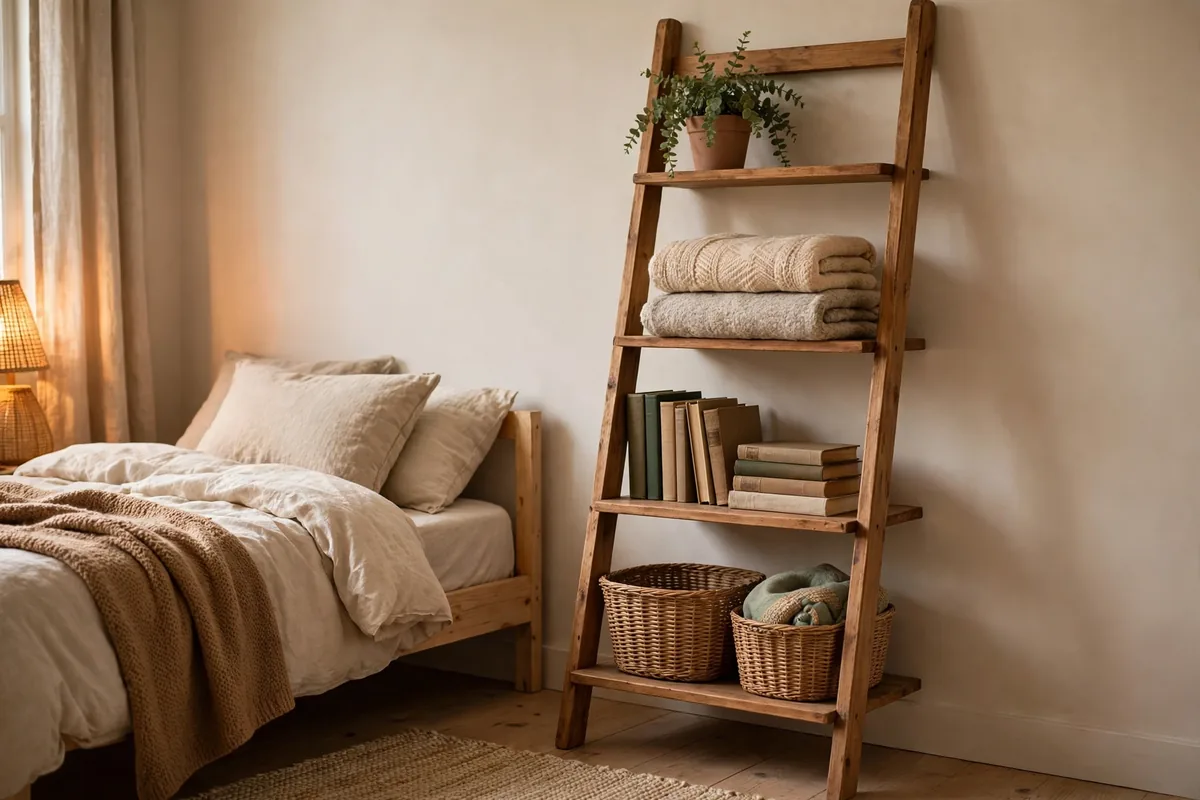
A leaning ladder shelf gives you tall storage with no drilling. It leans against the wall and rests on the floor. Put heavier items low. Put lighter items high. Keep the top shelf for display. Or keep it for things you rarely need. Reaching high over a bed is awkward. A leaning shelf beside the bed works best in a clear spot. It shouldn't block a light switch. It shouldn't block a radiator. It shouldn't block the walkway. And its feet should sit flat on the floor. If one foot sits half on a rug edge, the shelf will rock.
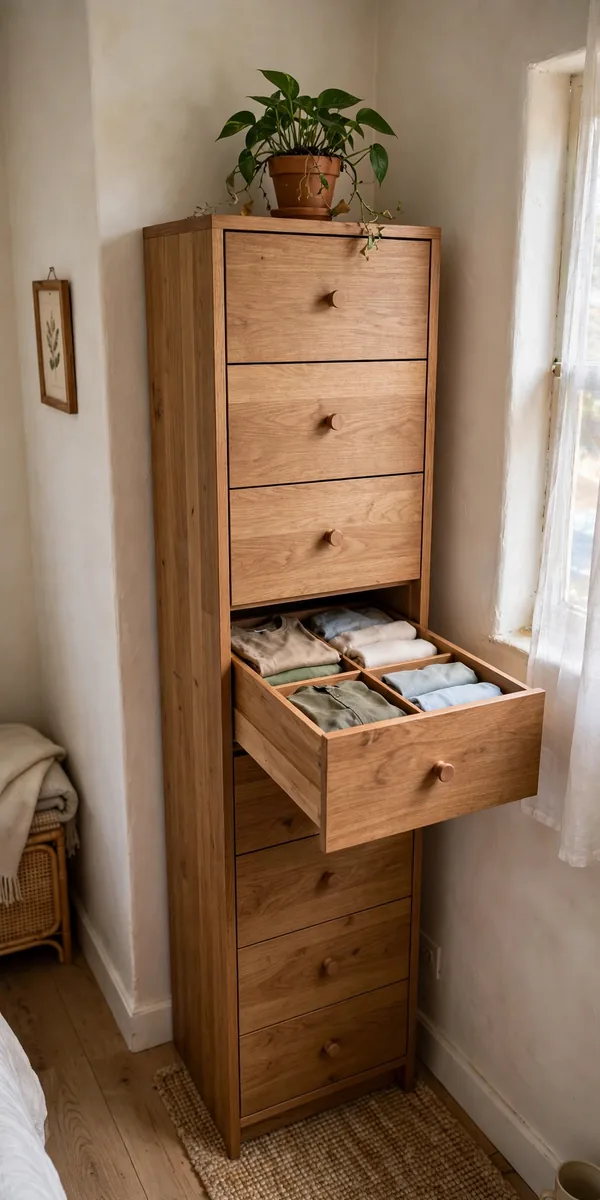
A tall narrow dresser follows the same rule in a different shape. Vertical storage uses wall height. It doesn't use floor area. Compare that with a wide low dresser. It eats the only clear wall. For a studio, the same freestanding logic applies. Our guide to studio apartment layouts by shape shows how it works. There, a low open shelf can divide zones.
Freestanding cubes and rolling carts and bedside pockets
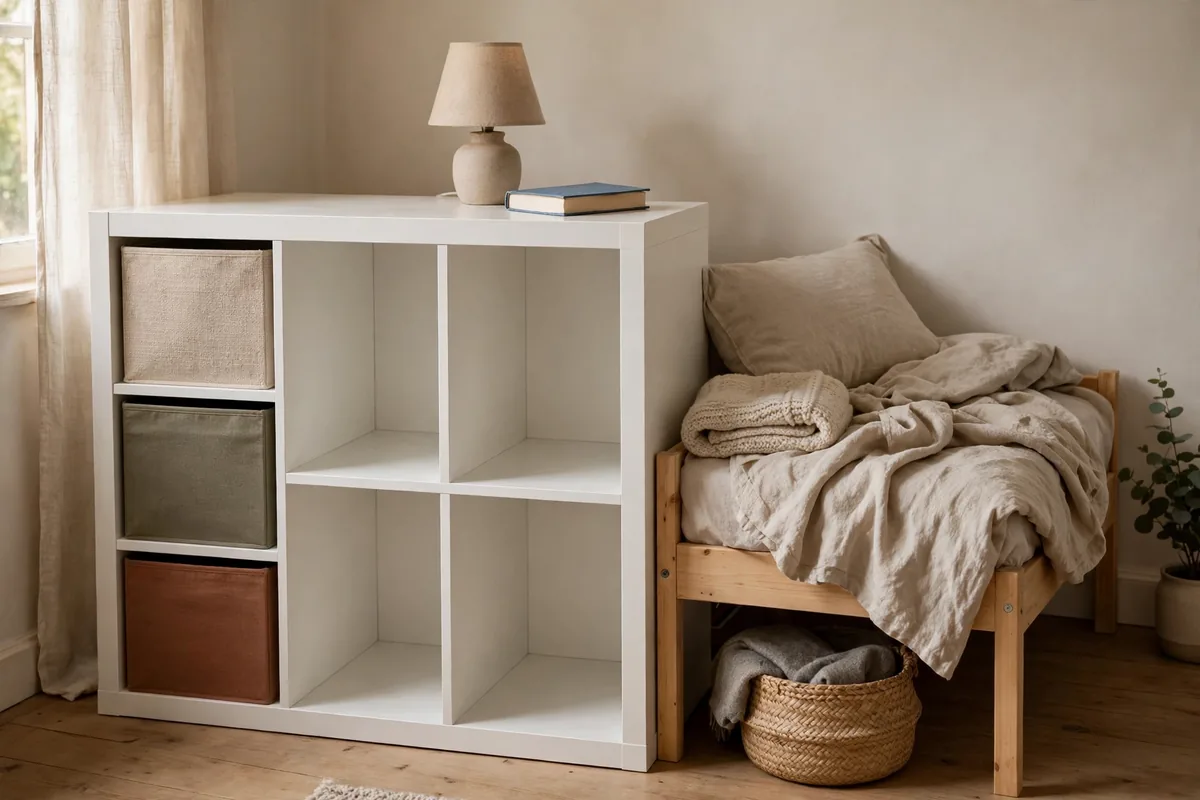
A freestanding cube unit's the most flexible piece in a no drill bedroom. Turn it on its side beside the bed. Now it becomes a nightstand with storage. Stand it upright against a wall. Now it becomes a narrow wardrobe substitute. Place it at the foot of the bed. Now it can act as a low divider in a larger room. Use fabric bins inside the cubes. Label them by category. Try gym and work and sleep. Clear labels make the system easy to keep up.
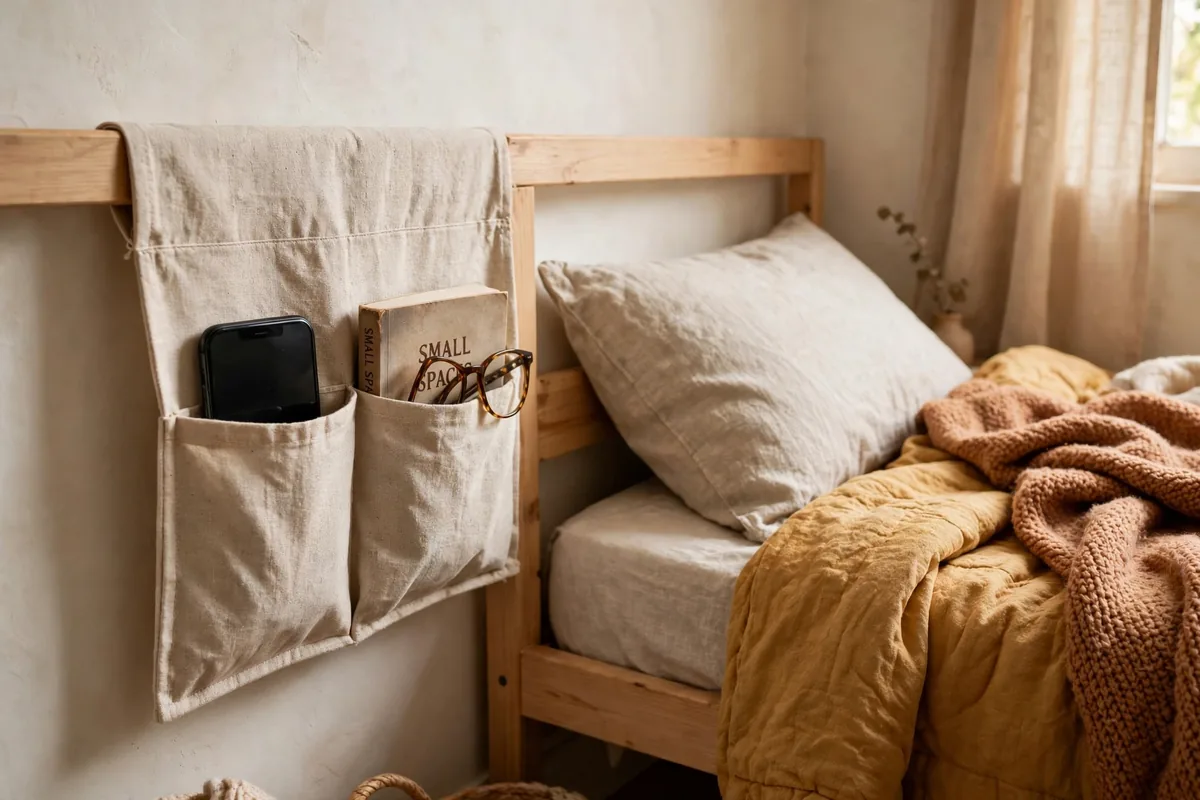
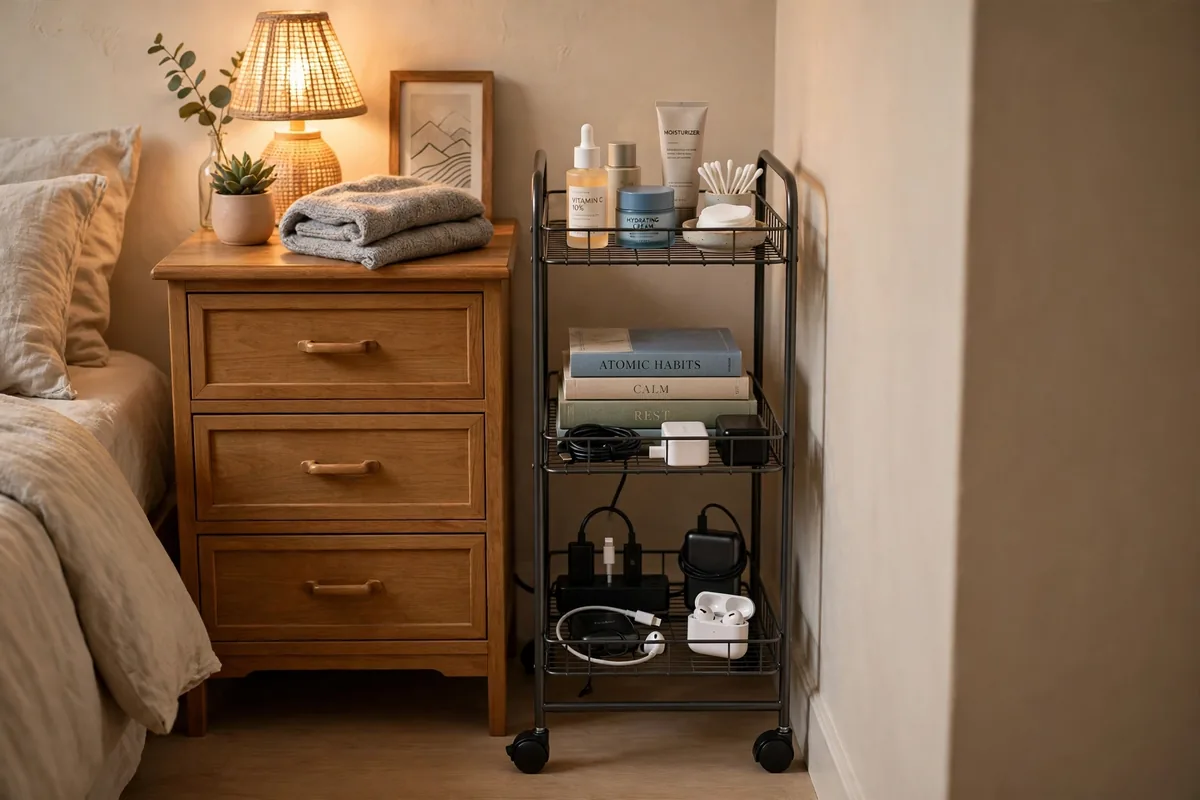
For gaps too narrow for a cube, try a slim rolling cart. It slides beside a bed or a dresser. It holds chargers and skincare and books. A bedside pocket organiser does the same job when there's no floor space at all. It hangs over the bed frame. Your phone and book and glasses go in the pockets. These small pieces cost little. A rolling cart or a set of bins is often around $20 to $40. That's a ballpark and it varies by store.
Under-bed and foot-of-bed storage that you can actually reach
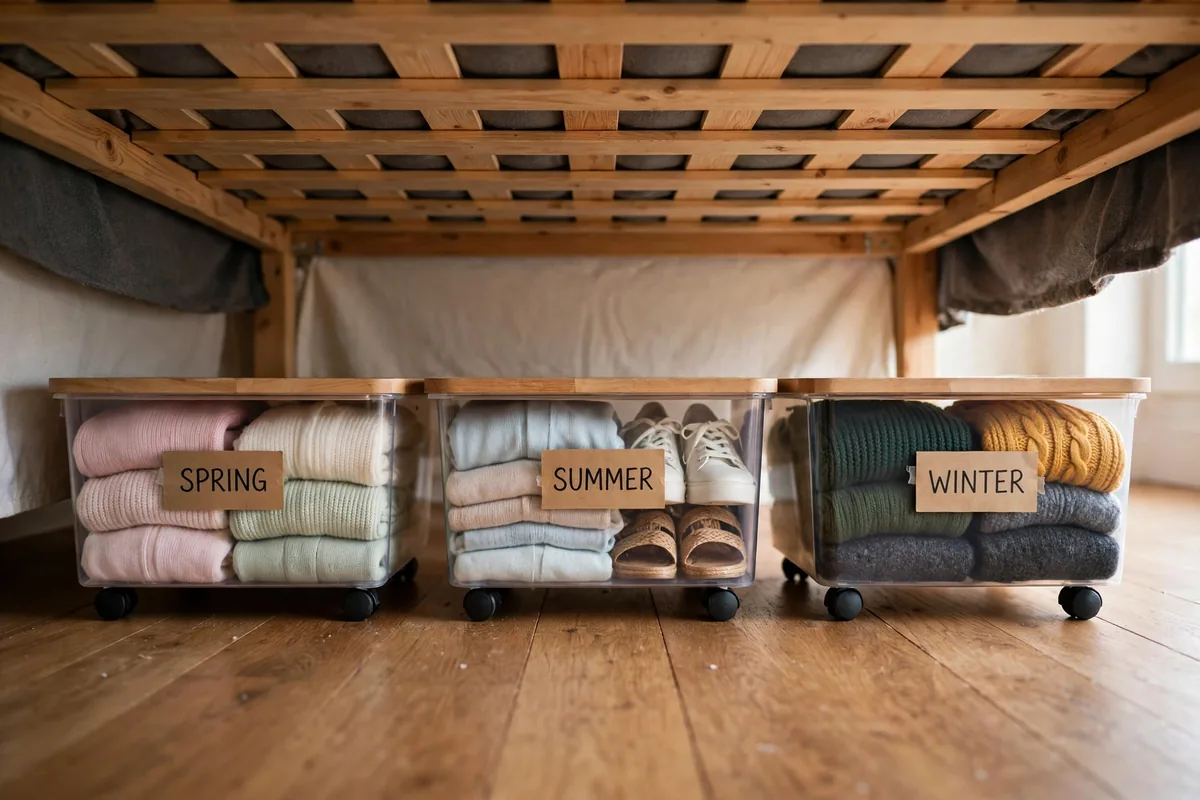
Under bed storage only works if you can reach it. You should be able to pull a bin out with ease. You shouldn't have to move the bed. Measure the clearance first. Many beds give only a few inches. A bin that's too tall will jam. Shallow rolling bins with handles are the practical choice. Label them by season. Put off season clothes in the back. Put the current season near the front edge.
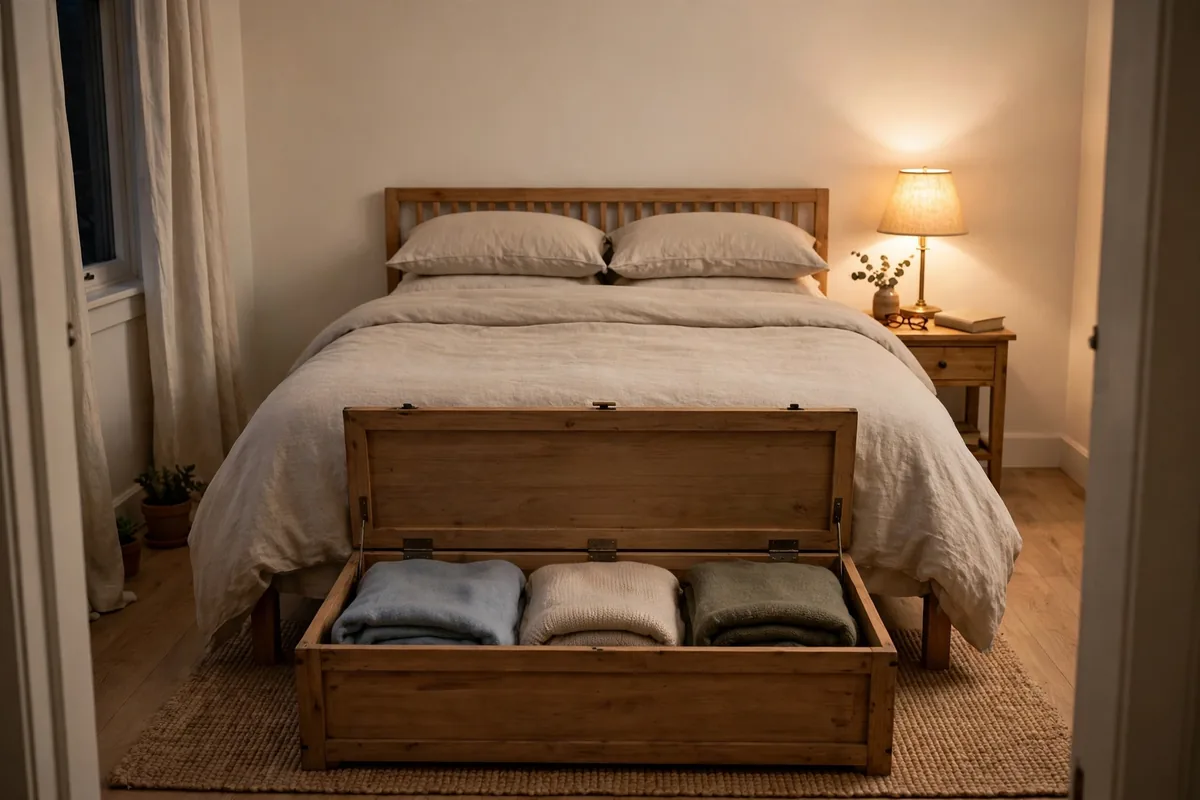
A storage bench at the foot of the bed adds a second hidden zone. Use it for blankets and bulky sweaters and spare bedding. It also gives you a place to sit while dressing. The bench only helps if it doesn't block the walkway. Leave at least 24 inches between the bench and the next piece of furniture. Choose a bench no wider than the bed. In a tight room, a bad bench is worse than no bench. If it forces you to sidestep every morning, skip it.
Adhesive rules: weight, paint, and the cure-time trap
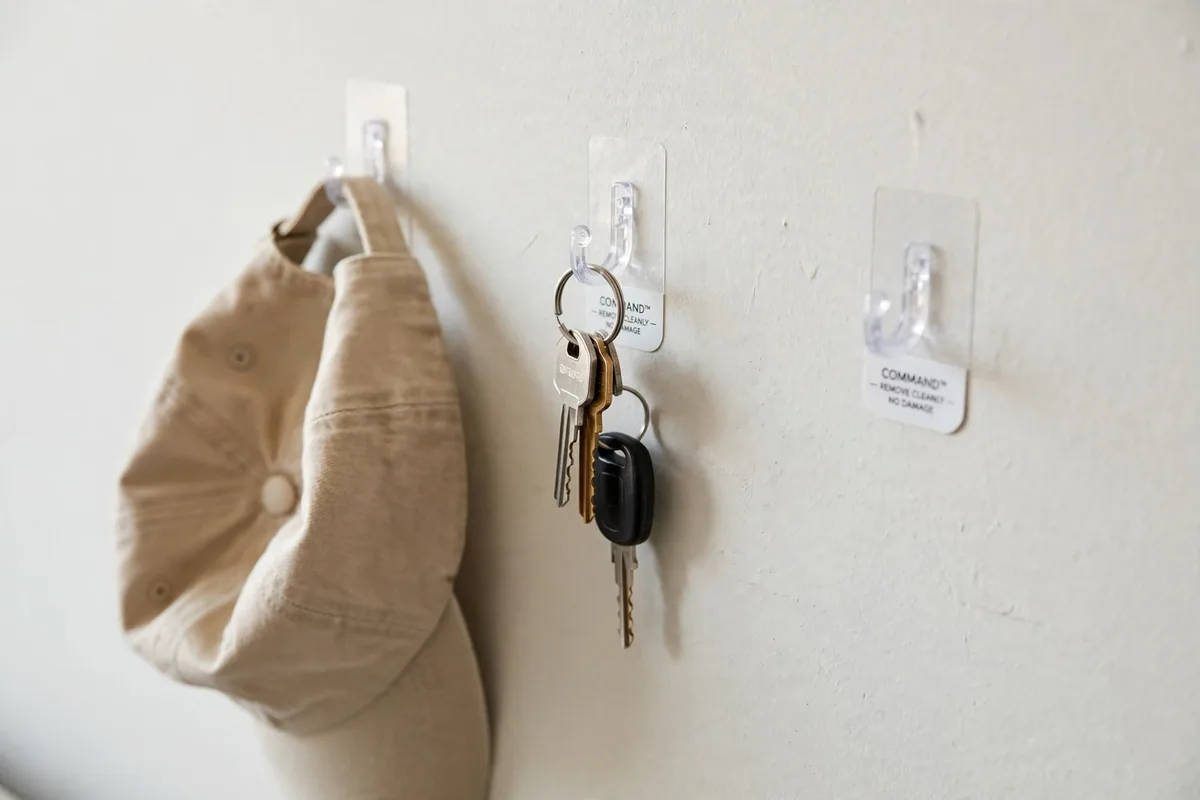
Adhesive hooks and shelves are useful only for light items. They also need the right surface. They grip best on smooth paint. That paint must be fully cured and clean. They are risky on fresh paint. They are risky on flat or chalky paint. They are risky on textured walls and damp walls and wallpaper. On those surfaces the adhesive can pull paint away when you remove it. Here's the trap. Fresh paint needs 2 to 4 weeks or more to cure. Don't put adhesive on it before then. In a cool or damp room, that wait can be longer.
Read the weight rating with care. Treat it as a maximum for ideal conditions. It's not a promise for your wall. Halve it for anything you value. Halve it for anything above a bed too. Never hang a mirror on adhesive alone. Never hang a shelf of books on adhesive alone. Never hang a heavy bag on adhesive alone. Never stack two hooks to double a rating. Our guide to decorate a small room for under $100 puts storage after a rug and warm light in spending order. If adhesive storage is eating your budget, a freestanding piece is usually the safer spend.
When no-drill storage doesn't work, and the renter branch
No drill storage fails in predictable ways. A leaning shelf may block the only walkway. A tension rod may drop because the span is too wide. Adhesive may lift flat paint. Or you may end up with so many small organisers that the room feels like a shop. The fix is usually subtraction. Remove one piece. Give daily clothes a single waist height home. Let seasonal items leave the visible room entirely. If you still can't fit what you own, storage isn't the problem. The volume is.
For renters, check the lease before you start. Look for rules on holes and adhesive and paint. Get permission in writing for anything borderline. That includes a tall piece you plan to secure to a wall. Photograph walls and doors and floors on move in day. Photograph them again when you remove storage at move out. Then a scuff that was already there's not charged to you. For more ideas in the same spirit, browse the SmallRoomly blog.
Frequently asked questions
How much weight can an over-door rail hold in a small bedroom without damaging the door or hinges?
Keep it light. Robes and bags and one or two outfits are fine on most interior doors. Keep heavier items low and near the hinges. If the door rubs or won't latch or swings on its own, remove weight first. Then check the hinges.
Will a tension rod inside a rental wardrobe slip when it's loaded with clothes?
It will slip if it's too loose. It will slip if it's too long for its thickness. It will slip if it's loaded with heavy coats. Tighten it until it resists a firm push. Hang lighter items on the lower rod. Keep heavy coats on the fixed rail. If it bows, the span is too wide.
How do I keep a leaning shelf from tipping when it stands beside a bed in a small bedroom?
Put heavy items low and light items high. Keep both feet flat on the floor. Don't let a foot sit half on a rug edge. Don't place it where you reach in the dark. If it still feels tippy, move it from the bedside. Then follow the maker's renter safe guidance.
What adhesive weight limit should I trust on smooth paint versus textured paint in a no-drilling bedroom?
On smooth and fully cured paint, treat the printed rating as a maximum for ideal conditions. Use well under it for anything valuable. Use well under it for anything above a bed too. On textured or flat or chalky paint, don't trust it for shelves or heavy items. Use freestanding storage instead.
How do I keep under-bed bins reachable when the bed is low and the side walkway is only 24 inches?
Use shallow bins with handles and wheels. Label them by season. Pull them from the foot of the bed rather than the tight side. Risers can add 3 to 6 inches if the bed stays comfortable. But keep daily items elsewhere. Under bed bins are for seasonal items.