 smallroomly
💰 How to Decorate a Small Room for Under $100 (The Order That Makes Cheap Look Expensive)
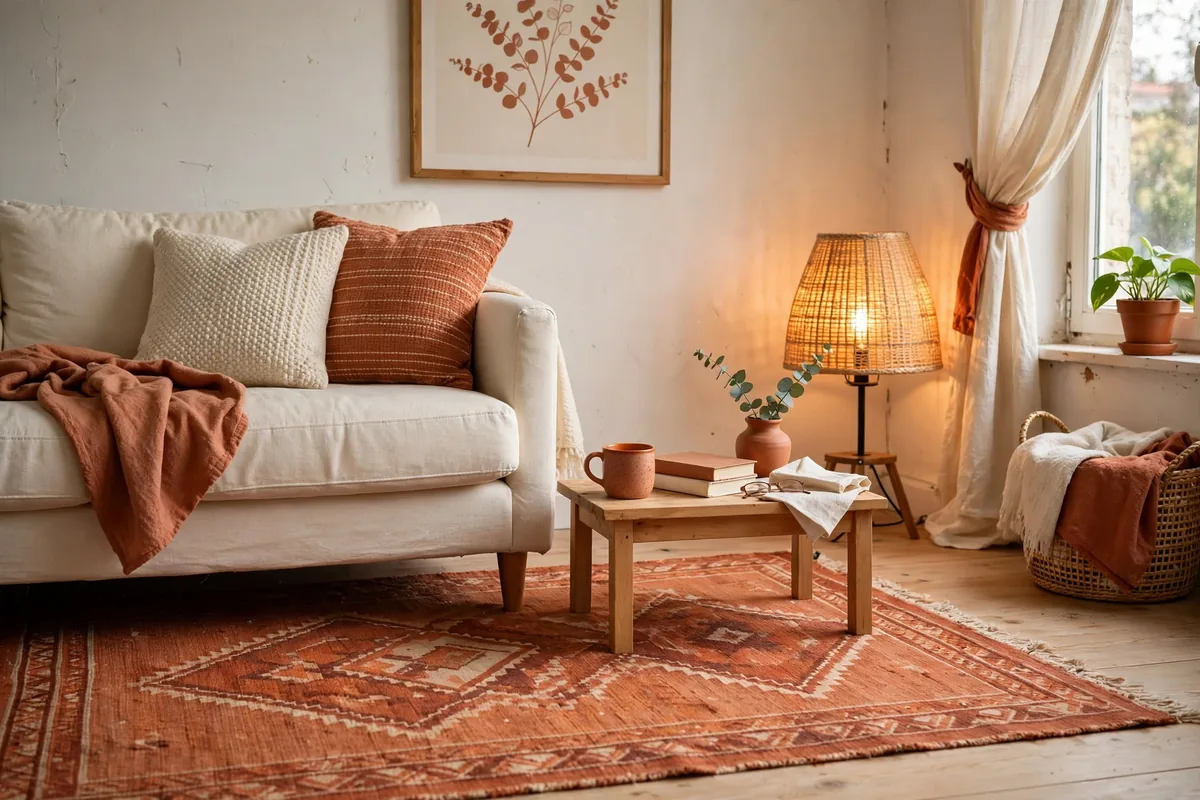
Most budget guides hand you 35 cheap things to buy. That's a trap in a small room. Thirty five small things don't make a room look decorated. They make it look cluttered. What makes cheap look good is order. You spend on big warm visible things first. You skip the trinkets. This guide gives you that order. It also gives you three room plans. Each plan stays under $100. Prices here are USD ballparks. They will vary by store.
The free step first: measure and move furniture
Before you spend a cent, move what you already own. Slide the bed or sofa to the best wall. Pull it a few inches off that wall. This costs nothing. A blocked window makes good decor look cramped. A sofa jammed against two walls does the same.
Next measure the zone you plan to decorate. Don't measure the whole room. In a living room, measure the seating area. Note where the front legs of the sofa will sit. In a bedroom, measure the floor beside the bed. In an entry, measure the floor strip by the door.
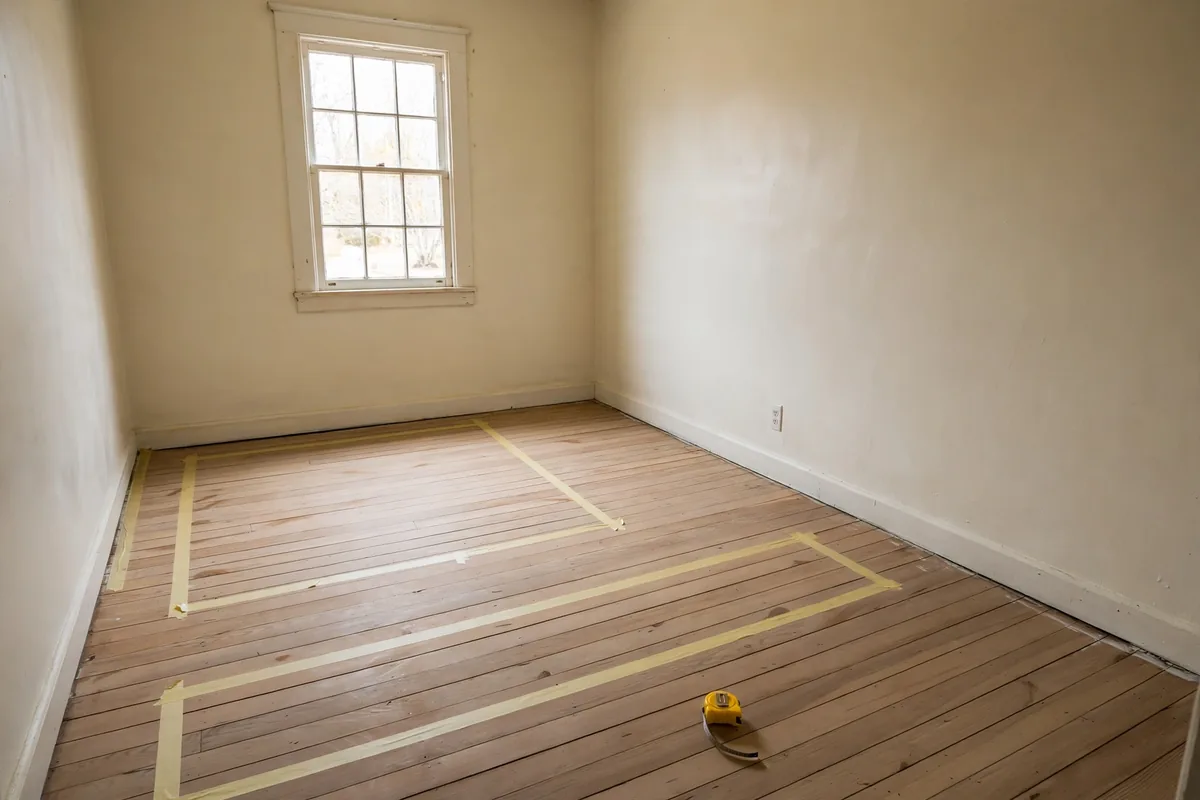
Tape the rug outline on the floor before you buy. Use painter's tape to mark the size. Walk around it for a day. Notice if you catch the corners. Notice if the door catches the edge. It works even better if you plan the room first in the free room planner.
Step 1: rug and warm light, in that order
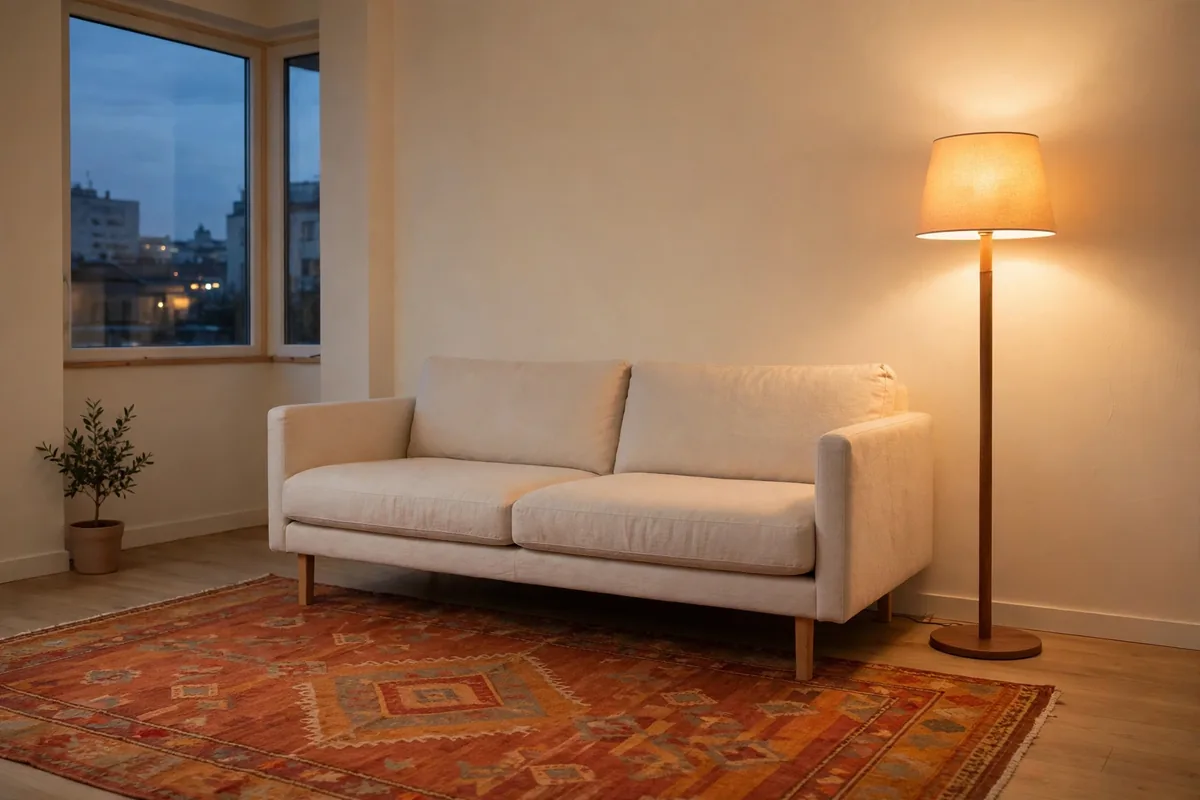
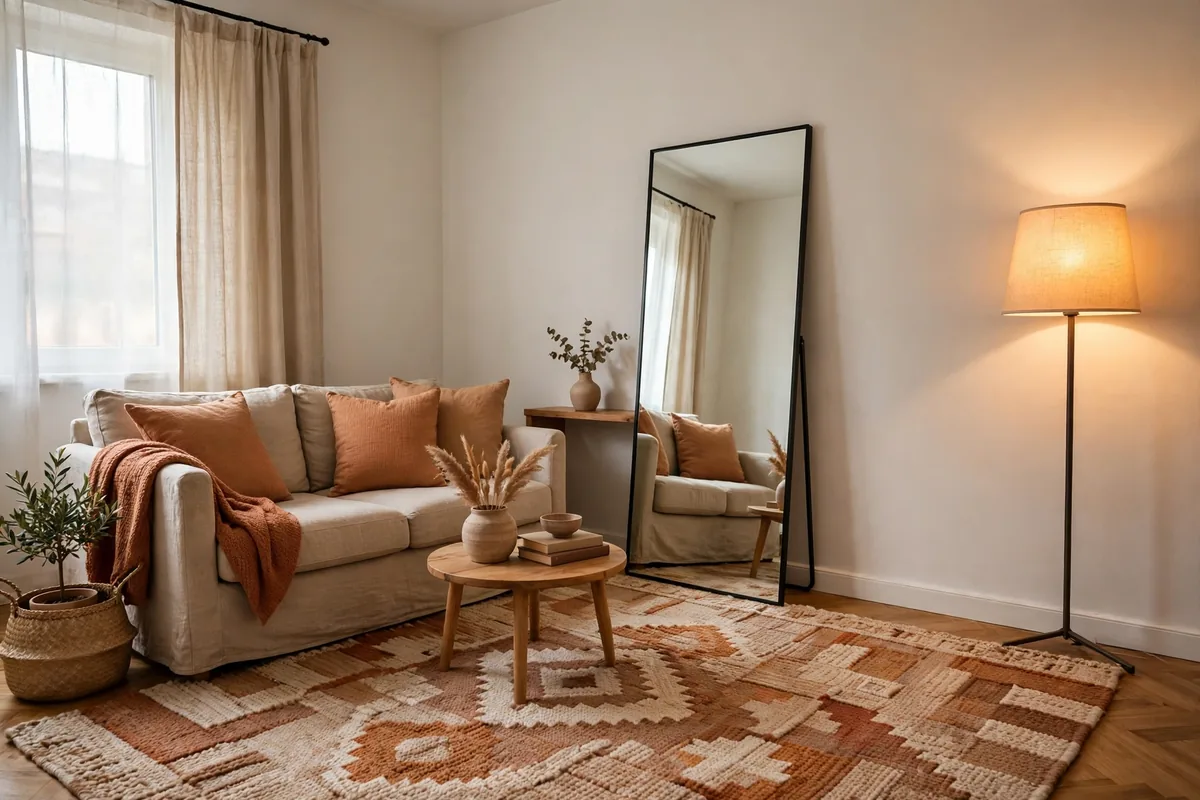
A rug grounds a room. A rug at about $35 to $45 beats $40 of small decor. It covers the largest surface you actually see. In a living room, pick a rug large enough for the front legs to sit on. The coffee table should sit fully on it where possible. In a small living room, that usually means a 5 by 7 foot rug.
Warm light is the second half of step one. It costs less than most people expect. Swap harsh daylight bulbs for warm bulbs at 2700K to 3000K. Use two smaller warm lamps when you can. It makes the room feel finished at night. A ballpark of $15 to $25 covers a warm bulb or two. If you shop secondhand, it can cover a whole lamp. If your room has no ceiling light at all, read our guide to light a room with no overhead lighting first. It shows a layered approach to try before you buy decor.
Step 2: textiles that repeat one palette
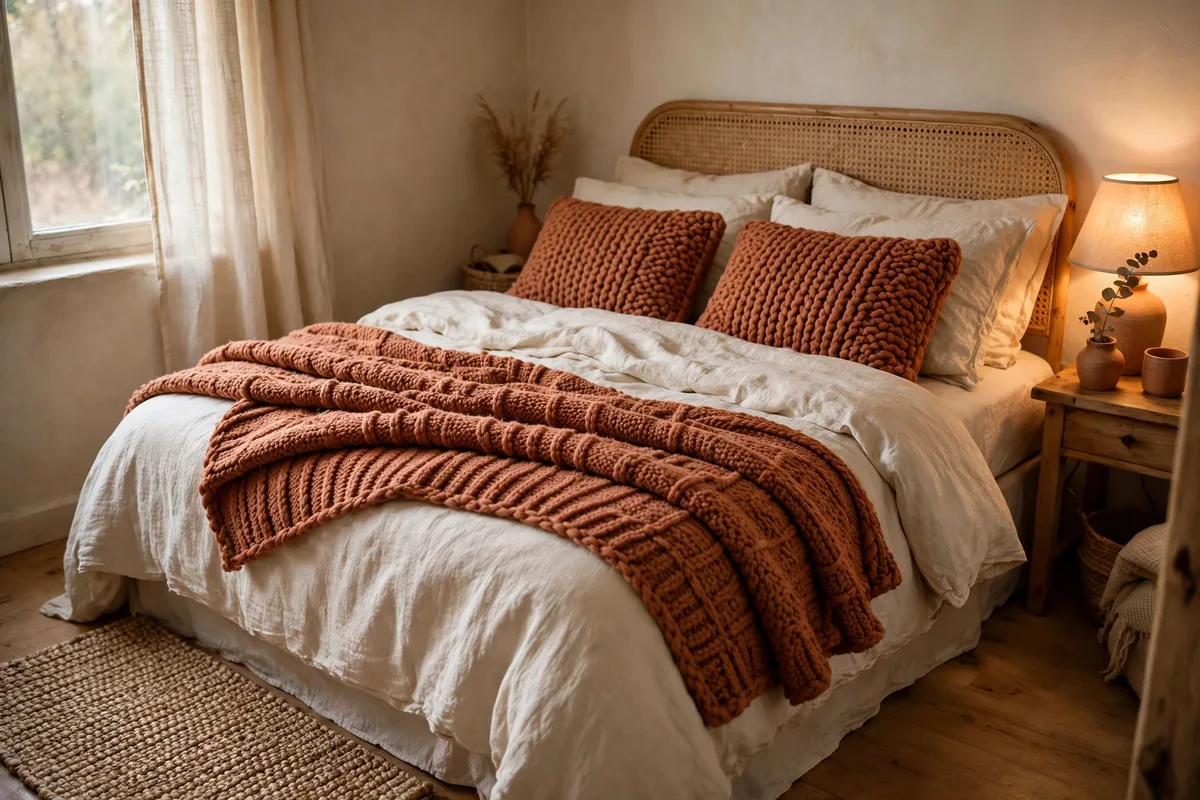
Textiles come next because they add warmth without clutter. A throw on the bed or sofa helps a lot. So do one or two cushion covers. Add a curtain panel in the same accent colour. The rule is simple. Use two neutrals plus one accent. Repeat that accent at least three times. Cream and wood with terracotta is one easy mix. If every textile is a different colour, the room looks random.
Step 3: one large focal point, not twelve small frames
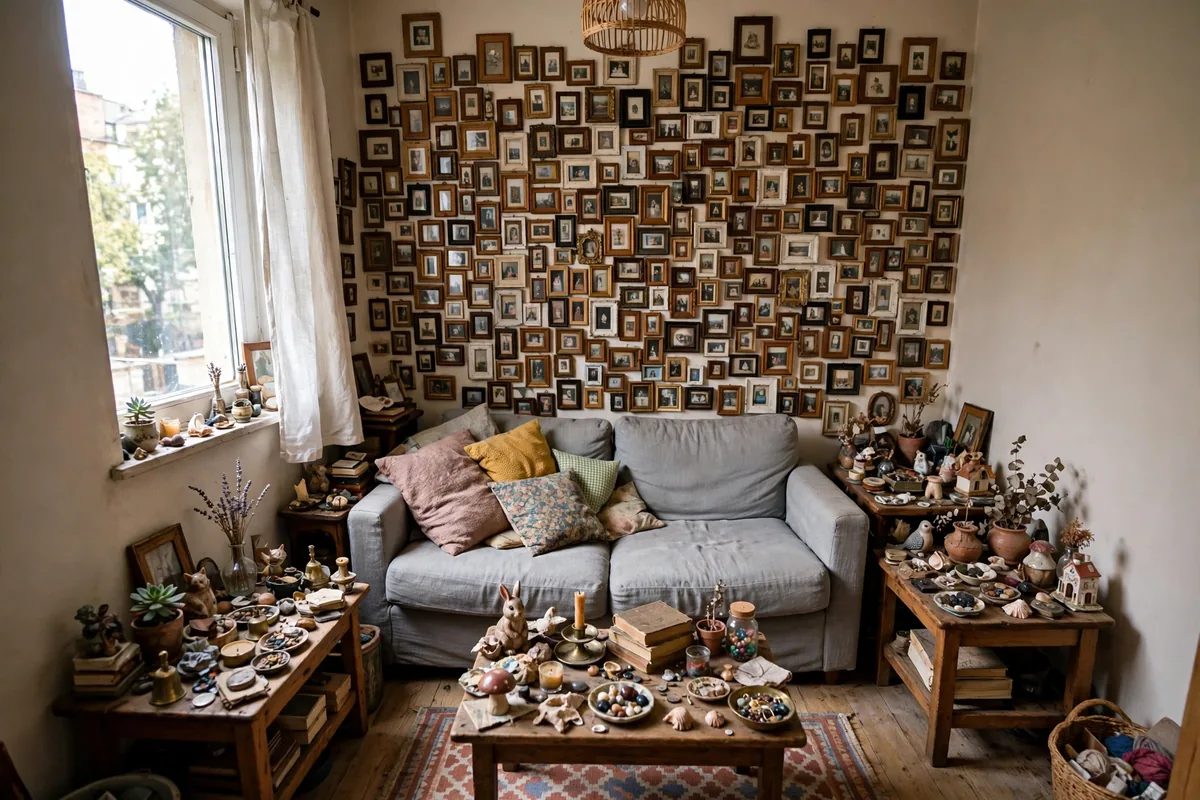
Buy a focal point only after the rug, light, and textiles are done. Then buy exactly one. Pick one large framed print. Or pick one large leaning mirror. Or pick one large piece of art above the sofa or bed. Twelve small frames on one wall look busy in a small room. Each one adds visual noise. If you already own many small frames, group them into one tight cluster. Use matching frames for the cluster. Or move most of them to another room. Keep one wall calm.
Scale matters more than subject. A focal piece should be about two thirds the width of the furniture below it. So a print above a 68 inch sofa should be about 40 to 46 inches wide. If a large print is out of budget, use a leaning mirror instead. See our guide to make a small room look bigger with curtains and mirrors for how mirrors help.
Bedroom plan: a worked split under $100
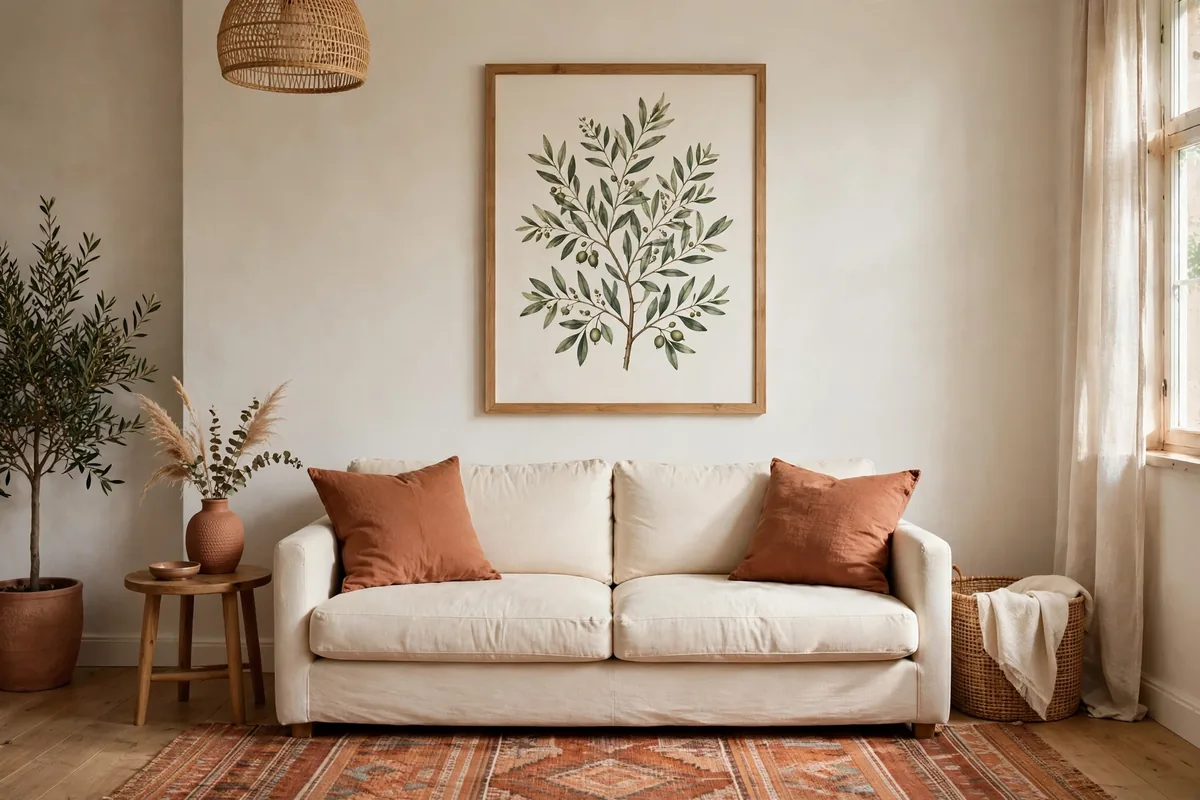
Here's a bedroom plan at roughly $90 to $100. This plan assumes you reuse your bedding and bed frame. Spend about $30 on a woven runner beside the bed. Spend about $20 on a warm bedside lamp. If you already like your lamp, spend that $20 on warm bulbs instead. Spend about $25 on a chunky throw in your accent colour. Spend about $15 on one large framed print. A leaning mirror works too. Put it on the wall you see when you walk in.
Move the bed first, before you buy anything. Put the headboard on the longest solid wall. Keep a clear path to the door. Leave the window unblocked. A runner only works if you can step onto it. If the walkway beside the bed is under 24 inches, skip the runner. Put that money into the throw and the lamp instead.
- Reuse bedding and bed frame
- Runner beside the bed about $30
- Warm bedside lamp or bulbs about $20
- Chunky throw in one accent about $25
- One large print or leaning mirror about $15
Living room plan: a worked split under $100
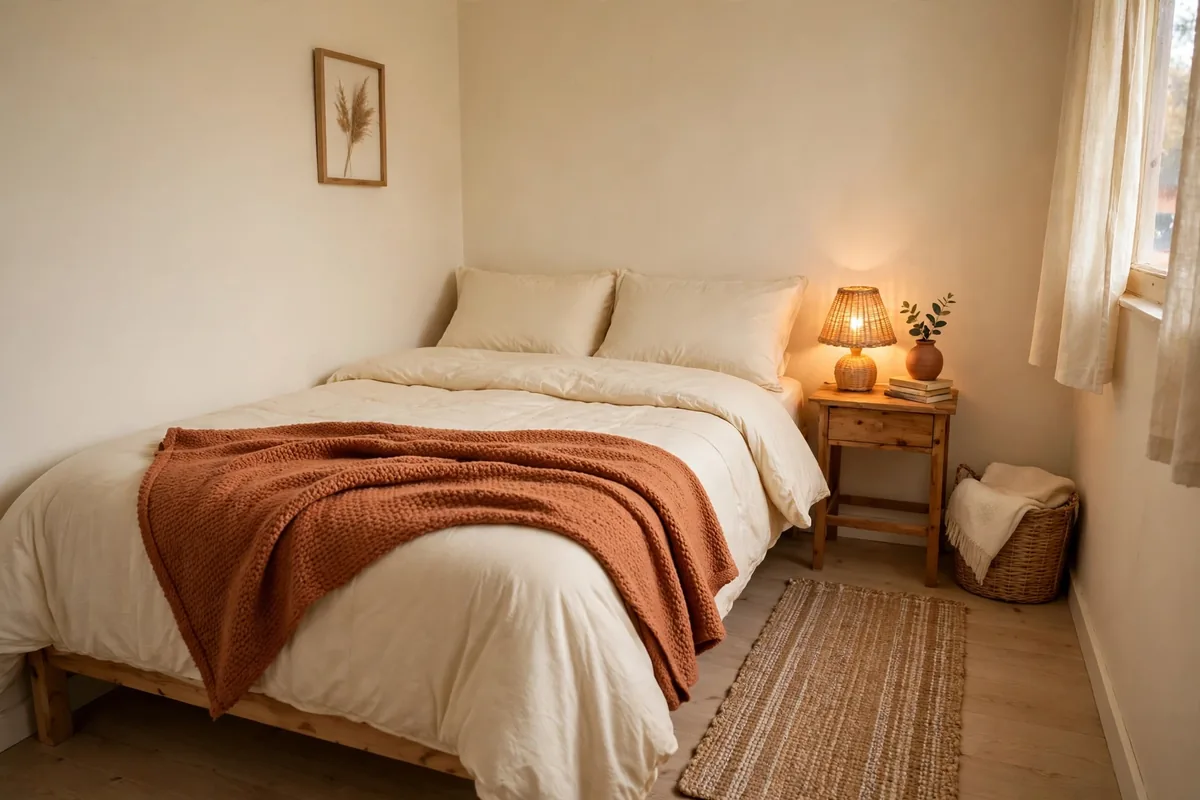
In a living room, the split shifts toward the rug. Plan about $40 for a 5 by 7 foot rug. The front legs of the sofa should sit on it. Plan about $20 for warm light from a floor or table lamp. Plan about $20 for a throw and one cushion cover in your accent. Plan about $15 to $20 for one large focal piece. That totals roughly $95 to $100.
Before you buy the rug, tape its outline on the floor. Keep 30 to 36 inches clear where you walk every day. Accept 24 inches as a tight minimum past the coffee table. If the rug outline eats the walkway, change the plan. Size down the rug or move the seating. Don't buy a rug that forces you to sidestep furniture.
Entry plan: a small entry for under $100
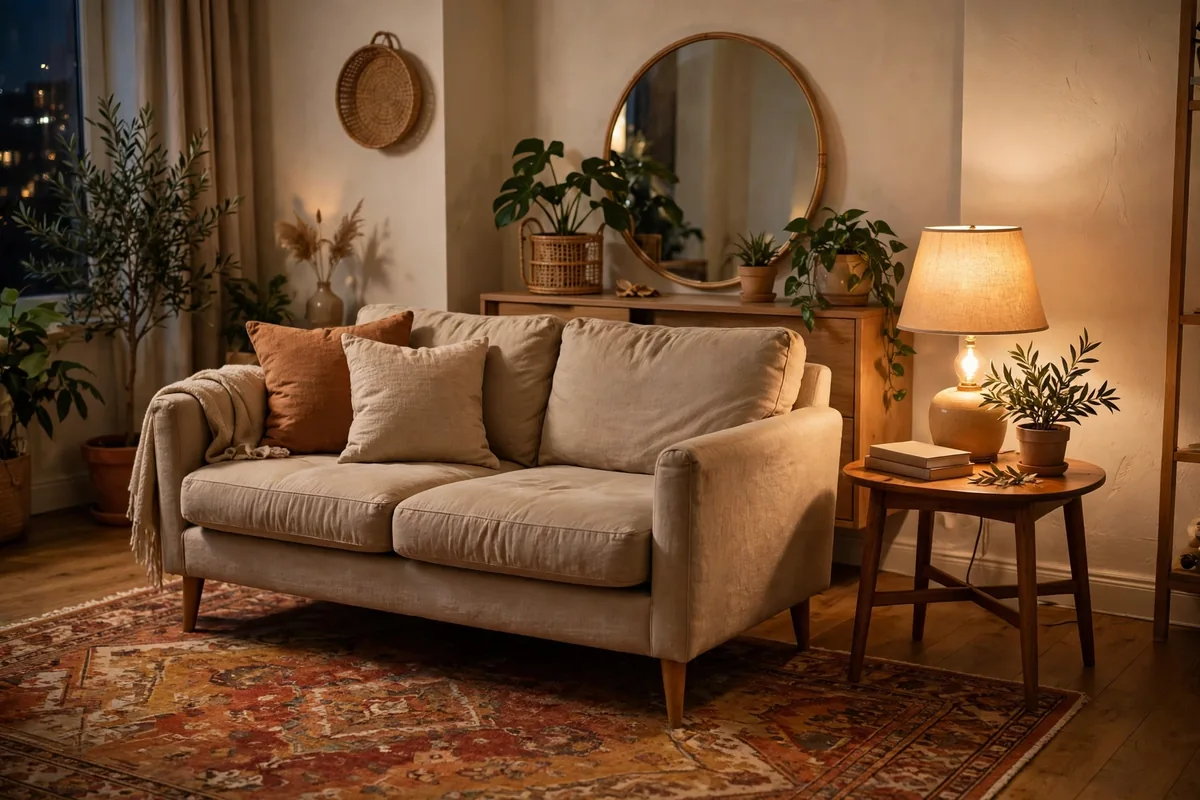
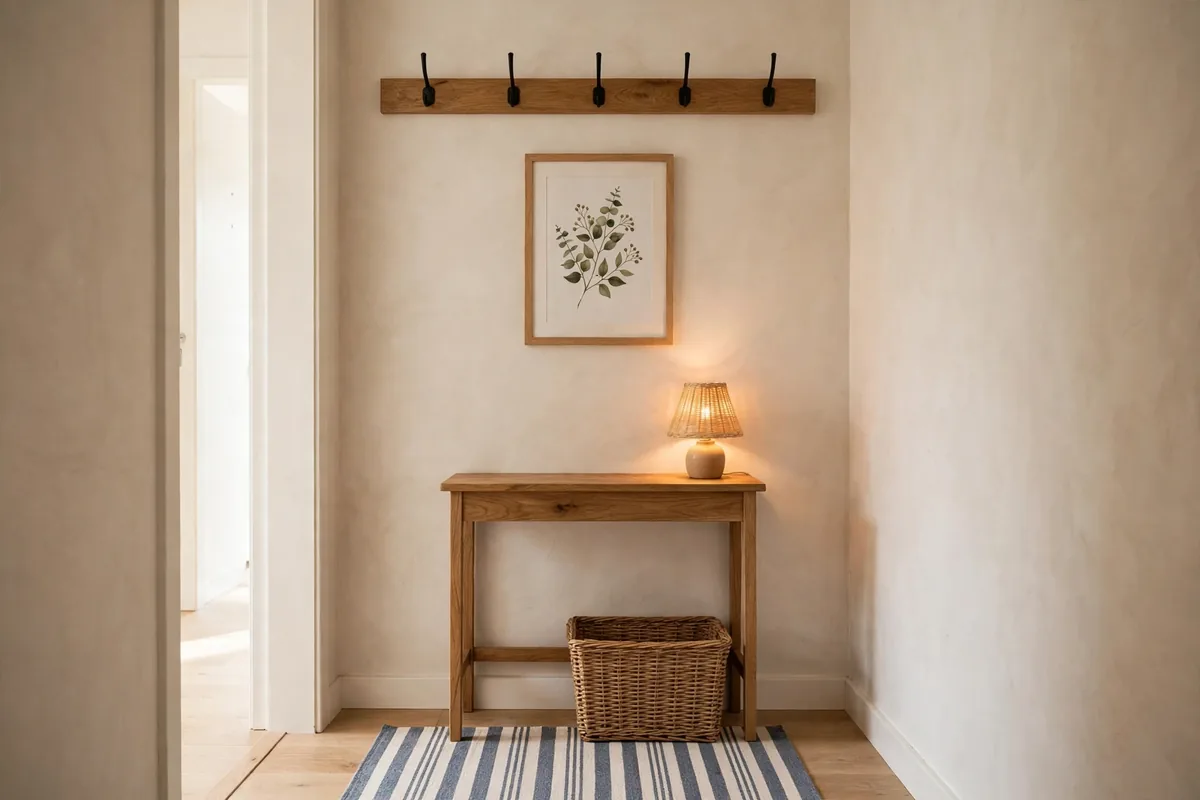
Entries get skipped in most budget guides. The zone is tiny. Plan about $25 for a short striped runner by the door. Plan about $20 for a small warm lamp. Put it on a console you already own. Plan about $20 for a woven basket. It hides shoes or bags. Plan about $20 for one framed print and a hook rail. Skip the hook rail if you already have hooks. That totals roughly $85. It makes the whole home feel considered the moment you walk in.
The entry rule is landing, not display. You need one place for keys. You need one place for a bag. You need one place for shoes. A basket under a console does that job. It stops shoes from migrating into the living room. Keep the door swing clear. If you have no console, use a stool or crate you already own.
Thrift and secondhand: what to buy, what to check
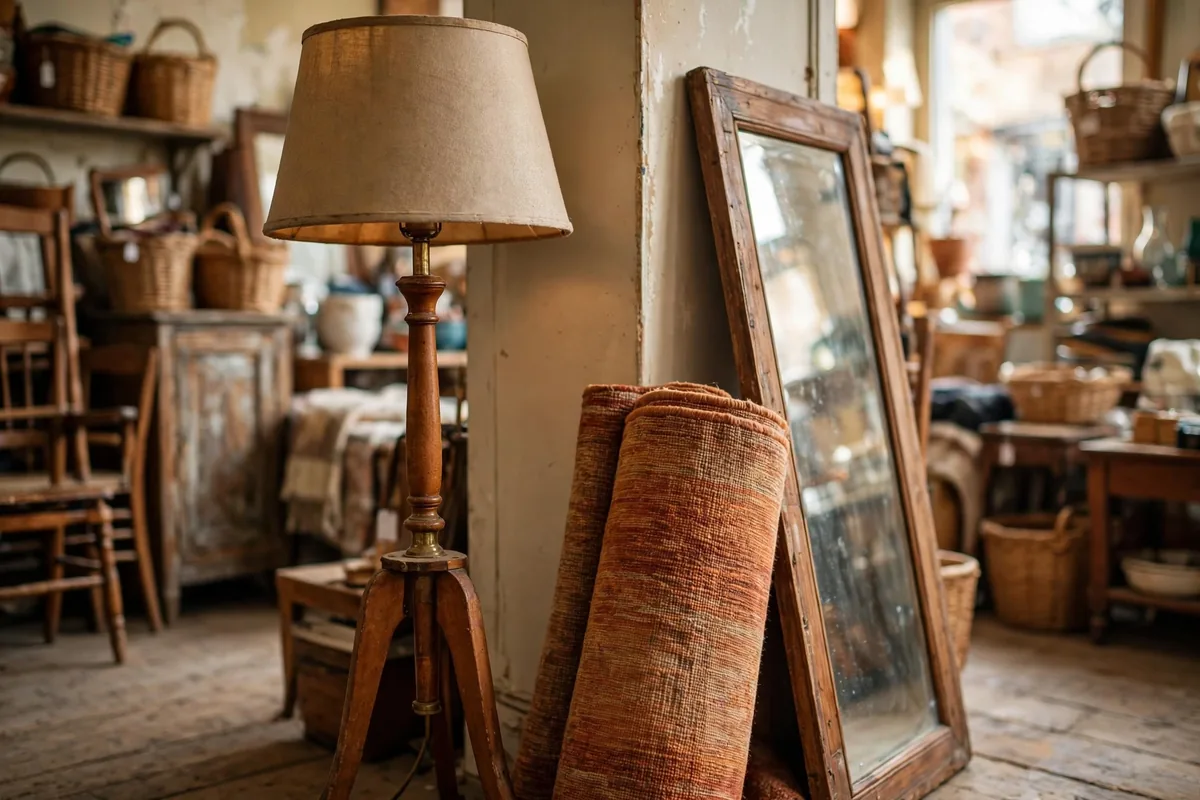
Thrift stores are where a $100 budget stretches furthest. That's true most of all for rugs, lamps, and mirrors. A solid wood lamp can cost far less secondhand than new. The same goes for a wool blend rug or a large framed mirror. Shop with your measurements written down. Buy only pieces that fit both. A bargain in the wrong size isn't a bargain. A bargain in the wrong colour isn't one either.
Check every secondhand piece before you pay. For rugs, unroll them fully. Check the backing and the corners. Look for stains in daylight. Don't judge stains under shop lighting. For lamps check the cord. Check the plug and the switch too. Ask if the shade is included. A replacement shade can cost more than the lamp. Leave stained items you can't wash behind. Leave lamps with frayed cords behind too. Leave rugs that curl and won't lie flat behind as well.
When this doesn't work, and the renter branch
The most common failure is spending backwards. People buy trinkets first and the rug last. If your room still looks cluttered after a $100 makeover, edit it hard. Remove the smallest half of what you bought. Keep the rug and the lamp. Keep the textiles and the one focal point. Live with that edited version for a week. Another failure is a rug that's too small. If the rug floats, replace the rug before you buy anything else.
A second failure is colour drift. That happens when the rug, throw, and print are three different accent colours. It happens because each piece was on sale. The room then looks like a sale rack. For renters, this plan is deposit safe if you avoid drilling and heavy adhesives. Use leaning mirrors, freestanding lamps, and flat rugs. Skip peel and stick wallpaper on a $100 budget. Paint damage can wipe out the savings. Photograph walls on move in day. Check the budget decorating hub and the SmallRoomly blog for the next step. That step could be small bedroom storage without drilling or a lighting plan.
Frequently asked questions
How do I split $100 between a rug, lighting, and textiles in a small room?
A workable split looks like this. Spend about $35 to $45 on the rug. Spend about $15 to $25 on warm light. Spend about $20 to $30 on textiles. Spend what is left on one focal point. Buy the rug first. Add warm light next. Add textiles after that. Buy the focal piece last.
Can I decorate a small entry for under $100, or should I skip it to save the budget?
Yes, you can. Entries are cheap to transform because the zone is tiny. A short runner helps a lot. Add a small warm lamp. Add a woven basket for shoes. Add one framed print. Together they total roughly $85 at ballpark prices. Skip a new console if money is tight. Use a stool or crate you already own instead.
What thrift-store finds are worth buying for a small room, and what should I leave behind?
Buy solid wood lamps with sound cords. Buy wool blend rugs that lie flat. Buy large framed mirrors or art in your palette. Leave stained items you can't wash behind. Leave lamps with frayed cords behind too. Leave rugs that curl behind as well. Leave pieces that need an expensive repair behind. Leave pieces that need a replacement shade behind too.
Why does my under-$100 room still look cluttered after buying decor?
This usually happens when the budget went to many small items. It also happens when the rug is too small for the seating zone. Remove the smallest half of what you bought. Keep the rug and warm light. Keep the textiles and one focal point. Live with the edited version for a week. Don't buy anything else until that week is done.
How do I keep a $100 makeover deposit-safe if my lease bans adhesives?
Use freestanding and leaning pieces only. Flat rugs work well. Freestanding lamps work well too. Textiles work well as well. A leaning mirror or print works well too. Avoid drilling and adhesive hooks. Avoid peel and stick wallpaper too. That wallpaper can lift paint. Paint damage can cost far more in deposit loss than the makeover saved.