 smallroomly
🪞 How to Make a Small Room Look Bigger With Curtains, Mirrors and Furniture Placement
Curtains, mirrors, and furniture placement get pinned everywhere. They rarely get explained with measurements. This is the method version. It tells you how high and how wide. It tells you where the mirror goes. It tells you which furniture helps and which hurts. Use it as a hub for the same room. These tricks work best with the right layout behind them. They need the right rug size, paint, and lighting too. Nothing here needs drilling or a renovation. Every trick can be tested before you commit.
Start with light and sightlines, not shopping
Stand in the doorway and look at the room like a visitor. What do you see first? Is it a bright window, a tall bookcase, or the back of a sofa? That first sight sets how big the room feels. If the first thing is a tall dark piece of furniture, the room will feel smaller.
Next, find the light path. Note where the window light falls at midday and in the evening. Note which wall catches it. That wall is where a mirror earns its place. The window itself is the feature to protect. Move one piece of furniture away from the window. Clear the glass. Step back to the doorway again.
Curtain rods: high and wide, with numbers
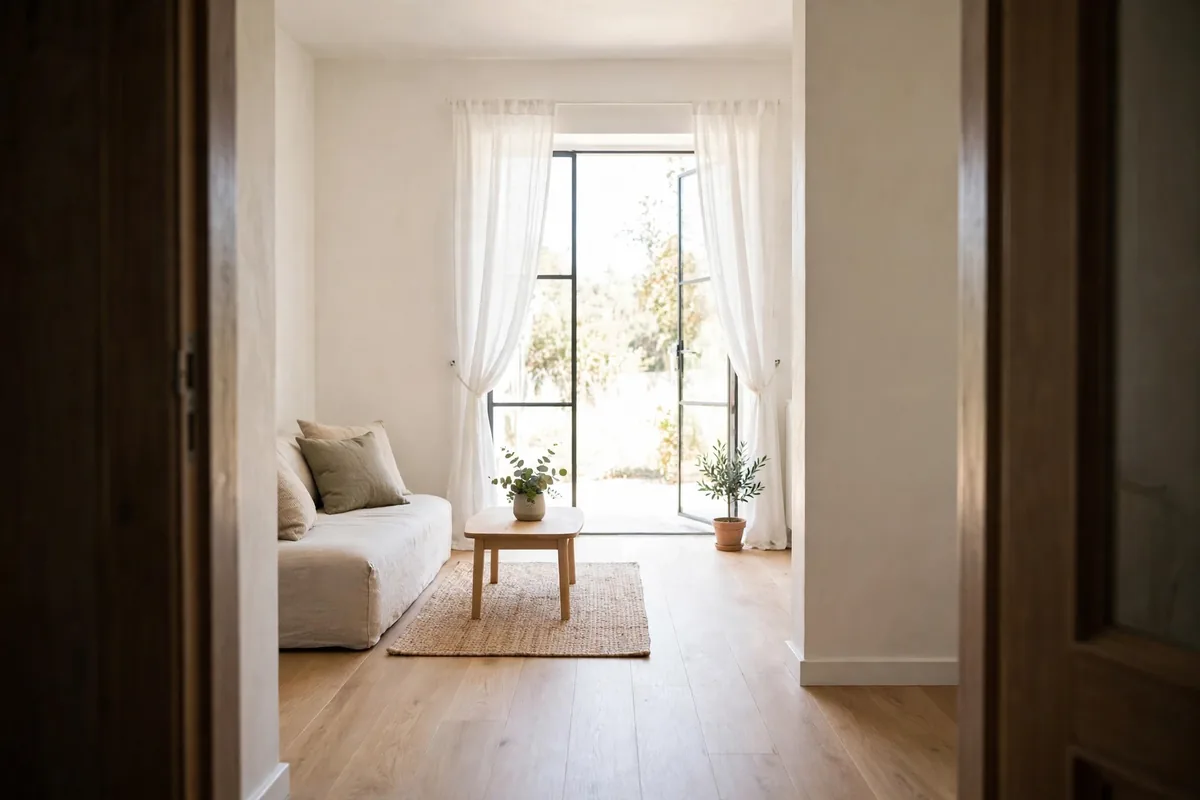
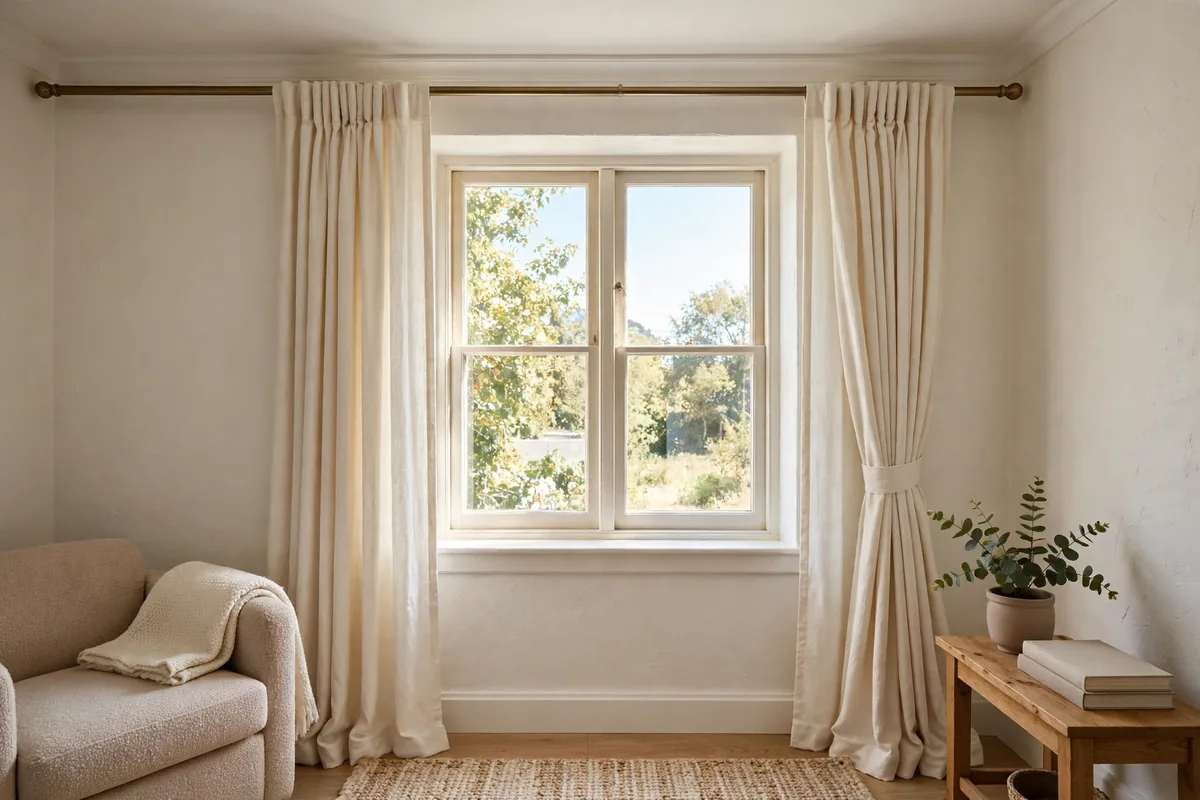
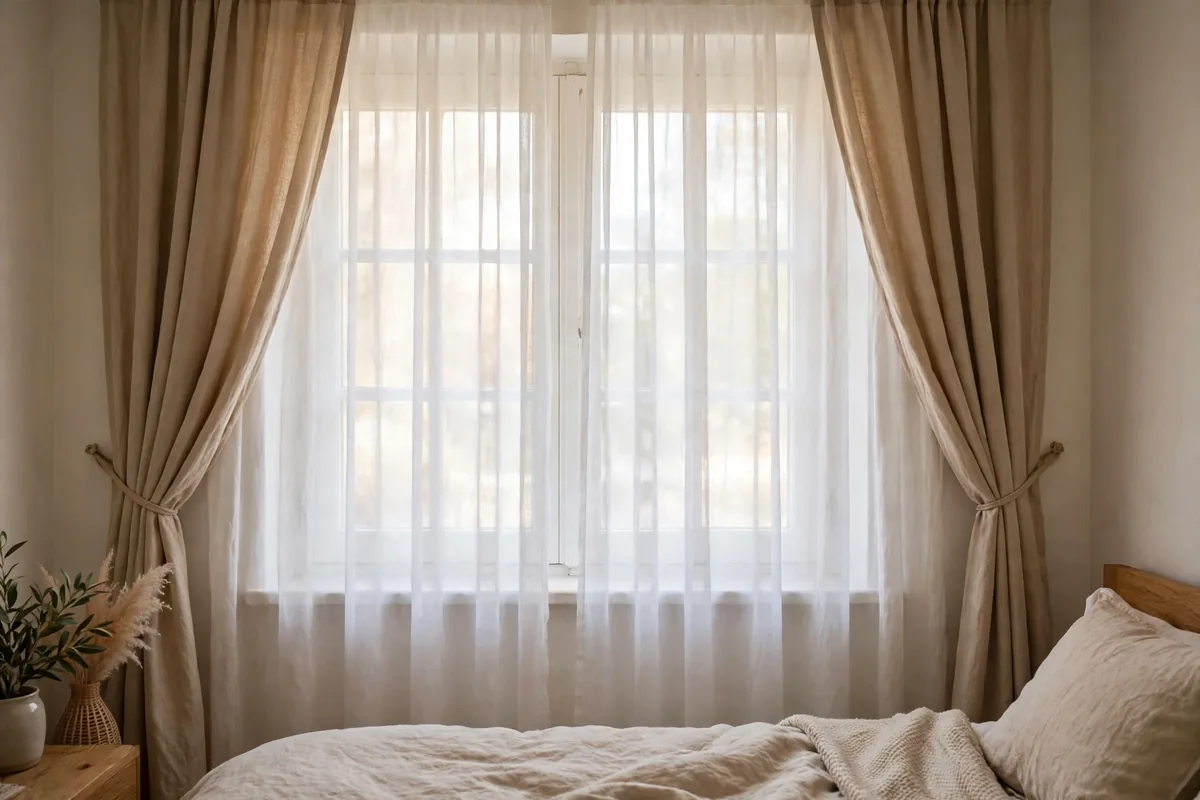
Hang rods close to the ceiling. If the ceiling is very low or has trim in the way, hang them 4 to 6 inches above the window frame. Extend the rod 6 to 12 inches beyond the frame on each side. Curtains will then stack on the wall, not over the glass, when they are open. That extra width makes the window read wider. The height makes the wall read taller.
Let curtains fall to the floor. Or let them fall to within about an inch of it. Don't stop them at the windowsill. Short curtains chop the wall in half. They make the window look smaller. Floor length curtains draw the eye up and down the full wall. Measure the drop from the rod to the floor before you buy. A curtain that pools heavily on the floor collects dust.
Sheer plus drape layers, and when to use each
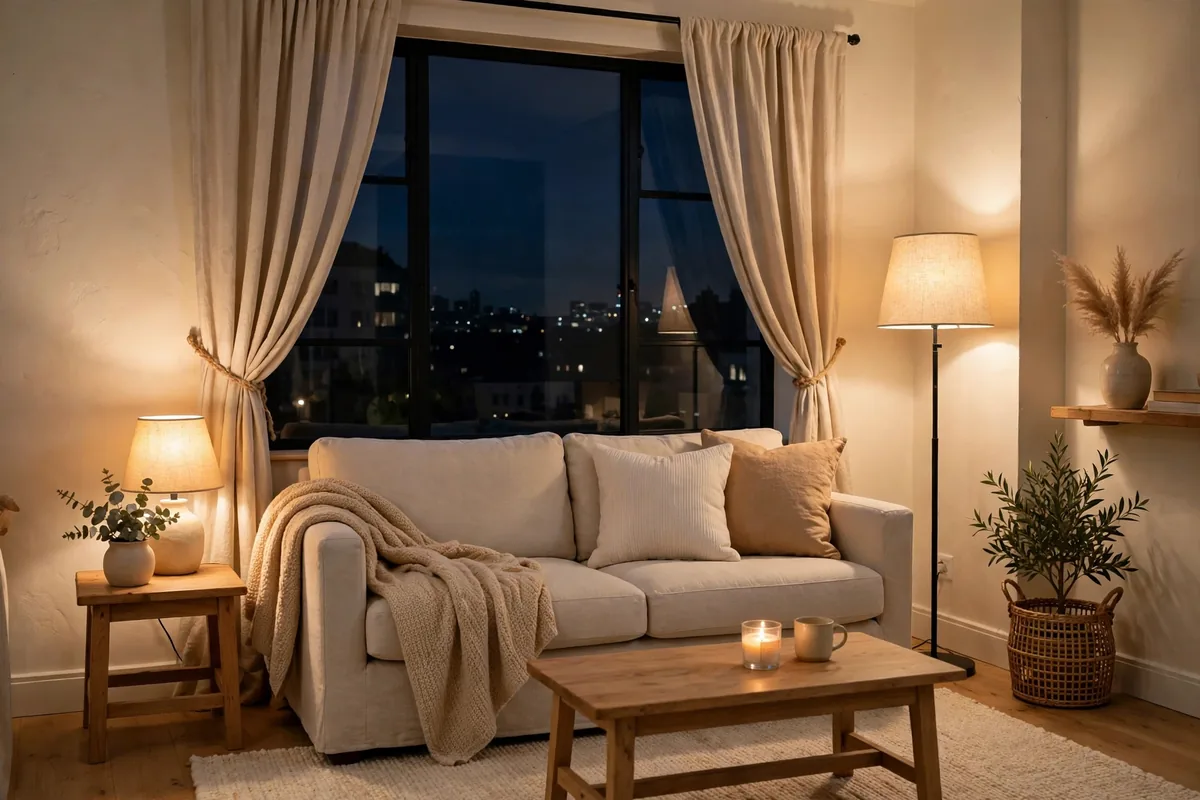
Layer sheers for daytime privacy with heavier drapes for night and coziness. Sheers let light through while softening the view in. The window stays bright all day. Heavier drapes pulled to the sides frame that light. Closed at night, they add warmth. They make the room feel finished rather than exposed. The pair gives you two rooms in one.
Use sheers alone only where privacy isn't an issue. Use them where the room needs every bit of light. A high window is one good case. A room facing a garden is another. In a street facing room, sheers alone leave you visible at night. That happens when the lamps are on. Choose one colour family for both layers. Pick the drape a shade deeper than the sheer. The layers will then read as one window treatment, not two competing ones.
One large mirror, placed for light
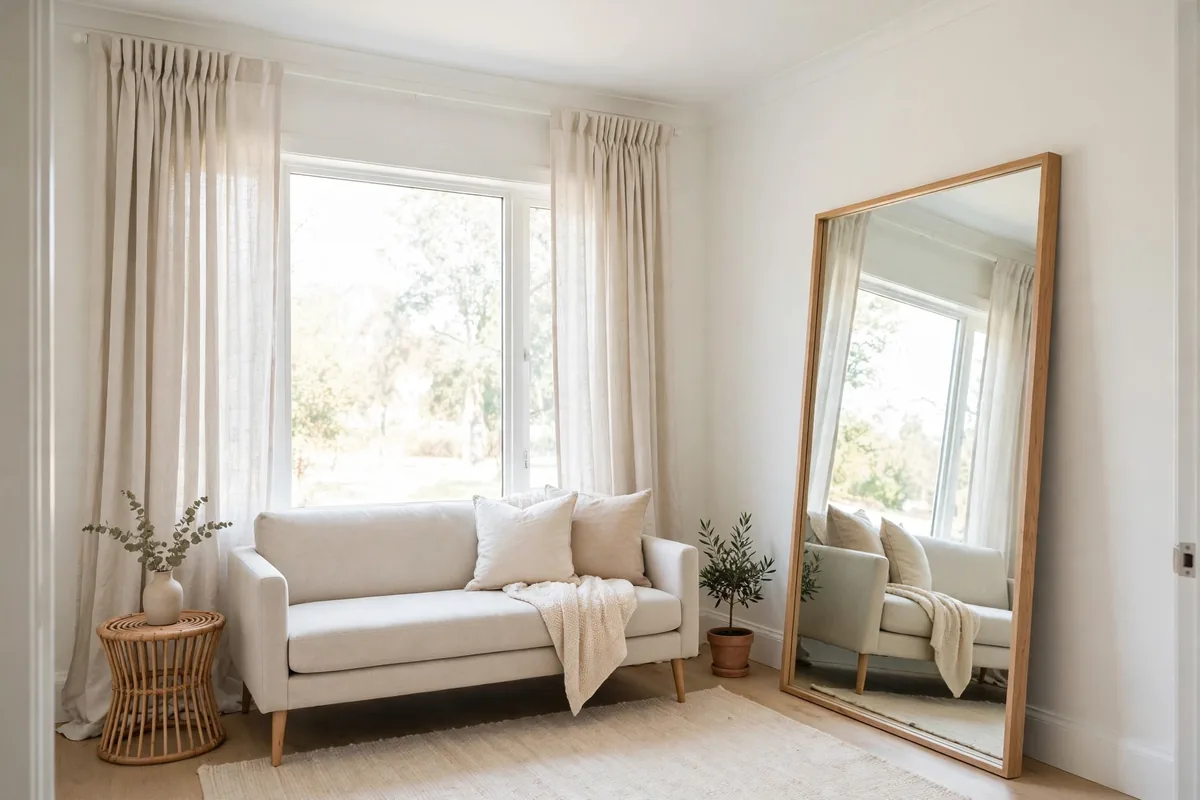
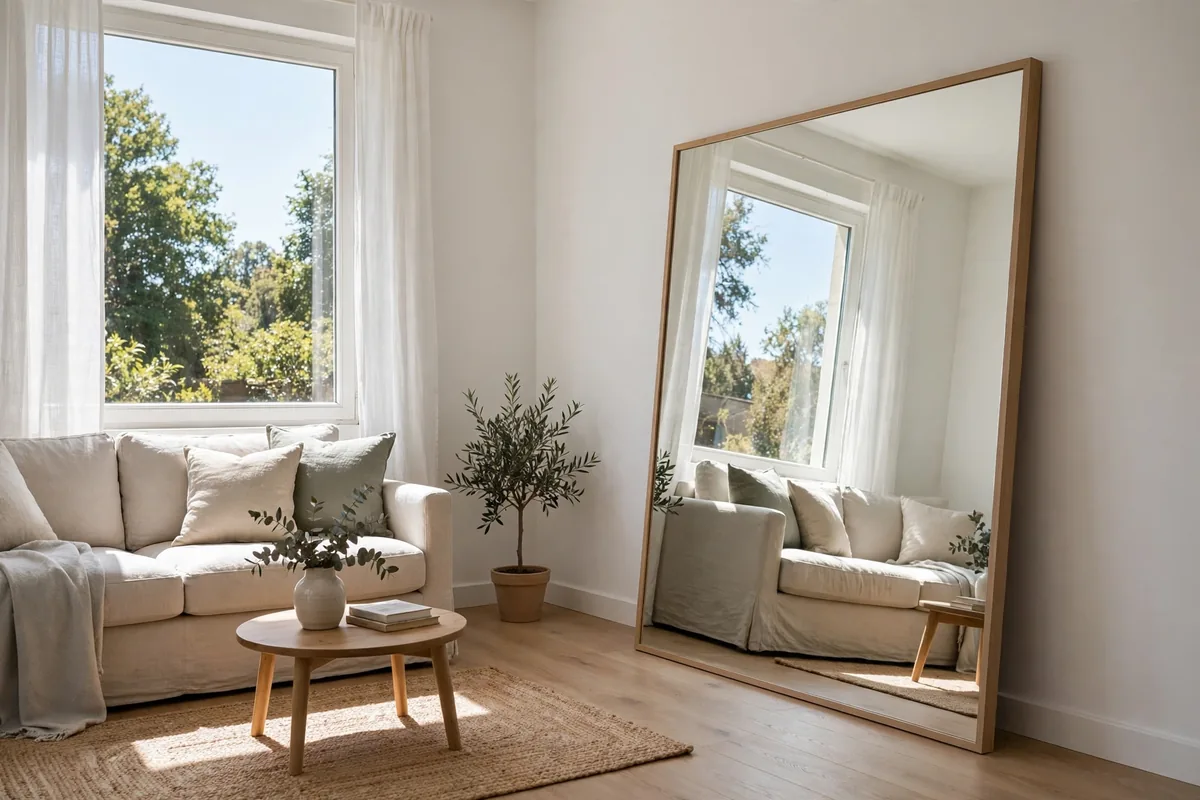
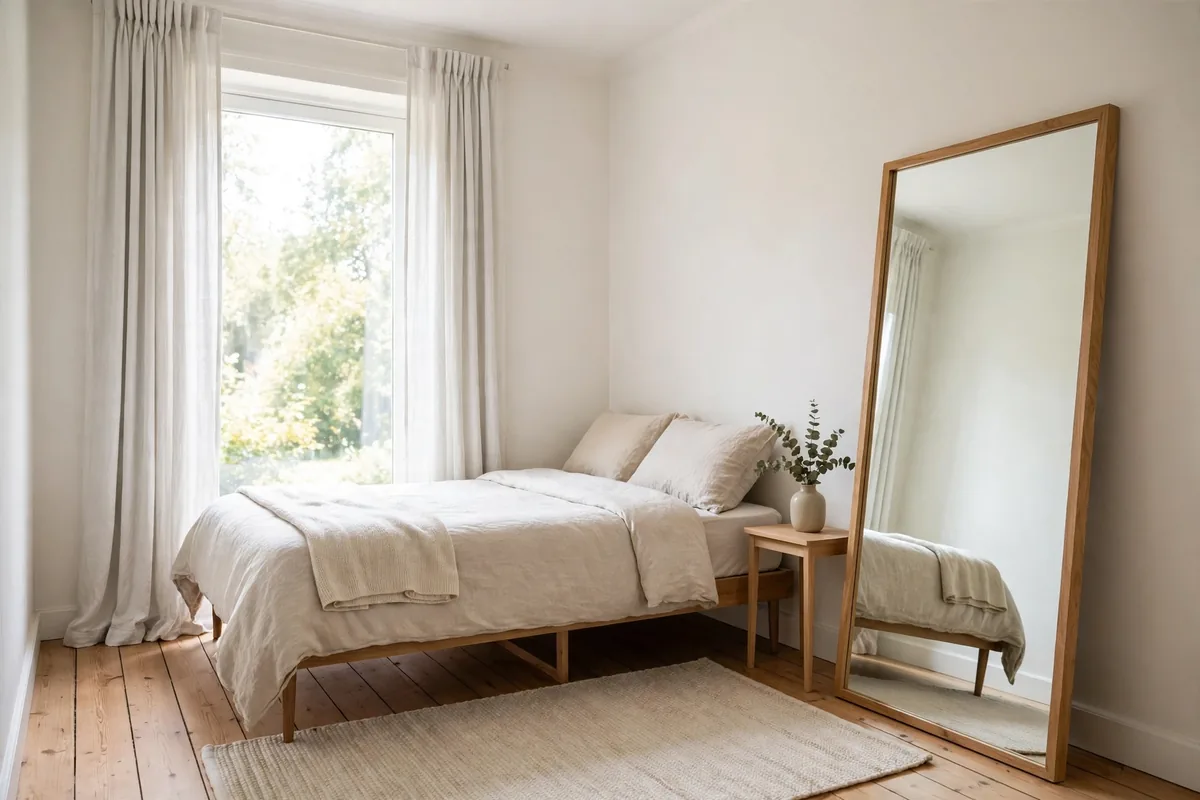
One large leaning mirror opposite or beside a window bounces light. A scatter of small mirrors doesn't do the same job. Each small reflection is a separate fragment, not one clear second window. Choose a mirror at least half the height of the wall where you can. Lean it securely against the wall. Check that it reflects the window or a pleasant view.
Don't put a mirror where it reflects clutter. It will double the clutter too. A mirror facing a messy desk makes the room feel messier. A mirror facing a pile of laundry does the same. A mirror facing a crowded shelf does it too. Clean the mirror regularly. A dusty mirror in a small room is highly visible. If the mirror wobbles, it's the wrong mirror for a leaning spot. Choose a heavier frame or a wall spot with proper fixings.
Legged furniture that shows floor
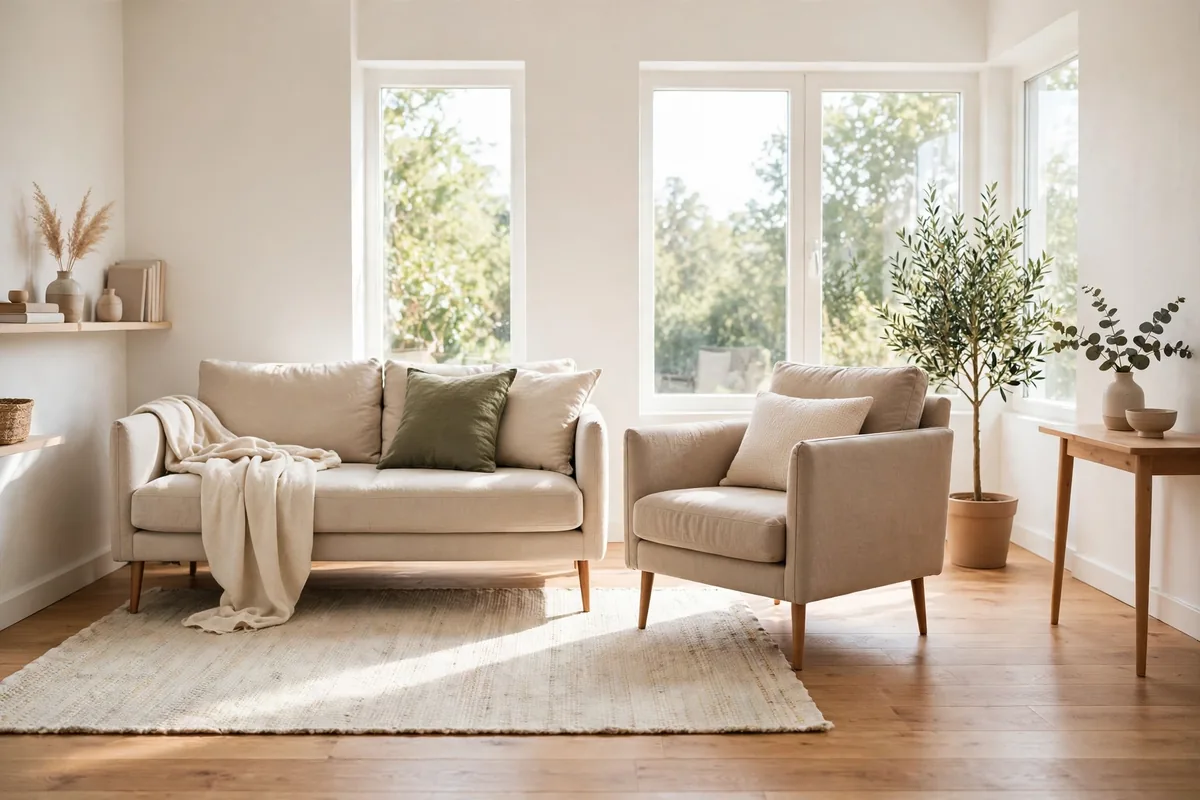
Furniture on legs shows floor underneath. It makes a room feel less heavy. Legs of 4 to 6 inches are enough to let light pass under a sofa or chair. They let the eye pass under too. This works best over a light rug or bare wood floor. A sofa that sits flat on the floor reads as a solid block. The same sofa on slim legs reads as a lighter frame. It reads as a frame with space around it.
Leave 12 to 18 inches of bare floor between the rug edge and the wall where you can. The rug will then define the seating zone without covering every inch of floor. That bare strip is part of the trick. Avoid skirts, plinths, and very low bases in a small room. They hide the floor line. If a piece you love has no legs, raise it only if it's safe and stable to do so. Never raise a heavy bookcase or a bed beyond its design.
Tall furniture: last wall, not first
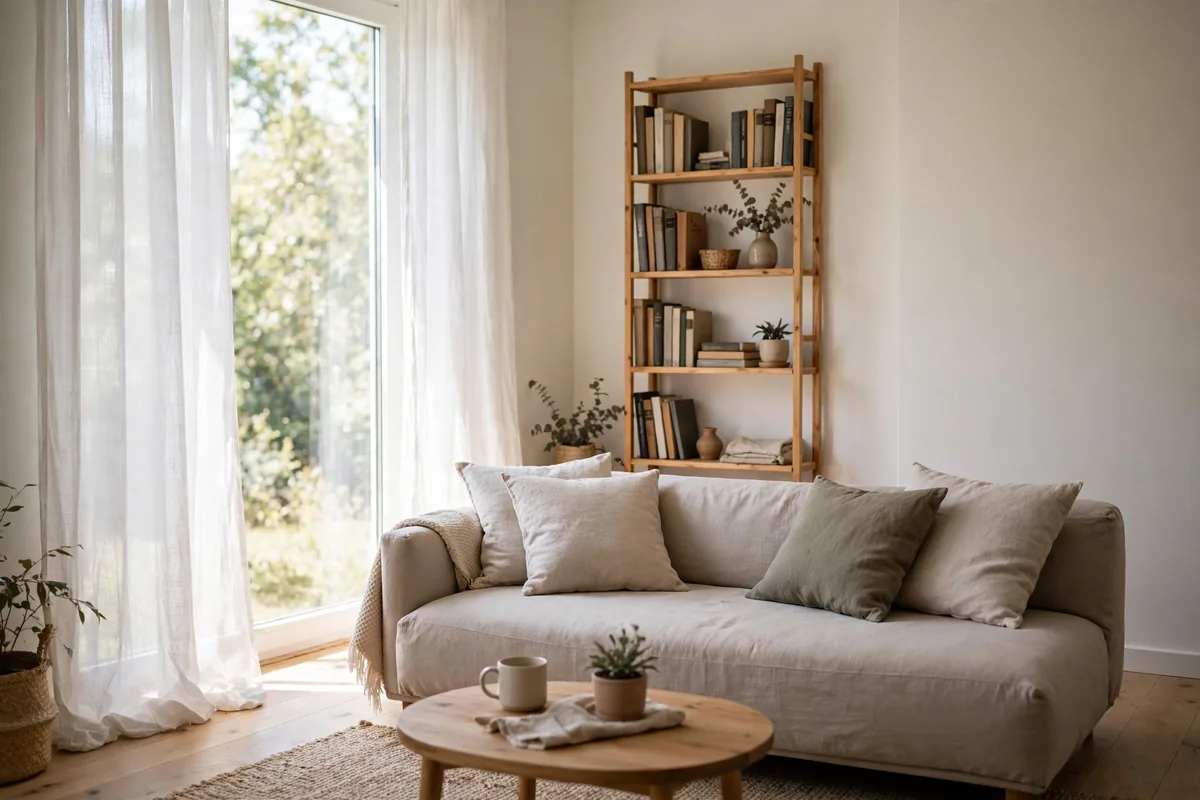
Put the tallest piece on the wall you see last when you walk in. Don't put it on the wall you see first. A tall bookcase or wardrobe on the entry wall greets you like a wall. The same piece on the far wall reads as background. Keep tall furniture away from windows entirely. Light won't be blocked then. The window stays the brightest thing in the room.
In a narrow room, this rule is even stricter. A tall unit on a long wall makes the corridor feel narrower. A tall unit on the short far wall anchors the end of the room. If you must place a tall piece near the entry, choose an open low backed shelf. Choose it rather than a solid wardrobe. For the full narrow room version of this rule, see our guide to narrow living room layout ideas.
Put it together: layout then rug then paint then light
These tricks work as a chain, not as single fixes. Layout decides where furniture goes. Rug size defines the seating zone. Paint colour sets how light behaves. Lighting layers carry the room at night. A large mirror in a room with a too small rug still looks scattered. High curtains in a room with one harsh daylight bulb still feel cold at night. Work the chain in order. Start with layout. Move to rug next. Move to paint after that. Finish with light. Add the mirror and curtains as the finishing layer.
Check the chain with a simple test. In daylight, the room should feel bright from the window and the mirror. It should show floor visible around the seating. At night, warm lamps at 2700K to 3000K at two or three heights should replace the daylight. That beats one bright overhead. If either test fails, fix that link before buying another trick. See the living room layout hub and the SmallRoomly blog for the linked guides. Those guides include best paint colors for a small dark room and the layout plan for the same room.
Tweaks for bedrooms living rooms and studios
In a bedroom, high curtains and a legged bed do most of the work. Hang curtains as in a living room. Choose a bed frame on legs that shows floor beneath. Place one large leaning mirror beside the window or on the wall opposite it. Keep the headboard wall simple. A busy headboard wall plus a mirror plus tall curtains compete for attention. If the bed is a queen in a tight room, check how to fit a queen bed in a small bedroom first. Do this before moving the mirror, so walkways stay clear.
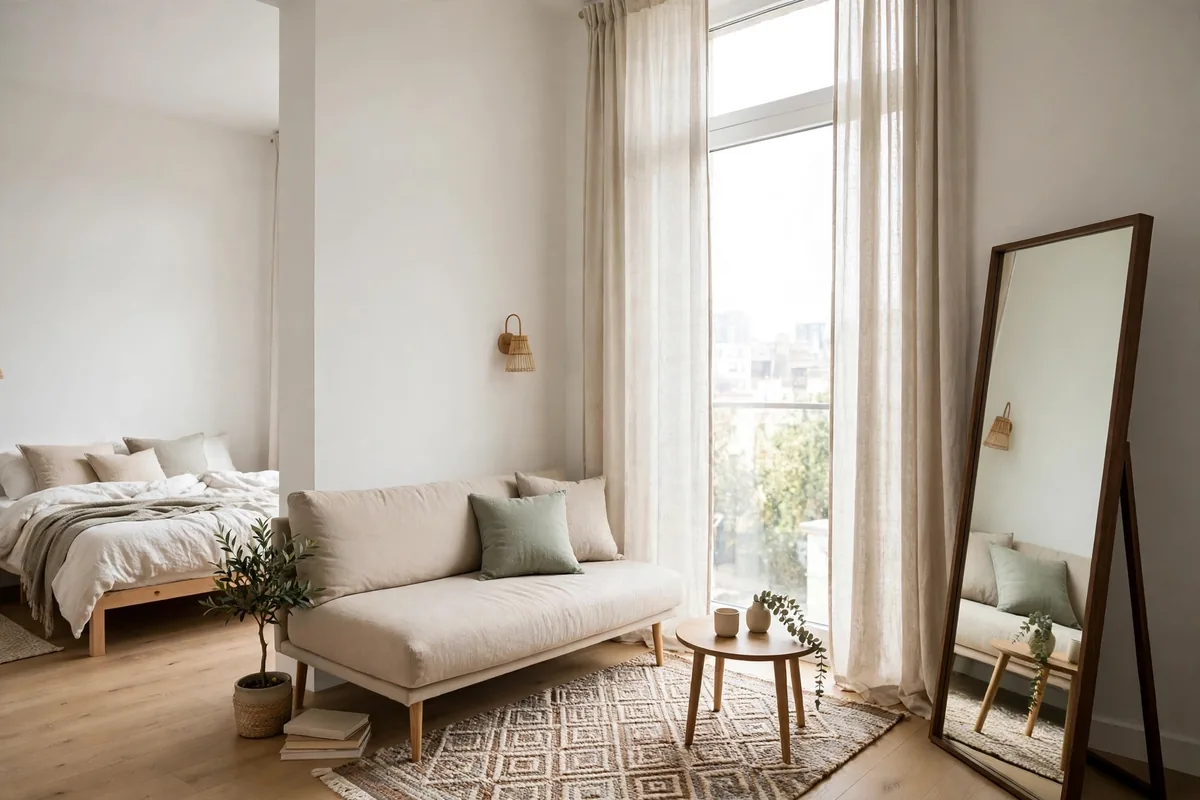
In a living room, the sofa is the piece to float. Pull it a few inches off the wall. Show floor under it. Let the rug anchor it. In a studio, use the mirror and curtains to mark the living zone. Keep the bed to the far end or a corner. Guests will then see living space first, not the bed.
When tricks don't work, and the renter branch
These tricks fail when they fight the room. A mirror facing clutter doubles clutter. Curtains that cover half the glass when open shrink the window. They shrink the window they were meant to enlarge. A legged sofa in a corner with no visible floor doesn't lighten anything. A tall bookcase in front of a window blocks the light the mirror needs. If a trick makes the room worse, remove it before adding another.
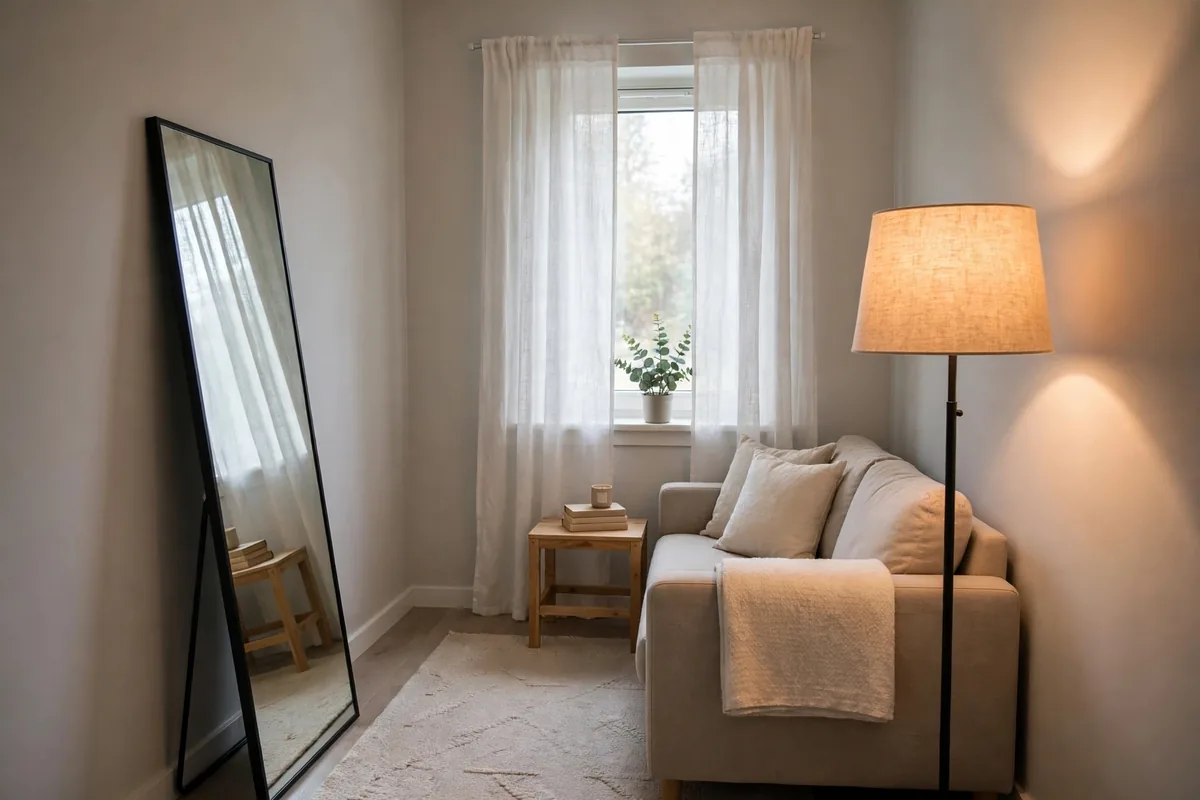
For renters, every trick here works without drilling. Use a leaning mirror. Use curtains on a tension rod inside the window frame. Use a rod you can remove as well. Use freestanding lamps and rugs that lie flat. Check your lease before using adhesive hooks for a rod. Test any adhesive in a hidden spot first. Use the free room planner to test curtain, mirror, and furniture placement with your room size. Move out with every piece intact.
Frequently asked questions
How far above the window frame and beyond its sides should curtain rods go in a small room?
Hang the rod close to the ceiling. If the ceiling is low, hang it 4 to 6 inches above the frame. Extend it 6 to 12 inches beyond the frame on each side. That makes the window look taller and wider. Curtains can then stack clear of the glass when open.
Should the mirror go opposite the window or beside it in a narrow room?
Opposite the window is best when the wall is free. It bounces the most light there. Beside the window works well in a narrow room. The opposite wall may hold the sofa there. Either way, use one large mirror. Aim it at light or a pleasant view. Never aim it at clutter.
Do sheer curtains alone make a small room look bigger, or do they need a heavier layer?
Sheers alone help in daytime. They soften light and keep the window bright. At night, sheers alone look dark and flat. A heavier drape layer pulled to the sides adds depth and coziness. The pair works better than either layer on its own.
How much visible floor do legged furniture pieces need to show before a room feels larger?
You need a clear strip of floor under and around the piece. Legs alone aren't enough. Legs of 4 to 6 inches help. A rug leaving 12 to 18 inches of bare floor to the wall helps too. Together they give the eye a sense of space. A legged sofa pushed into a corner with no floor showing doesn't help.
What should I do first in a small room with only one small window and no room for a large mirror?
Start with the window itself. Hang curtains high and wide. Keep the glass clear. Put no tall furniture in front of it. Then use legged furniture, a light rug, and warm lamps at different heights. If a large mirror truly won't fit, a medium mirror beside the window still bounces useful light.