 smallroomly
🛏️ How to Fit a Queen Bed in a Small Bedroom Without Blocking the Door
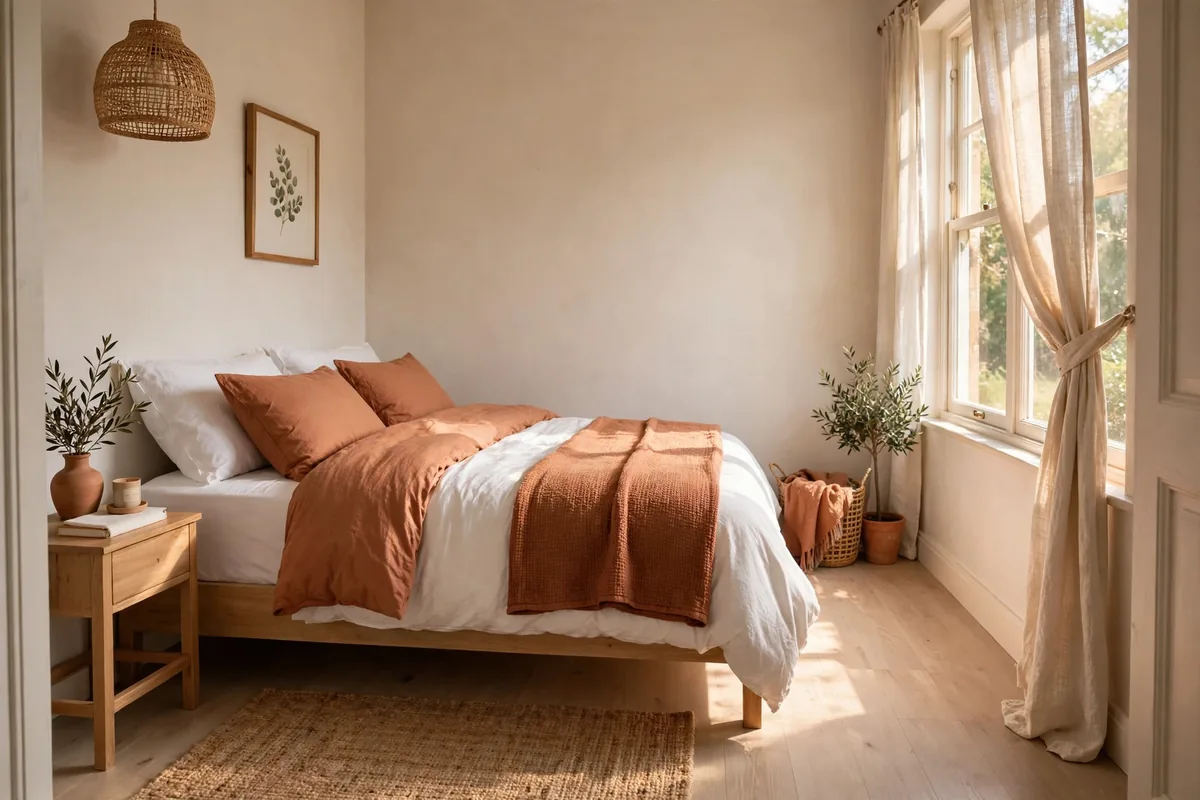
A queen bed measures 60 by 80 inches. That size is before pillows. It's also before a frame. And it's before space to walk. It's a lot. Here's the mistake to avoid. Don't push the bed against the first wall you see. You may find the door won't open fully. Or you may find you can't get out on one side.
Measure first, in this order
Start with the room. Don't start with the bed. Measure wall to wall in inches. Ignore the rug for now. A 10 by 10 foot room is 120 by 120 inches. But baseboards can steal an inch or two. A radiator cover can do the same. So can a built in wardrobe. Those small losses matter most where you walk.
- Measure the room wall to wall, not the rug.
- Mark the door swing on the floor with tape. A door needs about 30 inches of clear arc.
- Mark windows and closet doors and radiators and outlets and the light switch.
- Write down the frame size, not just the mattress. Frames add 2 to 4 inches each way
Next, tape the bed outline on the floor. Live with it for an evening. Walk your morning path. Open the closet door. Swing the bedroom door fully. If you want a second opinion before you buy, browse the small bedroom ideas hub. Then test your room size in the free room planner. It's faster to move tape than to return a bed frame.
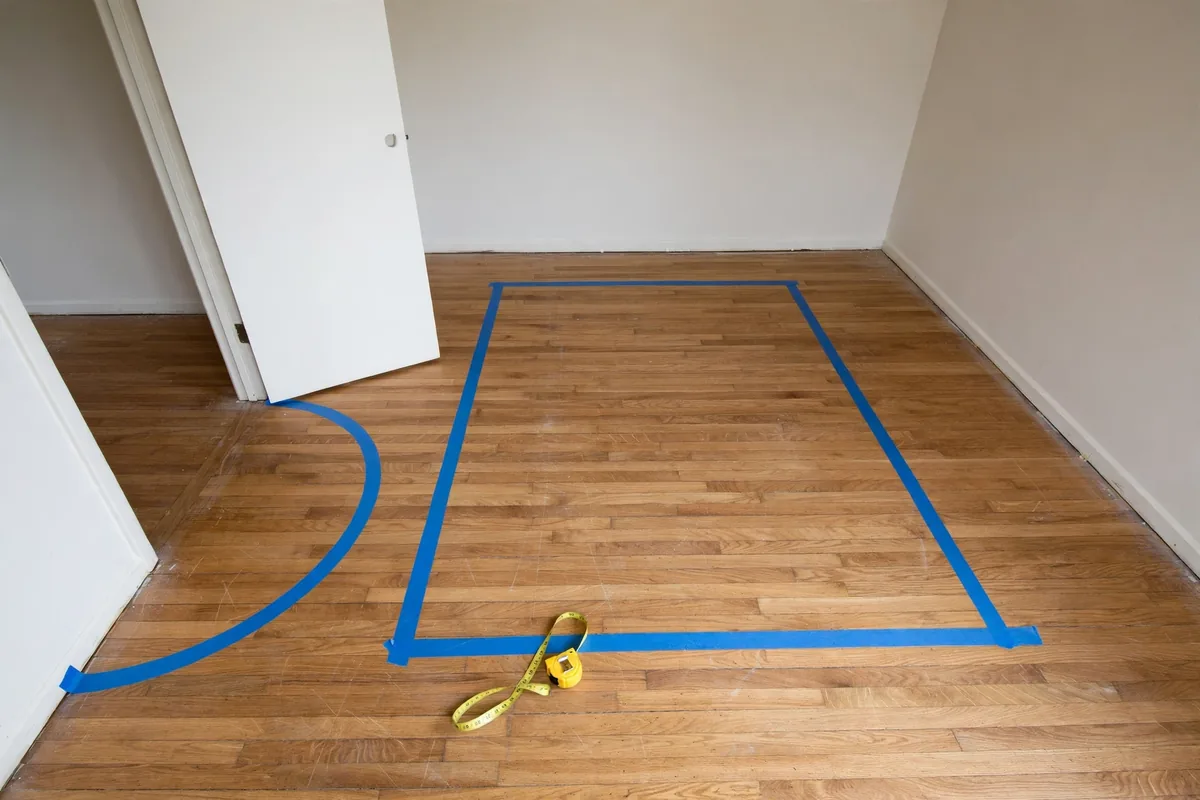
The 10 by 10 bedroom layout that works
You share 60 inches of length and 40 inches of width. That space must cover walkways and a nightstand and a door. So both sides can't be generous. Pretending otherwise makes a small bedroom unusable. Put the headboard on the longest solid wall. Give your getting out side 30 to 36 inches. Let the other side be 24 inches or a corner.
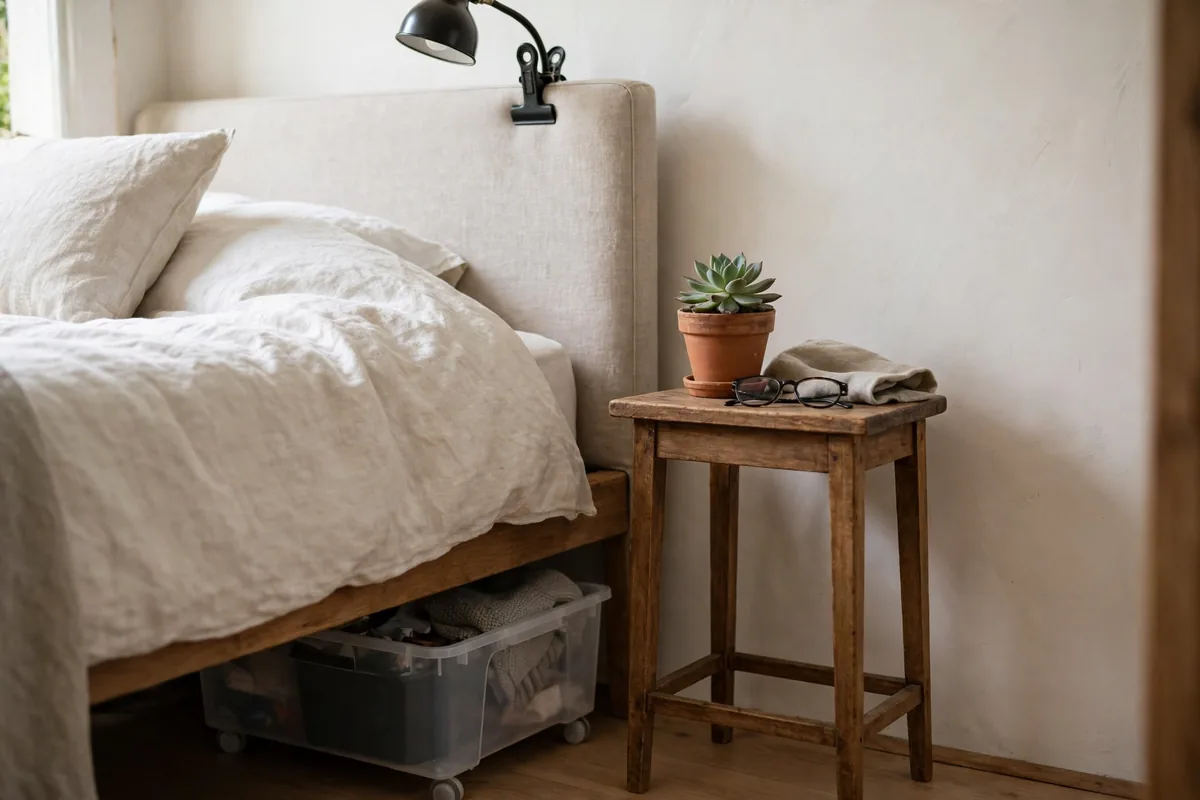
On the tight side, skip a full nightstand. Try a clip on reading light instead. Or try a small wall shelf at shoulder height. A bedside caddy works too. It can hold your phone and a book and water. Keep the foot of the bed clear too. You need room to stand there to change sheets. You also need room to walk past without turning sideways.
Corner beds: when they help and when they hurt
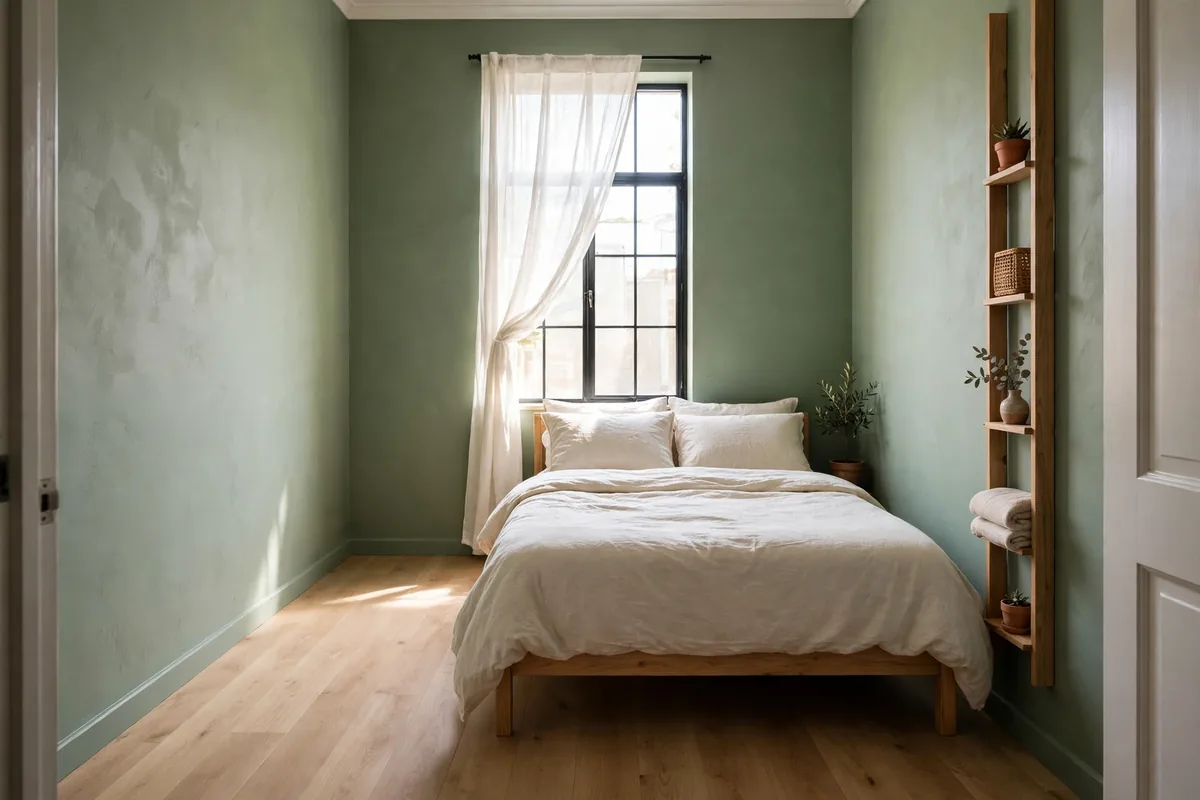
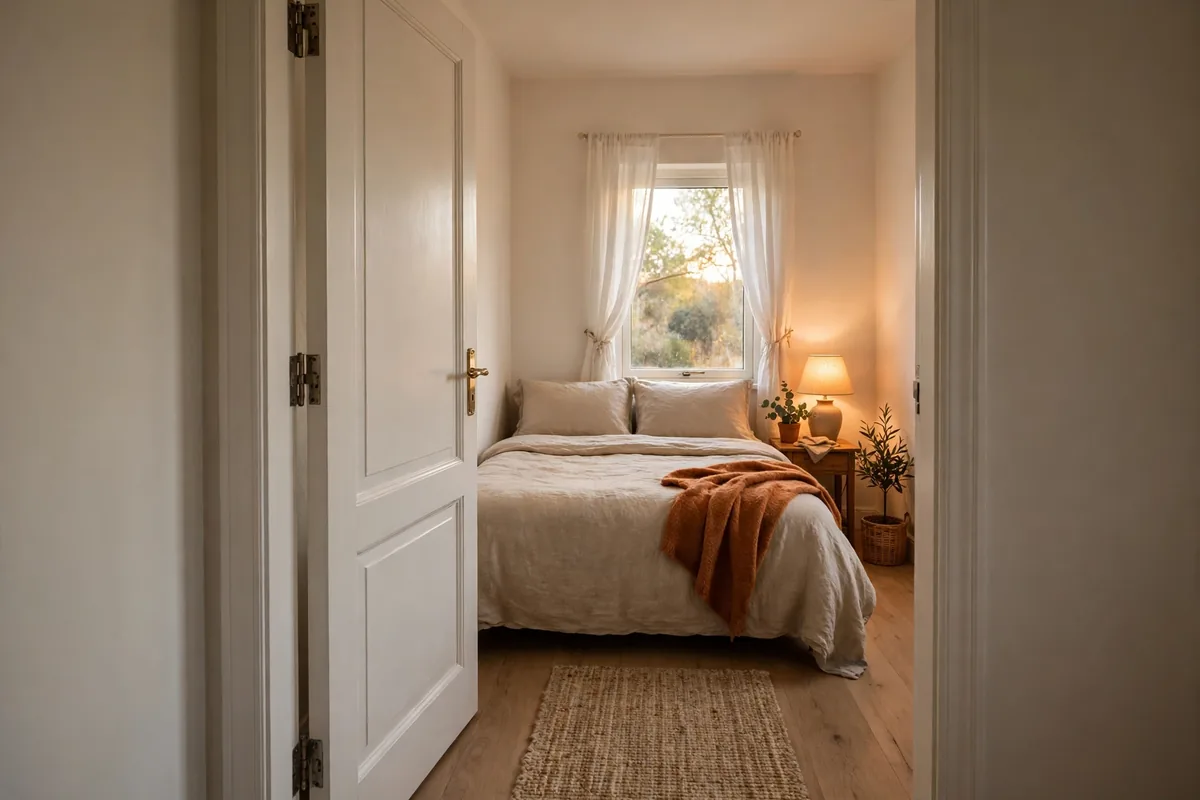
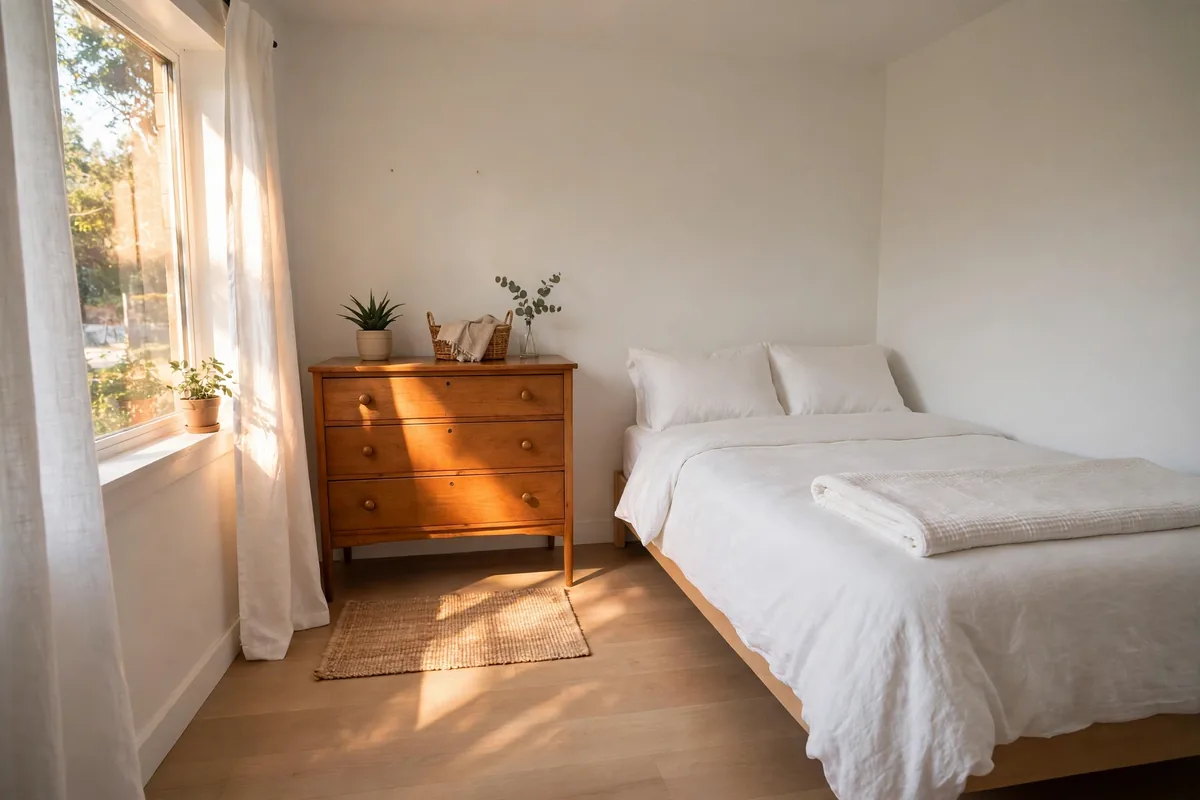
Pushing a queen into a corner frees the most floor space. In a very small bedroom that matters a lot. For one sleeper it's often the best layout. You get one clear side for getting in and out. You also get a long stretch of open floor. That space can hold a dresser or a desk. Your door swing stays fully clear too. A corner bed also suits a room with one short usable wall. The two walls together hold the bed steady. You don't need a wide headboard then.
The trade off is real. It grows with two sleepers. The person against the wall must climb over the other person at night. Changing sheets is harder too. You must pull the whole bed out. Or you must wrestle a fitted sheet in a gap. A corner is a bad choice if it blocks a closet door. It's also bad if it blocks a window you need for air. And it's bad if it blocks your only walkway to the door.
Narrow bedrooms and rooms with two doors
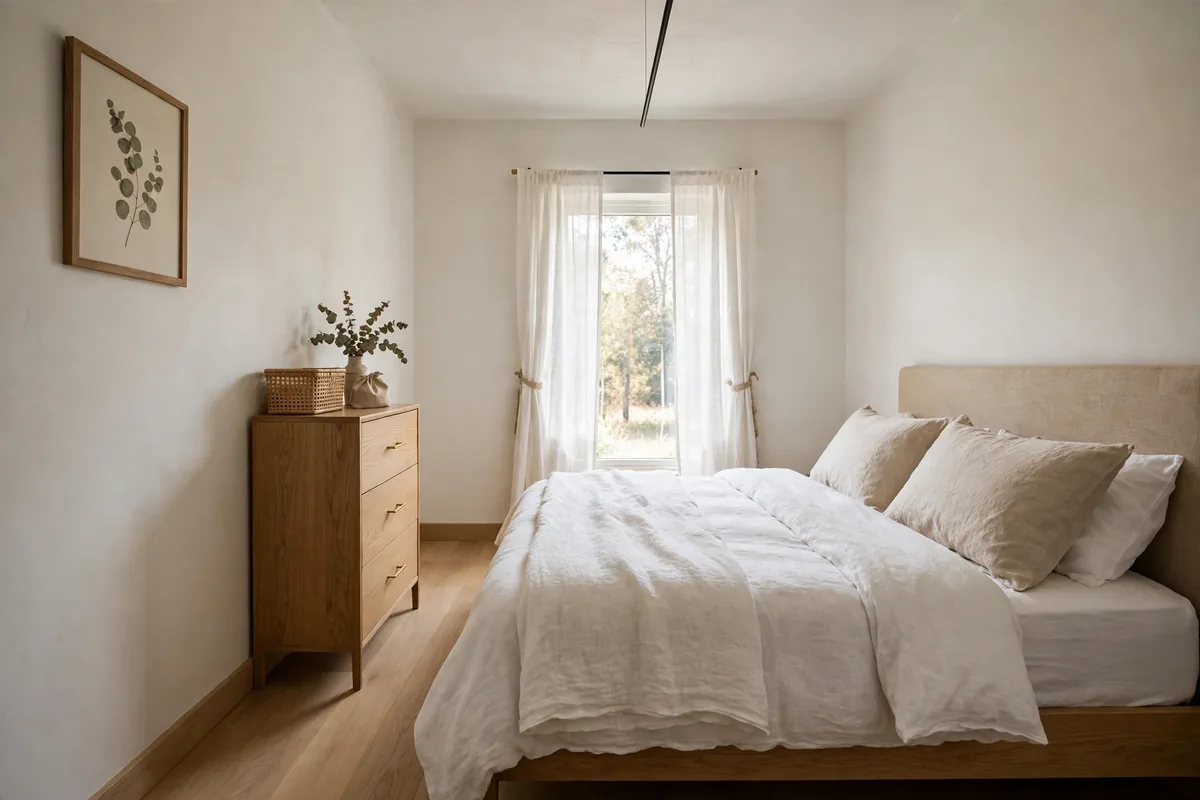
In a narrow bedroom, run the bed lengthwise along the long wall. One path of 30 to 36 inches feels calm. It runs the length of the room. Two paths of 18 inches each feel like a corridor. They fail at the closet and the dresser and the door.
Rooms with doors on two walls need extra care. Protect the path between those doors first. Tape both door swings. Then tape the straight line between them. Only then fit the bed around what is left. Never block a door swing with a bed corner. You'll hit it every morning. In an emergency you need that exit clear. The same walkway first rule shapes narrow living room layouts too. There one protected path matters more than extra seating.
Windows, closets and radiators: the conflict order
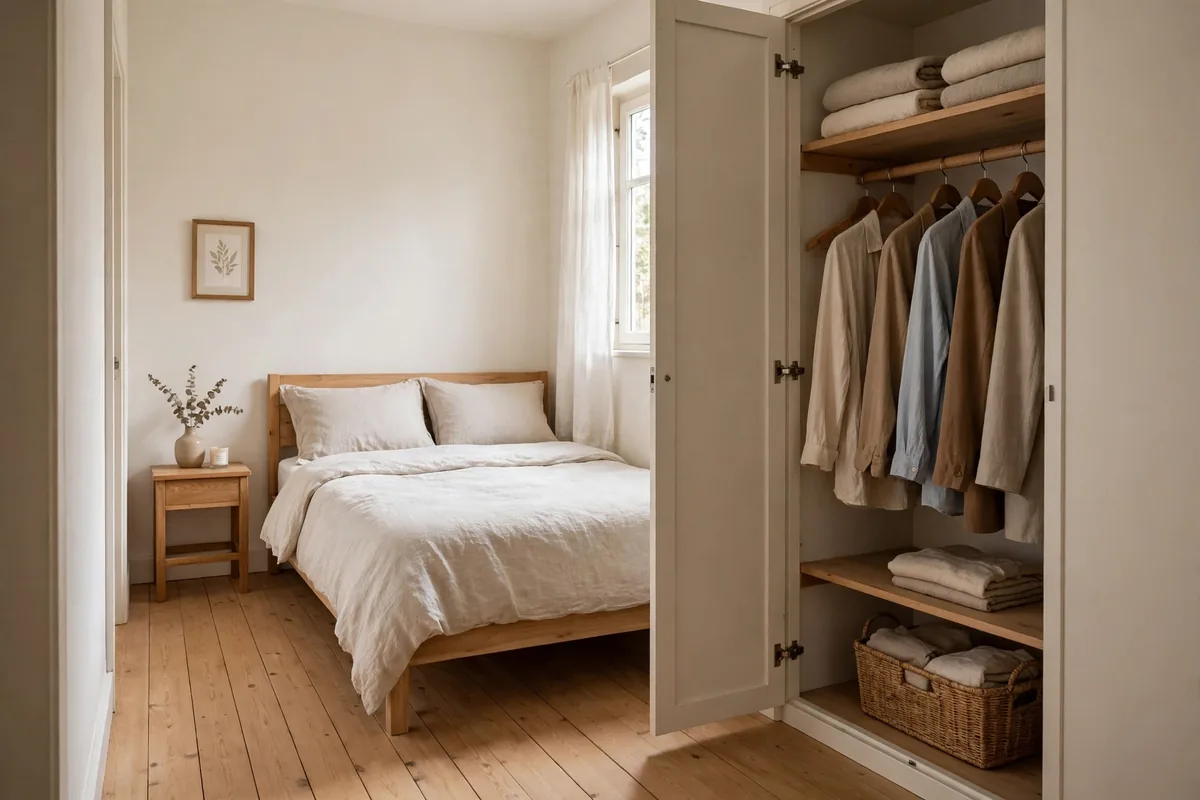
When every wall has a problem, decide in this order. Put door swing and exit first. Put closet access second. Put window use third. Put radiator clearance fourth. A bed that blocks a door is a safety problem. A bed that blocks a closet turns dressing into a chore. Clothes usually end up on a chair then. A bed under a window is workable. A bed in front of a radiator that can't breathe isn't. Blocked airflow wastes heat. It can damage bedding over time too.
If the only solid wall has a window, use that wall. Put the headboard under the window and keep it low. Or skip a tall headboard altogether. They keep the window usable and the room balanced. Curtains hung high and wide help too. They stop the bed from looking crammed against the glass. Check that the window still opens. Check that you can reach the lock. Check that no curtain drapes over a pillow all night.
Nightstands, lamps and storage when one side is tight
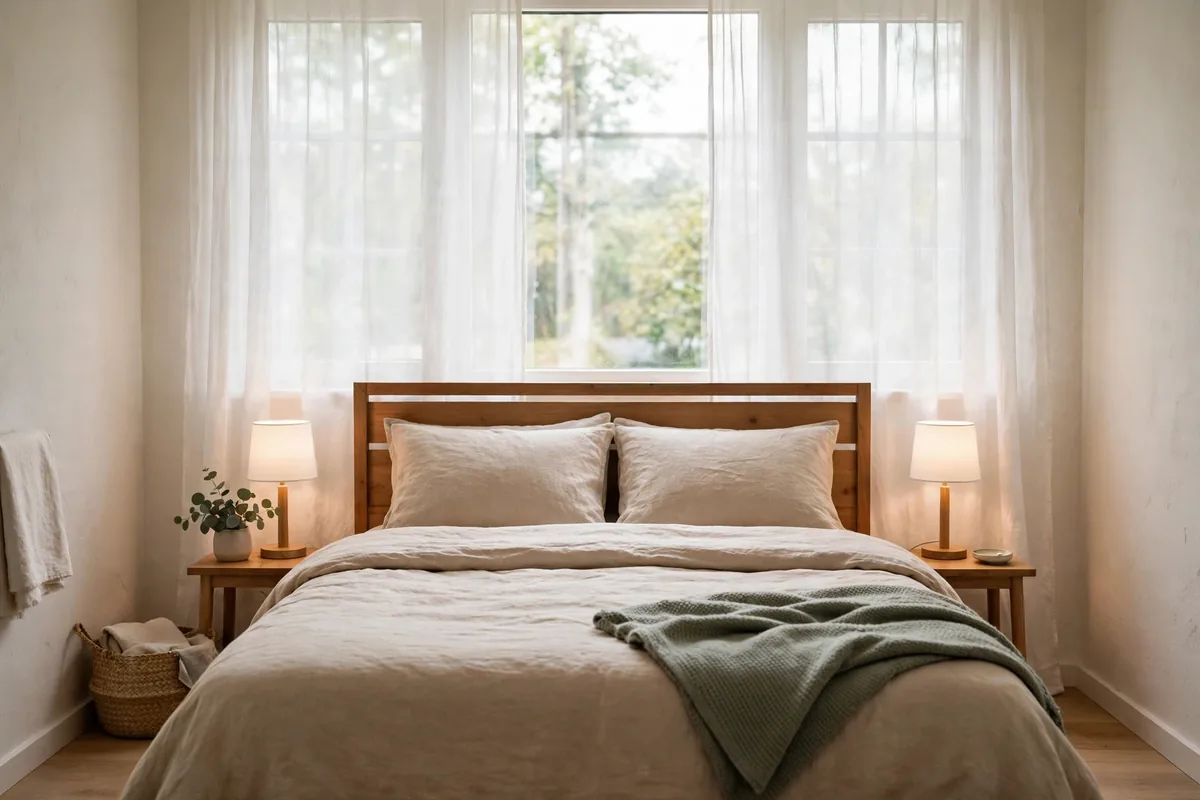
A tight side doesn't mean no storage. It means storage that doesn't sit on the floor in the walkway. Try a narrow stool about 12 inches wide. Try a wall shelf just above mattress height. Or try a headboard with a shallow shelf. They do this without blocking your feet. Under bed rolling bins take the bulky items. Use them for off season bedding and spare blankets. Then the room itself doesn't have to hold them.
Lighting matters more than a second nightstand here. Put one warm lamp on the generous side. Choose 2700K to 3000K for a cozy room. Add a clip on light on the tight side. You don't need two bulky lamps. If clothes storage is the real squeeze, try the system in how to organize a small bedroom with no closet. It uses hanging and folded and hidden zones. It sets a limit on each zone. That moves clothes off the chair and out of the walkway. It pairs well with a queen bed.
Rug, bedding and colour: making a queen look intentional
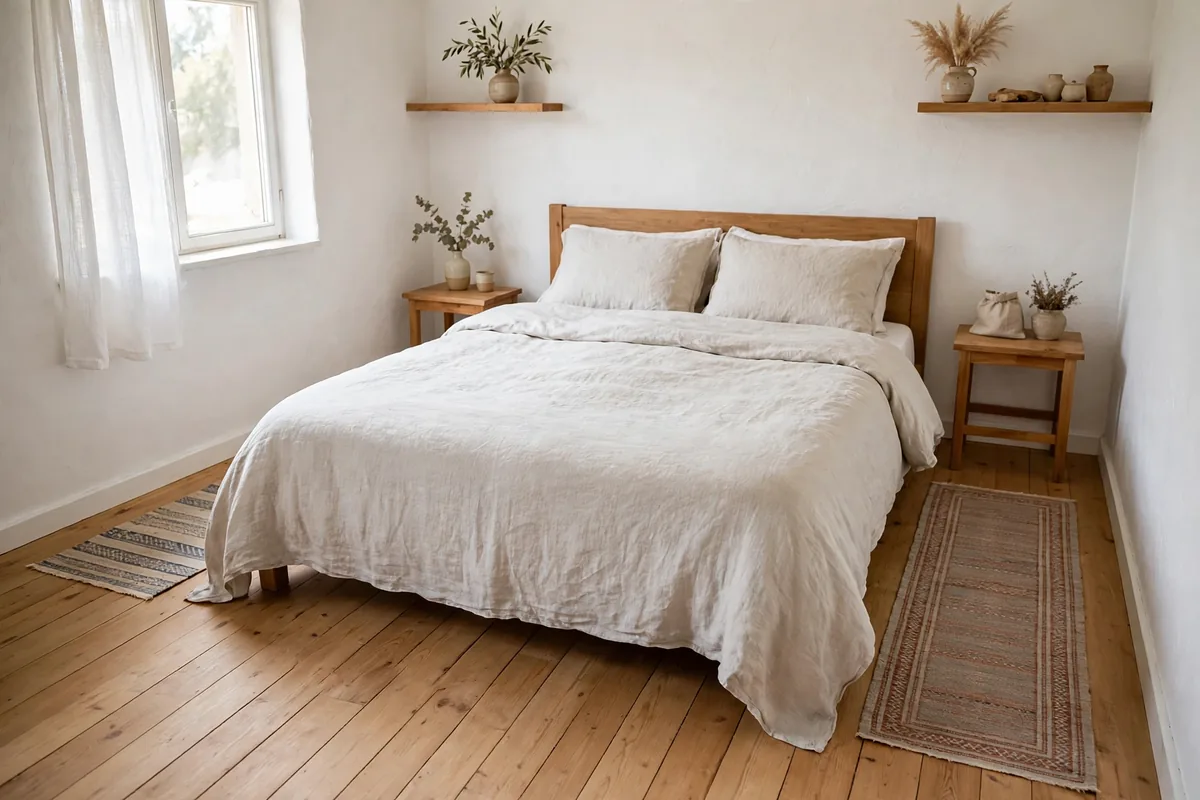
A rug under a queen should be large enough to step onto. A small mat will slide around the foot. An 8 by 10 foot rug is the classic fit for a queen. The bed sits on its upper two thirds. Rug shows at the foot and sides then. In a 10 by 10 room that leaves little bare floor. Use two runners, one on each side of the bed. Or place a rug across the foot of the bed. Let it extend about two thirds of the bed width.
Bedding and colour do the rest of the work. Choose a lighter duvet cover. Stack pillows rather than spreading them across the whole bed. Repeat one accent colour through the room. That keeps a large bed from dominating the room. The mirror and curtain tricks in how to make a small room look bigger help here too. Use one large mirror opposite a window. Hang curtains high and wide. Then your eye has somewhere to go beyond the bed.
When a queen bed honestly doesn't fit
There's a point where a queen stops being a comfort choice. Past that point it becomes a daily annoyance. If you can't keep at least 24 inches on one side, the queen doesn't fit. You also need a clear door swing. You need access to the closet and window too. The queen doesn't fit that room even if the tape outline squeezes in. Watch for warning signs. A door hits the bed. Drawers can't open fully. You have stopped using the closet. You turn sideways in the walkway every time.
A double bed measures 54 by 75 inches. It gives you 6 extra inches of width. It gives you 5 extra inches of length. That's often exactly the difference you need. For one sleeper, a twin XL is worth a look. It keeps the length of a queen. It does this in a much narrower footprint.
Renter branch and a final checklist
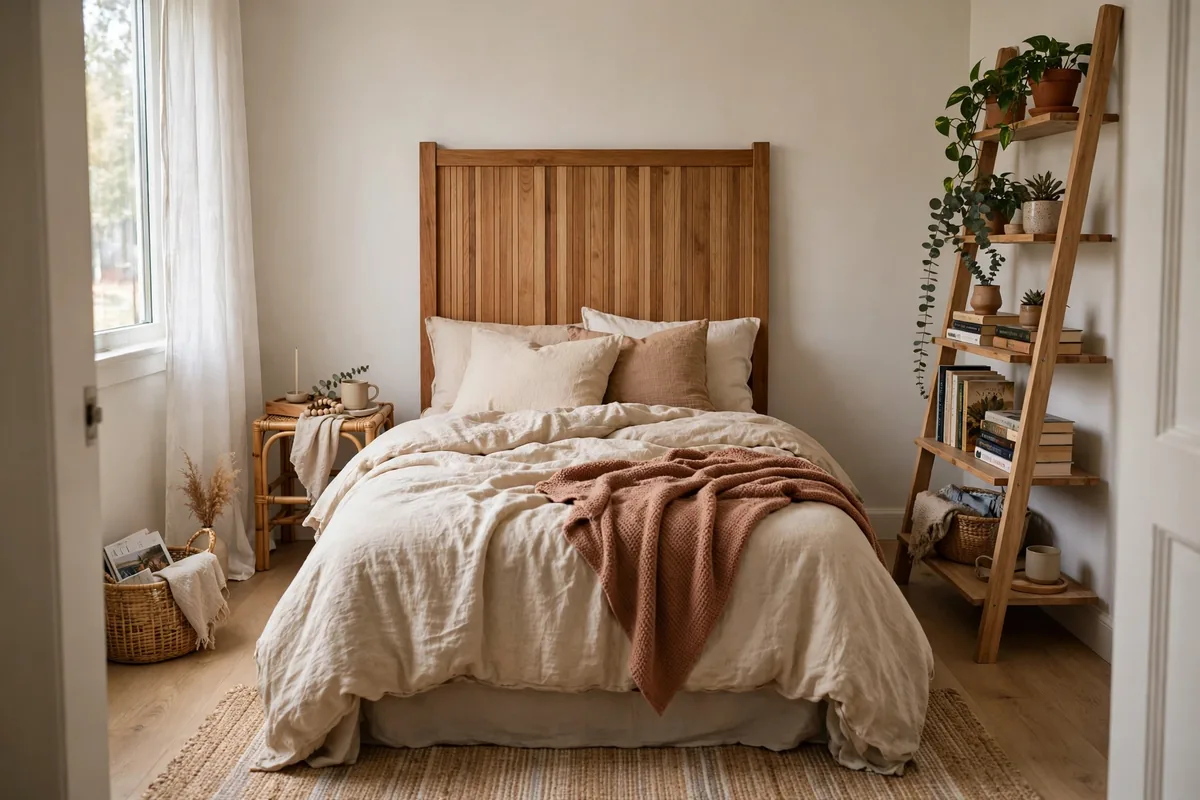
Renters don't need to drill to make a small bedroom work. Use a freestanding headboard instead. Use a leaning shelf instead. Or use adhesive hooks rated for the weight. Use them on smooth paint only. Check your lease before using heavy wall shelves. Textured and flat and chalky paint is the risk zone. That's where adhesive damage and deposit loss are most likely. Fresh paint needs 2 to 4 weeks or more to cure. Test a hidden spot for a week first. That test is cheaper than a repaint charge.
Run this checklist before you order. Write down the frame size. Tape the door swing and keep it clear. Keep 30 to 36 inches on your getting out side. Or keep 24 inches as a tight minimum. Keep the closet and window usable. Put a light on each side. You don't need a full nightstand for that. Plan a rug that leaves a walkway. If every box ticks, a queen bed will feel generous. More layout and storage and lighting guides for the same room are on the SmallRoomly blog. Each guide links to the next step for that room.
Frequently asked questions
Can I fit a queen bed and two nightstands in a 10x10 bedroom?
Usually not with comfortable walkways. A queen frame of about 62 to 64 inches wide takes a lot of room. Add two standard nightstands. Then little room is left for a 30 to 36 inch walkway. The room is only 120 inches wide.
What do I do when a queen bed blocks the closet door in a small bedroom?
Move the bed first. Do this even if the new layout feels less obvious. A blocked closet pushes clothes onto a chair. Clothes also spill into the walkway. Then the room feels smaller than it should. A different bed position often feels bigger.
How do I change sheets on a queen bed pushed into a corner?
Pull the bed out from the wall if you can. Even a foot helps a lot. Change the wall side first. Then push the bed back. But it beats wrestling a fitted sheet in a gap.
Does a queen bed fit in a 9x11 bedroom with the door on the short wall?
Yes, it can work. Put the headboard on a long wall. Keep the door swing fully clear.
Should I choose a low platform frame or a storage bed for a queen in a small bedroom?
Choose a low platform frame if walkway space is tight. It looks lighter in the room. It leaves visual room around the bed.