 smallroomly
👗 How to Organize a Small Bedroom With No Closet (Renter-Friendly, Under $50 to Start)
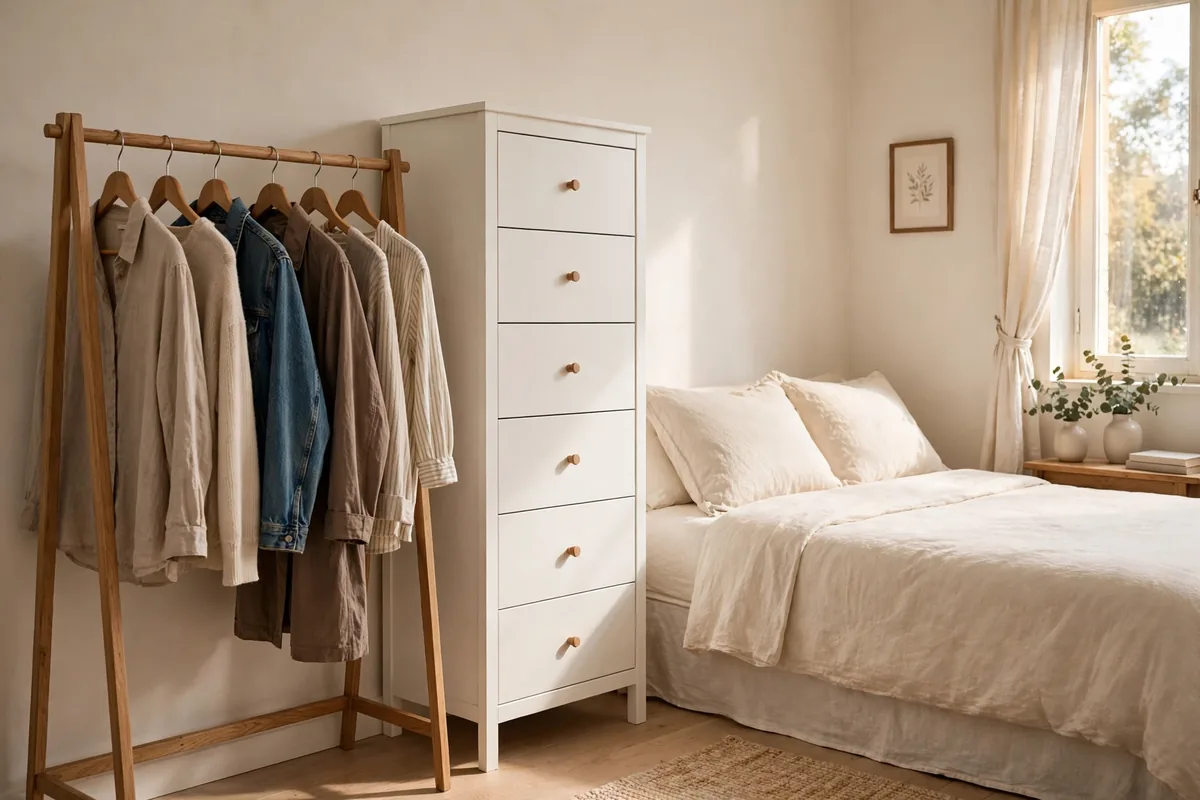
A bedroom with no closet feels impossible at first. It feels fine once you build the closet yourself, in zones. You need a hanging zone, a folded zone, and a hidden zone. Each zone needs a limit. That system beats a pile on a chair. It also beats a rack that looks like a shop. This guide builds that system for you. It gives you the measurements that keep walkways clear. It gives you a capsule rotation too. Only the current season stays visible. It also gives you a renter friendly starter set under $50. You need no drilling and no built ins. Everything here moves with you.
Count what you actually own before you buy storage
Storage fails most often because it's bought before anyone counts the clothes. Empty every pile, drawer, and chair onto the bed. Sort them into groups. Make a group for hanging clothes. Make a group for folded clothes. Make groups for shoes and bags too. Make a group for off season items as well. Count the hanging pieces roughly. Note how many need a hanger and how many need a fold. Be honest about what you haven't worn in a year. That count decides what you need. It decides if you need a rack, a dresser, or both.
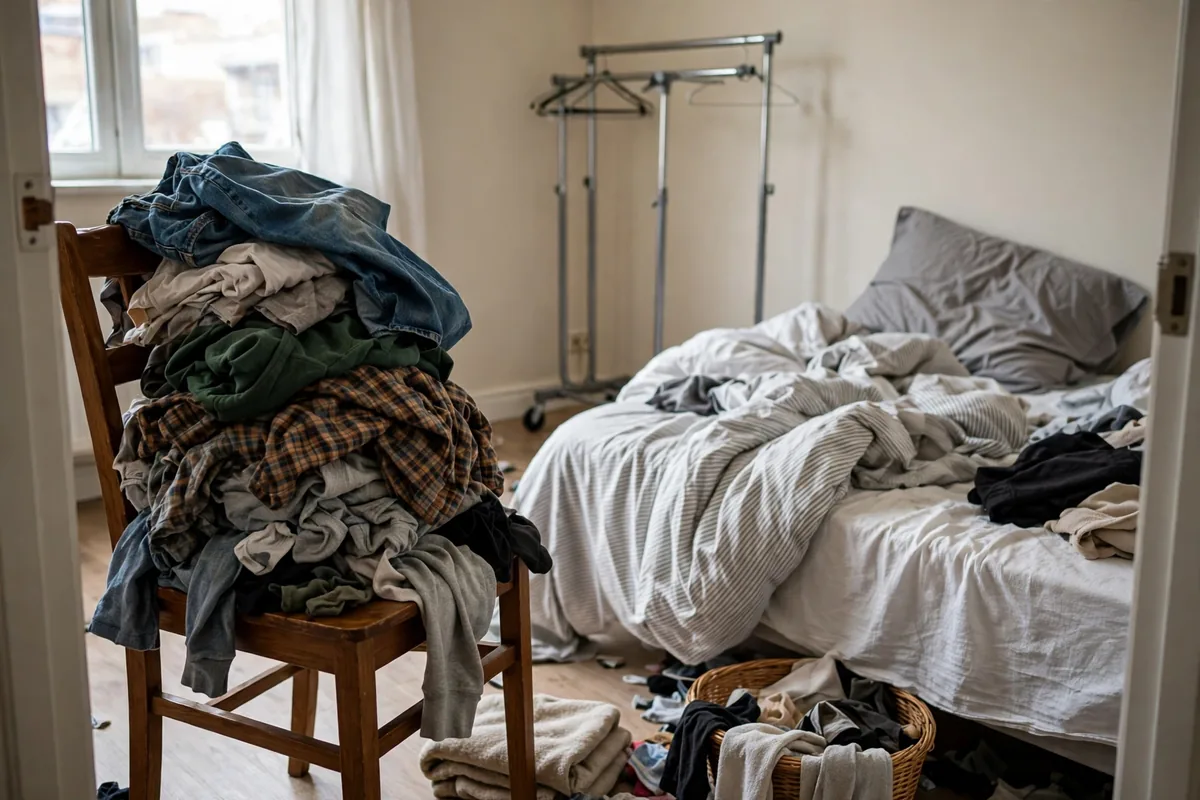
Then decide what leaves before you build the system. Clothes that are damaged go first. Clothes that don't fit go too. Clothes you haven't worn in a full year go as well. Send them to donation or recycling. A rack holds a fixed number of hangers. A dresser holds a fixed number of drawers. Every item past that limit becomes a pile. If you skip the count, you'll buy storage for clothes you don't wear. You'll still have nowhere for the clothes you do wear.
Zone 1: hanging on a freestanding rack
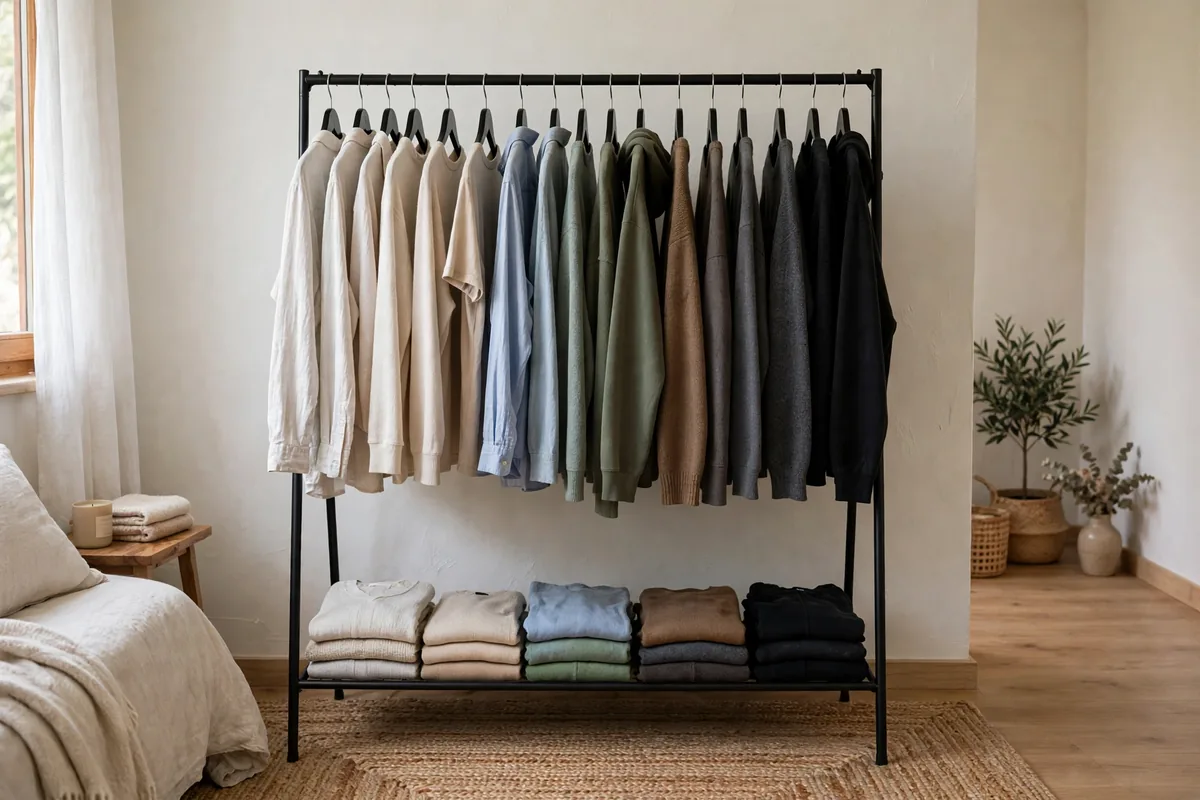
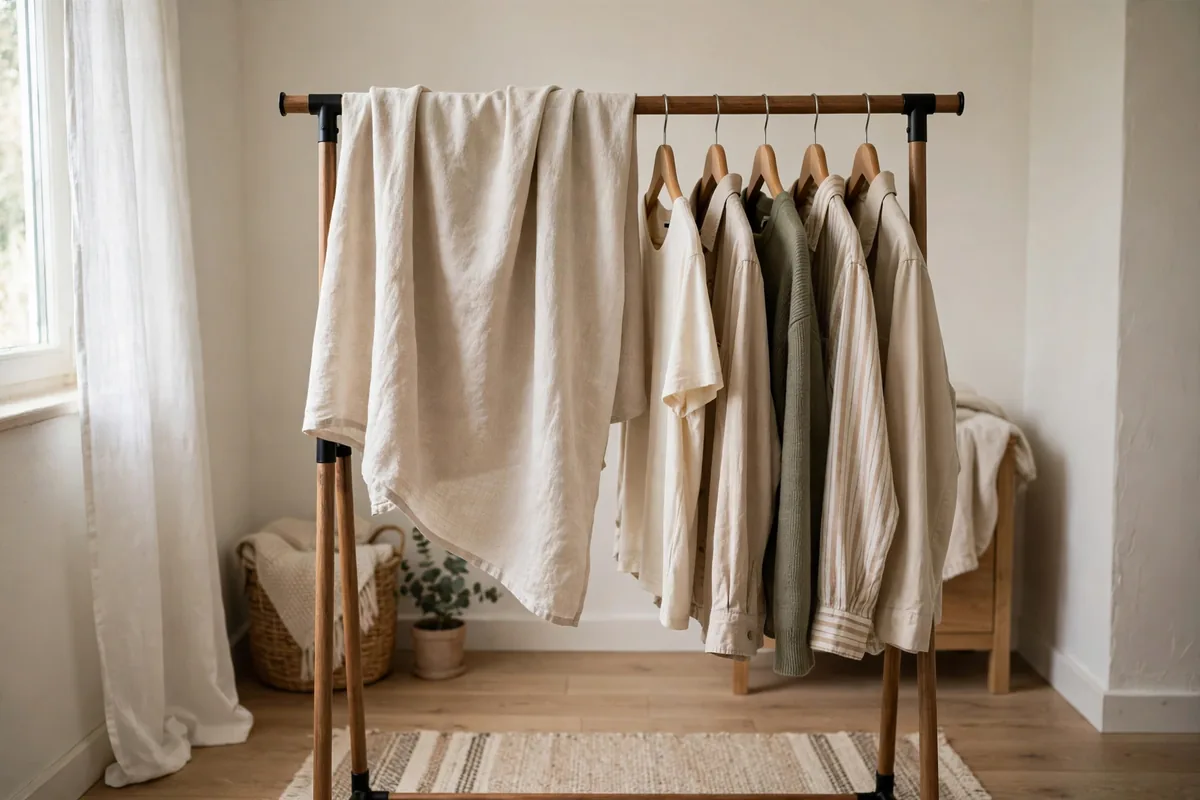
A freestanding rack, a double rail, or an over door rail can replace a closet rod. Choose a rack with a sturdy base and a lower shelf. A top heavy rack tips when it's loaded on one side. Allow 22 to 24 inches of depth from the wall. Measure to the front of the bulkiest hanging coat. Then check the walkway past it. Keep 30 to 36 inches where you walk daily. Accept 24 inches as a tight minimum. If the rack eats the walkway, it belongs on a different wall.
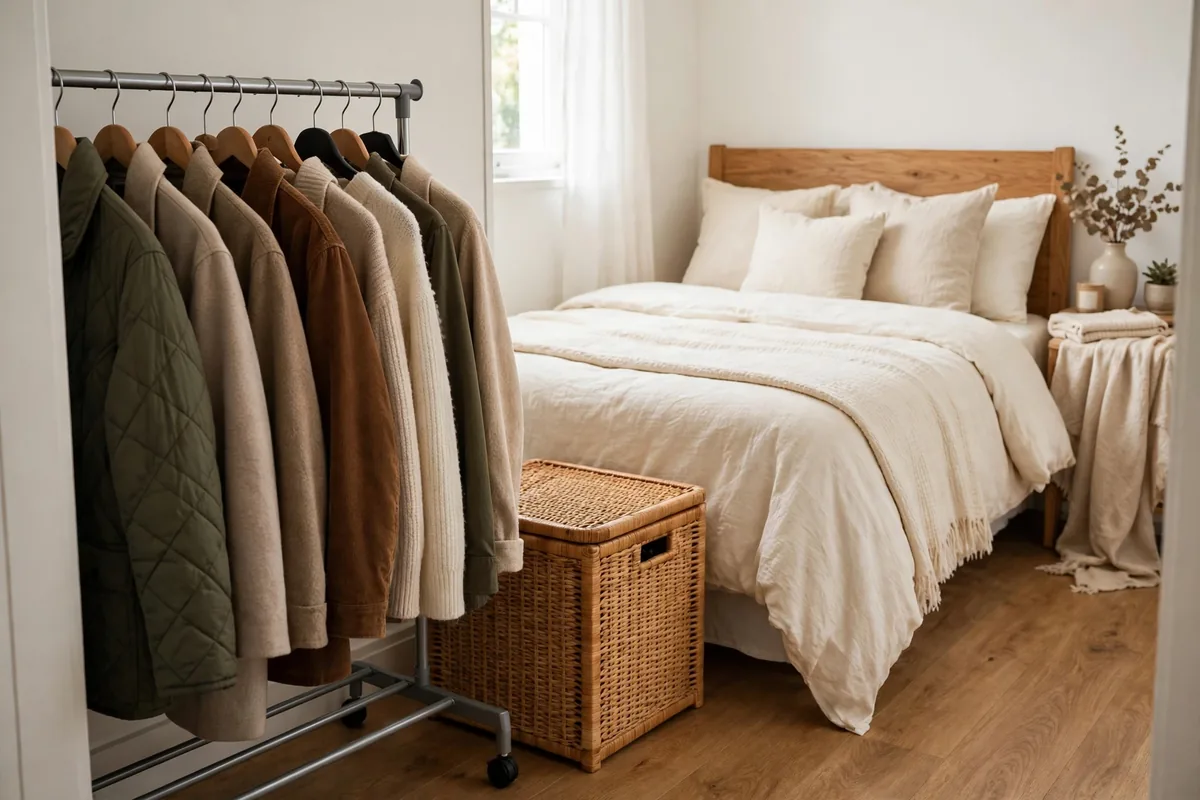
Hang by category first, then by colour inside each category. Put shirts together, then pants, then jackets. Put light colours on the left and dark colours on the right. That order makes an open rack look like a shop display. Use matching hangers throughout. Mixed hangers make a tidy rack look messy fast. A set of matching hangers is one of the cheapest upgrades in this guide.
Zone 2: folded in a tall narrow dresser
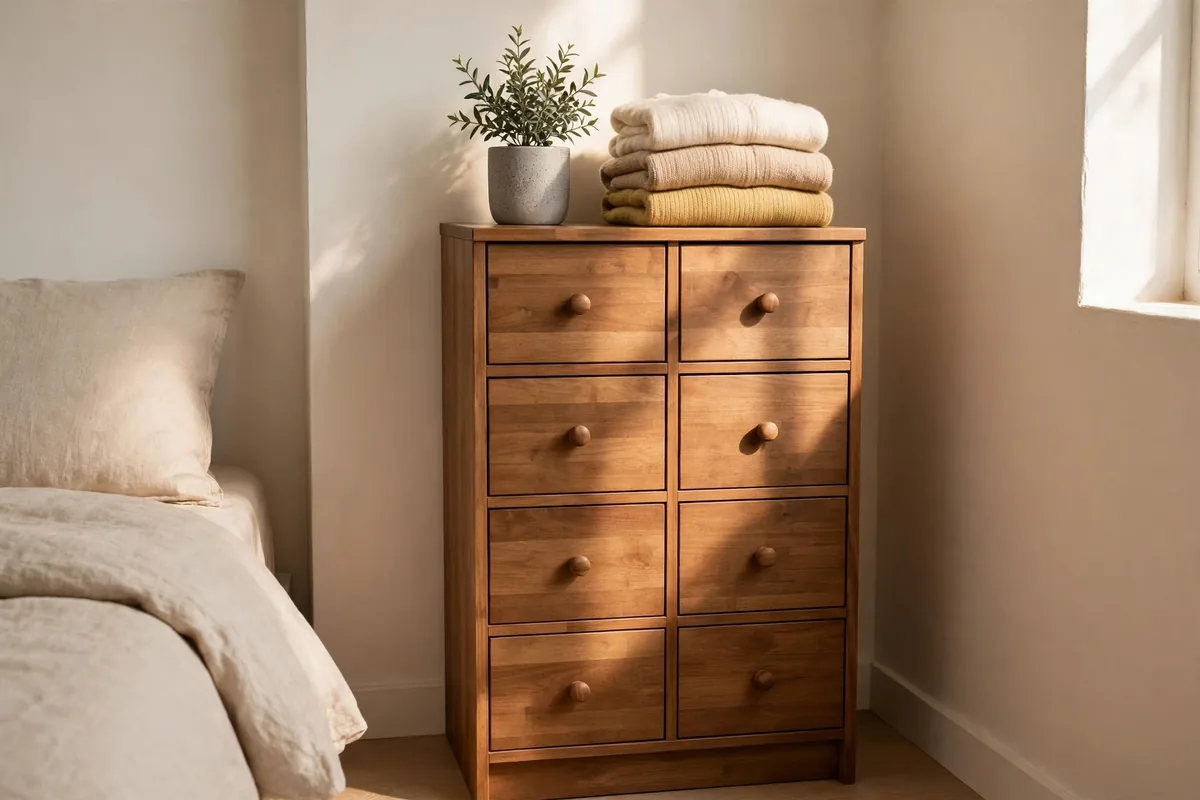
A tall narrow dresser beats a wide dresser in a small bedroom. Vertical storage uses wall space, not floor space. A unit roughly 30 inches wide and 48 to 54 inches tall fits most small bedrooms. Put daily clothes at waist height. You can reach them without bending or stretching. Put rarely worn items in the top or bottom drawers. If the dresser is taller than you can reach comfortably, the top drawer becomes dead space. Measure your reach before you buy height.
Fold by category and file your clothes. Don't stack them in deep piles. Stand folded shirts on their edges in the drawer like files. You can then see every shirt without lifting the top five. A drawer you have to dig through will be a mess within a week. Label drawers if you share the room. A shared dresser without labels becomes two people's piles in one piece of furniture.
Zone 3: cube drawers and dividers for the small stuff
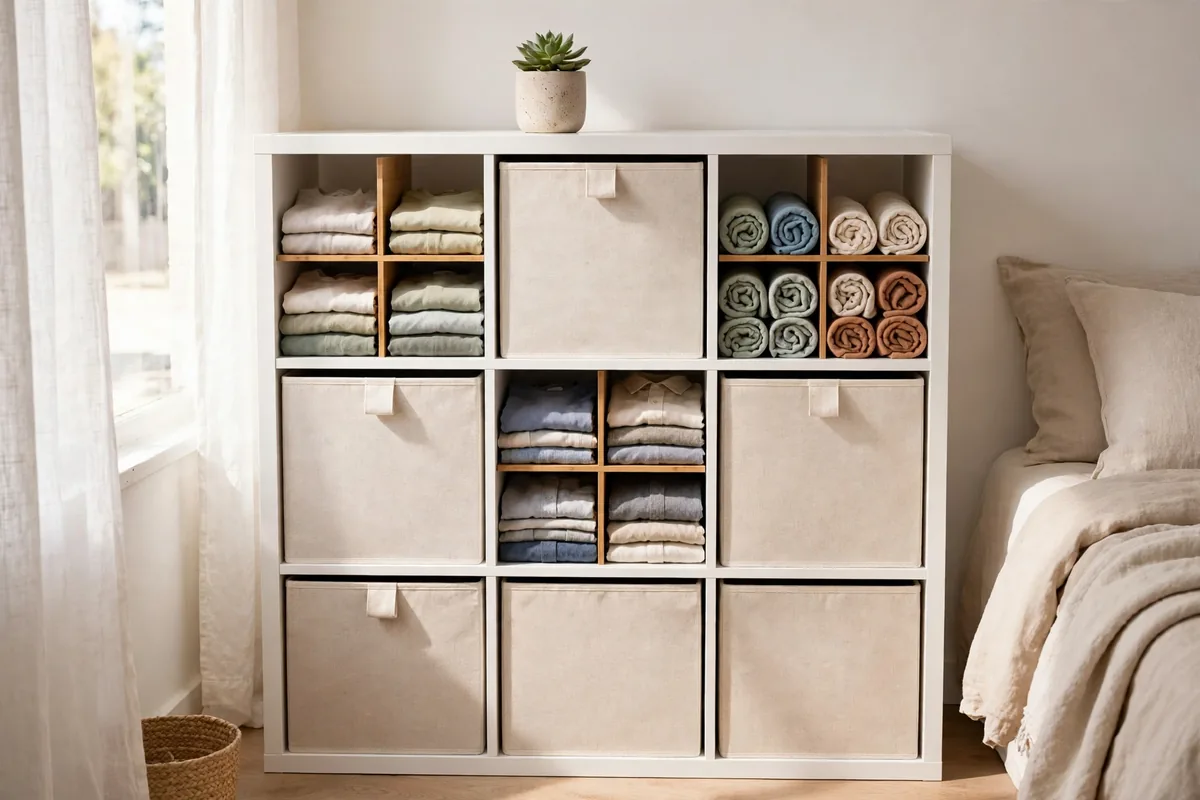
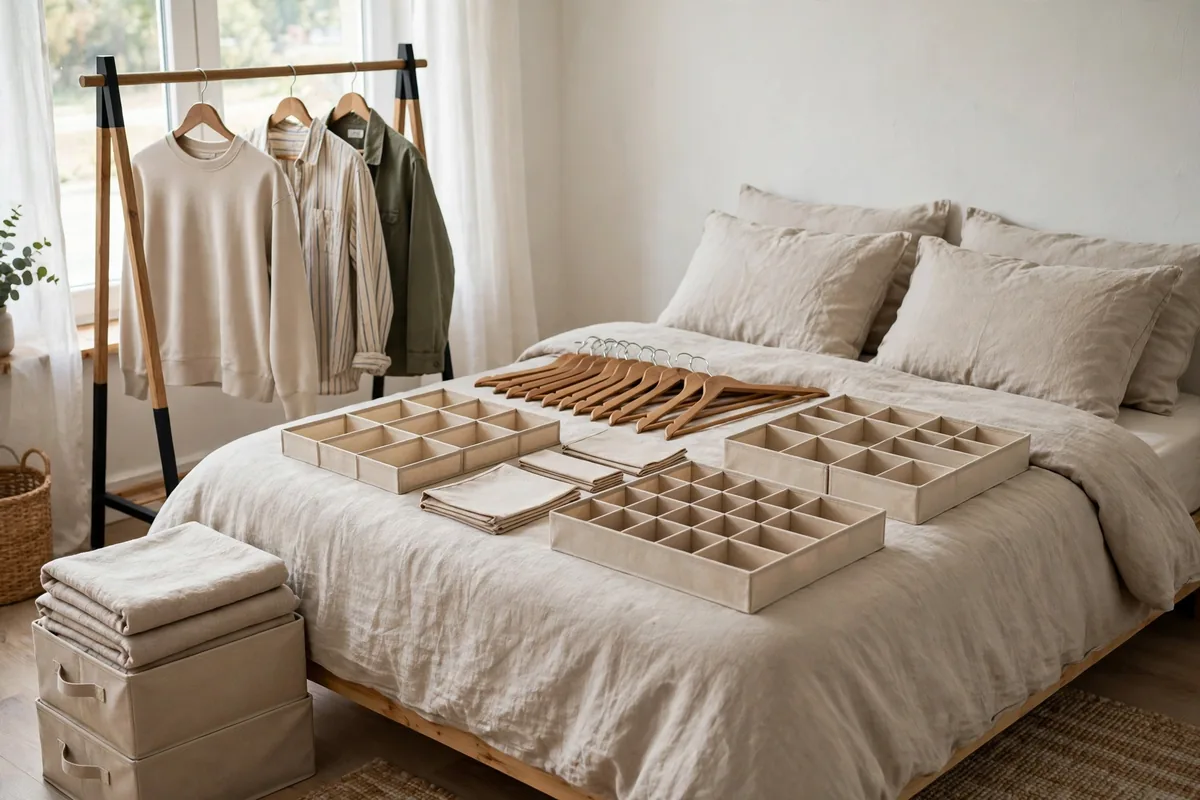
Cube drawers work where a dresser won't fit. They can double as a room divider in a studio or a shared room. Use fabric bins inside the cubes for underwear, socks, and accessories. Add drawer dividers inside each bin. One cube per category is the rule. Use one cube for underwear. Use one cube for socks. Use one cube for accessories. Use one cube for workout clothes. When a cube is full, its category is full. That's the container limit rule doing its job.
Hidden zone: under bed bins by season
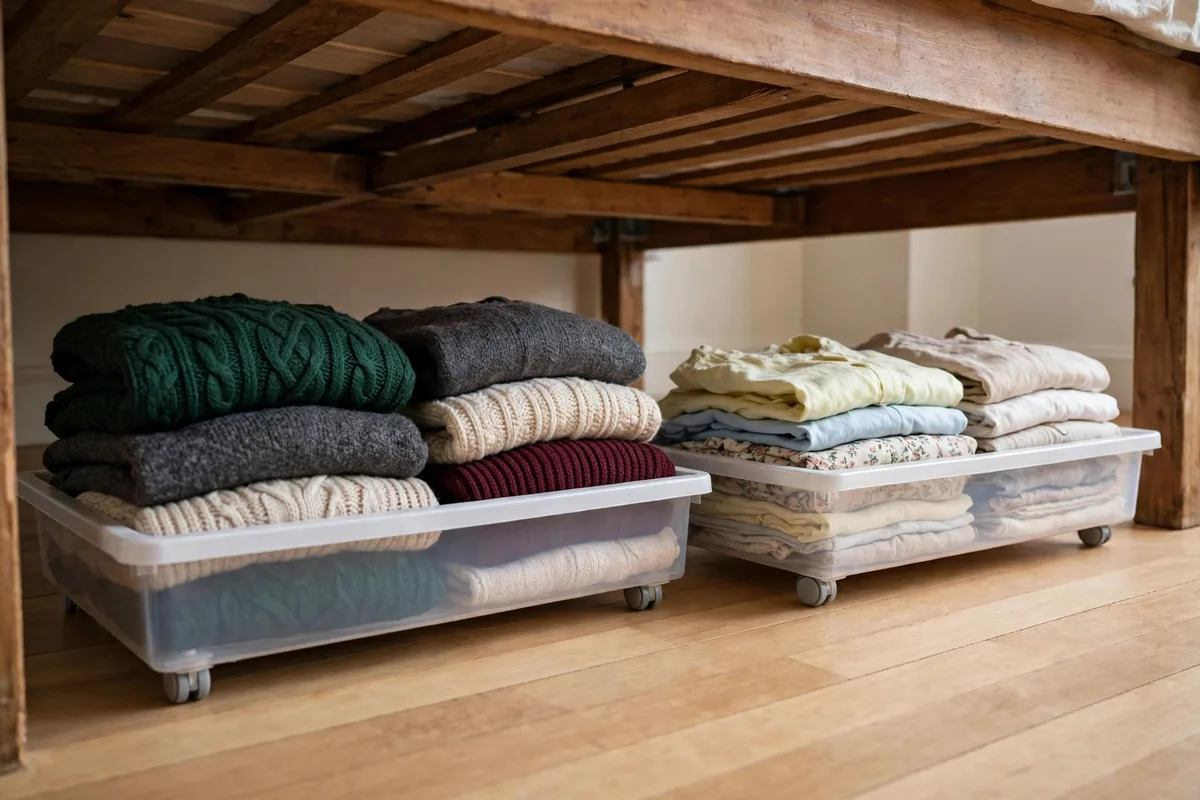
Under bed bins are the hidden zone. They only work if you can reach them. Measure the clearance under your bed first. Many frames give 6 to 10 inches. Shallow rolling bins fit that space. If clearance is under 6 inches, bed risers are an option. They add 3 to 6 inches. Put bins on the side you can reach without moving furniture.
Label bins by season, not by misc. Winter, summer, and occasion wear are useful labels. Put off season clothes in the bins, folded and clean. Put a sheet of paper on top listing what is inside. That list stops you buying a second black sweater. When the season changes, swap the bins in one sitting. Take the current season out. Put the past season in. The visible room stays the same size all year.
Capsule rotation: how it works week to week
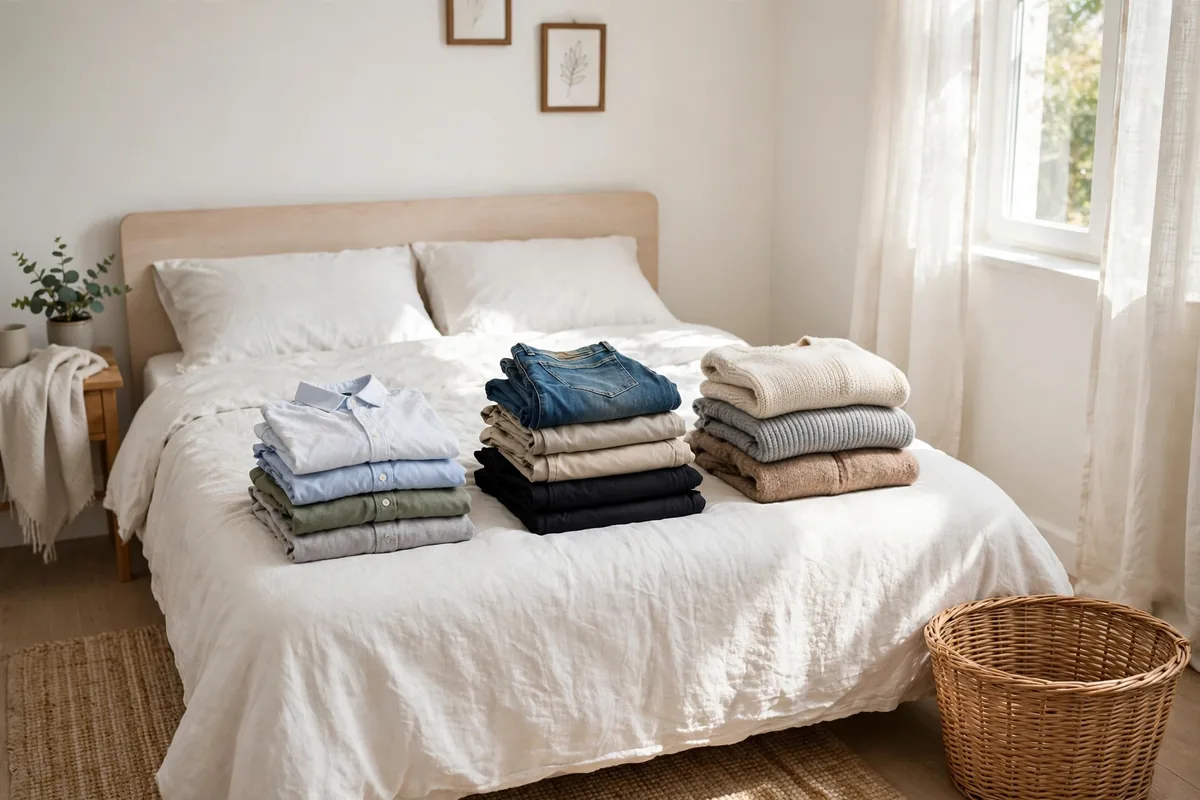
A capsule rotation means wearing a smaller set of clothes for the season. You store the rest. What you see each day is only what you actually wear. Start with about two weeks of outfits. Add uniforms and one smarter outfit. Keep that set on the rack and in the dresser. Put everything else for the season in a labelled bin. Keep off season clothes under the bed. The visible set should fit its zones with breathing room. If the rack is packed edge to edge, the set is too big.
Rotation happens twice a year. Add a small swap when the weather turns. At each change, take the bin out. Try on anything you're unsure about. Return anything unworn to donation before it goes back into storage. Don't count on a percentage saving. Wardrobes differ too much for one number to be honest. You face fewer visible choices each morning.
Making open storage look intentional, not messy
Open storage looks intentional when three things match. Those things are hangers, colour order, and a limit. Matching hangers and colour order are covered above. The limit's the rack itself. Leave a few inches of empty rail at one end. A rack stuffed to both ends looks like storage overflow. If the rack still bothers you visually, cover it with a light linen curtain. Hang the curtain from the rack's own frame. Keep the cover easy to lift. If you don't, you'll stop using the rack.
Tight rooms: depth, walkways, and door swing
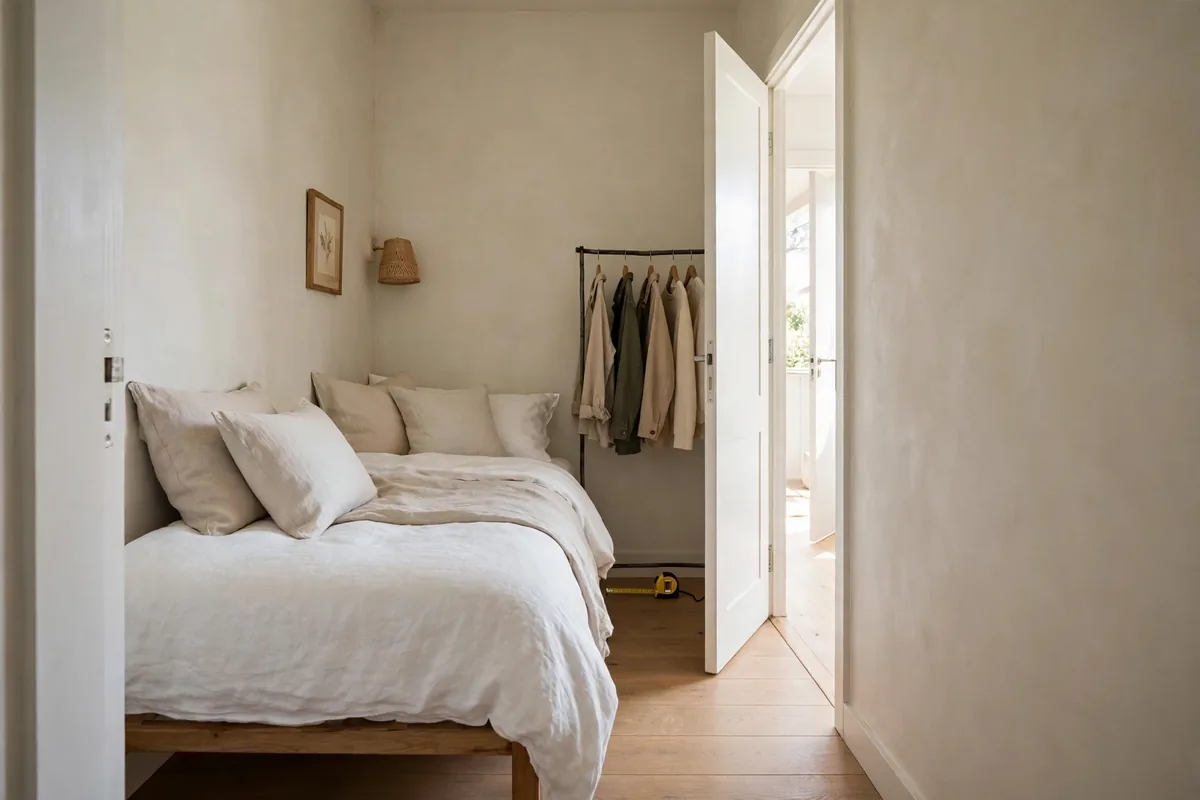
In a tight bedroom, placement matters more than the rack you buy. Put the rack on the longest solid wall. Never put it across a door swing. Never put it in front of the only window if you can avoid it. Mark the door swing on the floor with tape. Allow about 30 inches of clear arc. Keep that arc empty. A rack that blocks a door isn't just annoying.
Check the full path, not just the rack spot. Walk from the door to the bed. Walk to the rack and to the dresser too. Notice where you turn sideways or catch a sleeve. If you turn sideways, the walkway is under 24 inches. Move the rack to a longer wall. Move the dresser to a narrower one. Or move the bed a few inches. Use the free room planner to test the layout with your room size before you buy. See our guide to studio apartment layout by shape if the bedroom is part of a studio.
When this doesn't work, and the renter branch under $50
This system fails in three predictable ways. First, a rack that's too deep for its wall blocks the walkway. Measure depth from the bulkiest coat, not the frame. Second, a dresser that's too tall becomes dead space at the top. Measure your reach. Third, a rotation that's never done becomes two wardrobes in one room. Put the seasonal swap on the calendar twice a year. If the chair pile returns, don't buy more storage. Check which zone is missing or too hard to reach.
For renters, start under $50 with what you already have plus three purchases. Buy a freestanding rack or a low cost rail. Buy drawer dividers. Buy under bed bins you may already own. You need no drilling and no built ins. Photograph the room on move in day. Check your lease for adhesive and wall rules before you add hooks. See the small room storage hub and the SmallRoomly homepage for the next step. That step could be small bedroom storage without drilling or a layout plan for the same small room.
Frequently asked questions
How deep does a freestanding clothing rack need to be so clothes don't block the walkway?
Allow 22 to 24 inches of depth for the rack plus hanging clothes. Measure from the wall to the front of the bulkiest coat. Don't measure to the rack frame. Check that at least 24 inches of walkway remains past it. If it drops below that, use a slimmer rack or a longer wall.
What goes in each zone when a bedroom has no closet and only one wall free?
Hanging clothes go on that wall. Folded clothes go in a tall narrow dresser or cube unit on the same wall if it fits. Off season clothes go under the bed. Shoes go in a basket or on the rack's bottom shelf. Bags go on a hook on the bedroom door.
How many outfits should stay visible in a no-closet capsule rotation?
Keep about two weeks of outfits you actually wear visible. Add uniforms and one smarter outfit. Put everything else for the season in a labelled bin. Keep off season clothes under the bed. If the rack is packed edge to edge, the visible set is too big.
Where do shoes, bags, and accessories go when there's no closet door to hang things on?
Shoes go in a low basket by the rack or on its bottom shelf. Never leave them in a pile by the door. Bags go on a freestanding hook stand or an over door hook on the bedroom door. Accessories go in one divided drawer or one small tray on the dresser.
How do I stop a no-closet bedroom from sliding back into a chair pile?
Treat the chair pile as a signal. One zone is missing or too hard to reach. Give tomorrow's outfit a hook. Give laundry a basket by the rack. Do a two minute nightly reset. If the pile returns daily, fix the zone before you buy more storage.