 smallroomly
💡 How to Light a Room With No Overhead Lighting (Renter-Friendly, Cozy, Not Dim)
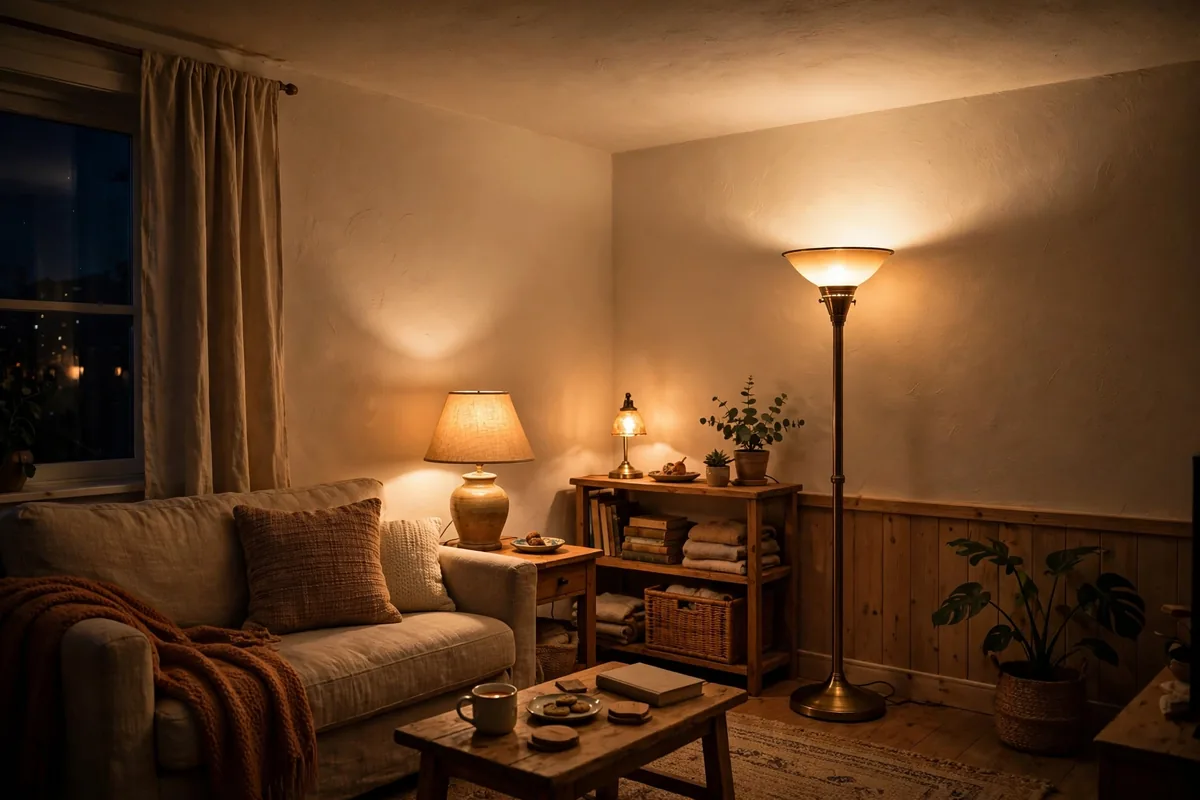
A room with no ceiling light isn't doomed to be dim. It's doomed only if you swap one overhead fixture for one harsh lamp in the middle of the room. Cozy rooms are lit in layers. Light bounces off the ceiling so the whole room glows. Light sits at the height where you sit and read. A small warm glow makes the room feel finished at night. Build those three layers with plug in lamps. Then a room that once felt like a cave starts to feel intentional. It feels easy to live in after dark.
The three-layer plan, in the order to build it
Think of lighting as three jobs. The first job is general glow. That's enough soft light to walk around and find things and see faces without squinting. The second job is task light. That's a focused warm pool where you read and work and eat. The third job is the small glow. It makes the room feel cozy when the day is done.
Height matters as much as brightness. A ceiling bounce source sits high and throws light upward. A seating lamp sits at shoulder height when you're sitting. A small glow sits low, near the bed or sofa. The free room planner helps you test where seating and walkways actually sit before you place lamps. Then a floor lamp doesn't end up blocking the 30 to 36 inch path you walk every day. It doesn't narrow it to less than the 24 inch minimum that still feels usable.
Layer 1: bounce light off the ceiling with a torchiere
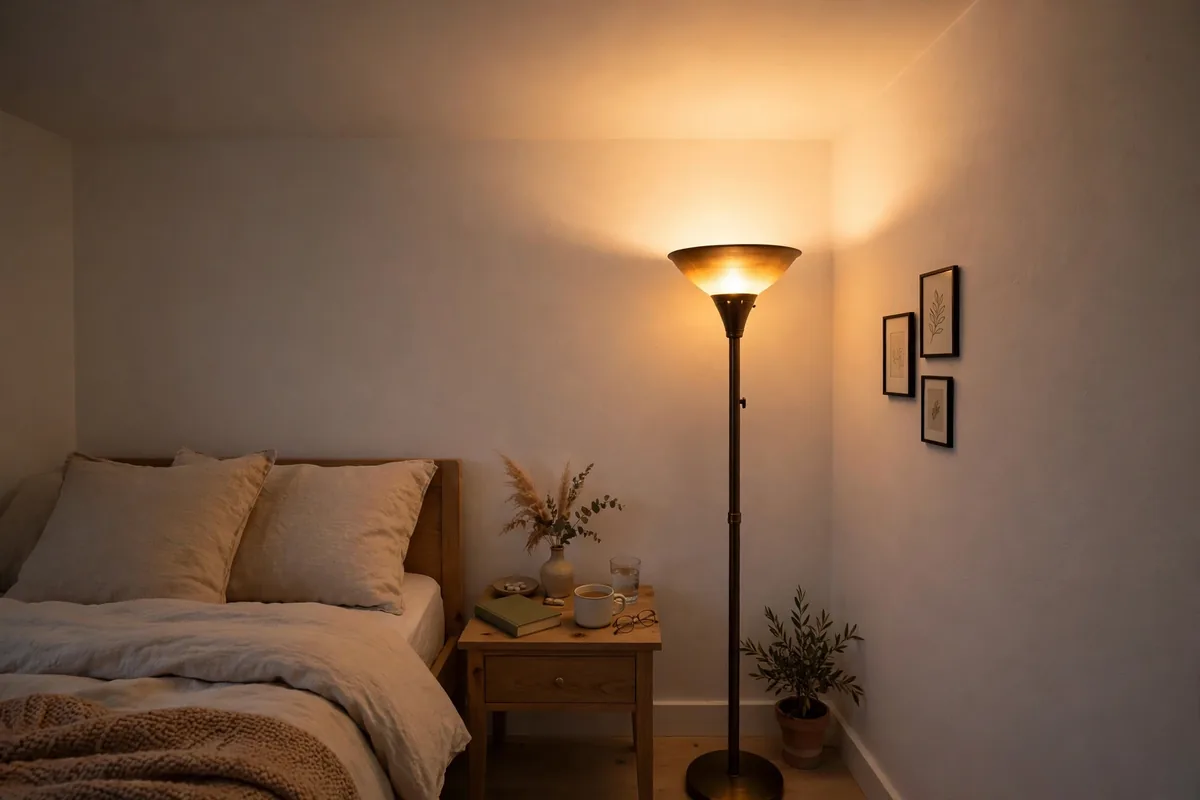
A torchiere floor lamp in a corner is the closest plug in replacement for a missing ceiling light. Its upward bowl throws light onto the ceiling. The ceiling then spreads it softly across the room. Place it in a corner, not the centre. Then the glow spreads along two walls. It doesn't create a bright spot directly above your head. Keep it away from curtains and bedding. Keep it away from anything that could drape over the bowl. Check that the ceiling is light enough to bounce light. A white or warm white ceiling works well. A very dark ceiling will absorb the glow. It will leave the room dim no matter how bright the bulb is.
LED strips on top of a tall bookcase or wardrobe do the same job in a different shape. Aim them at the ceiling. Hide the strip behind the top edge. Then you see the glow, not the diodes. Run the cable neatly down the back of the furniture to an outlet. This is a ceiling glow, not a reading light. It will make the room feel open. But it won't by itself light a book.
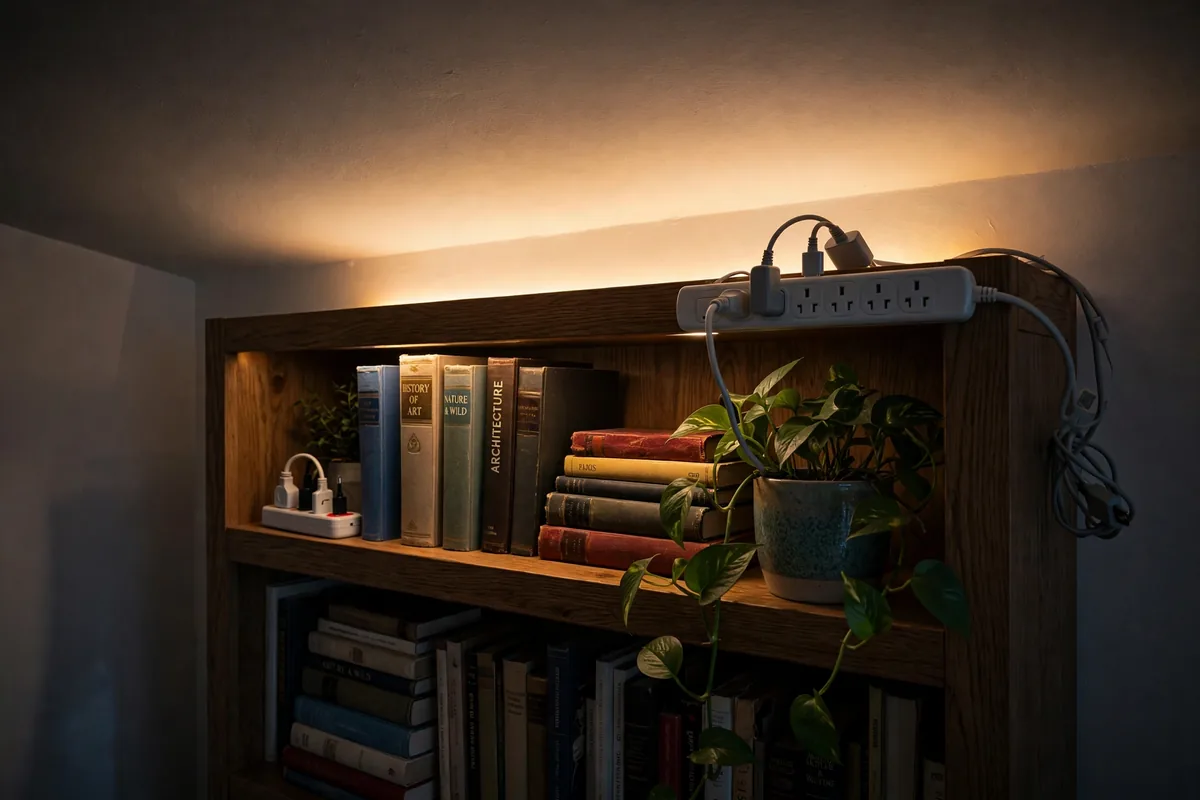
Layer 2: light where you sit, read, and eat
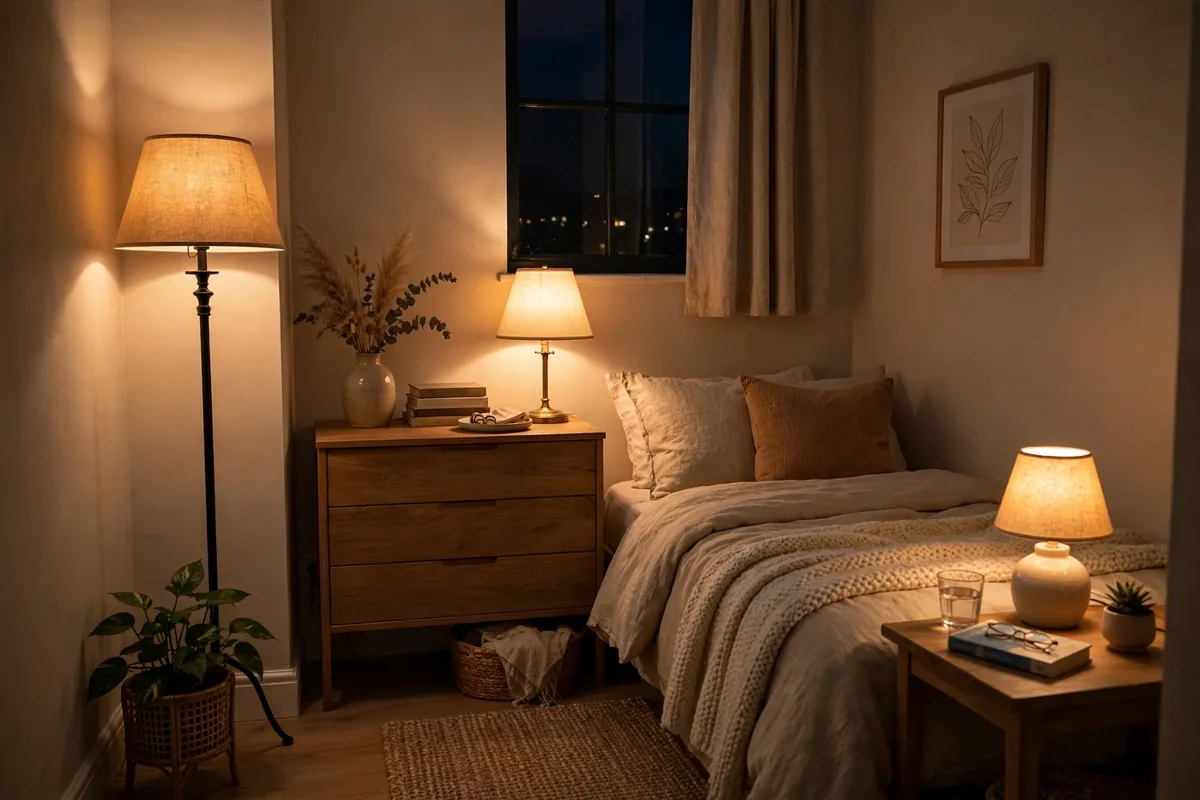
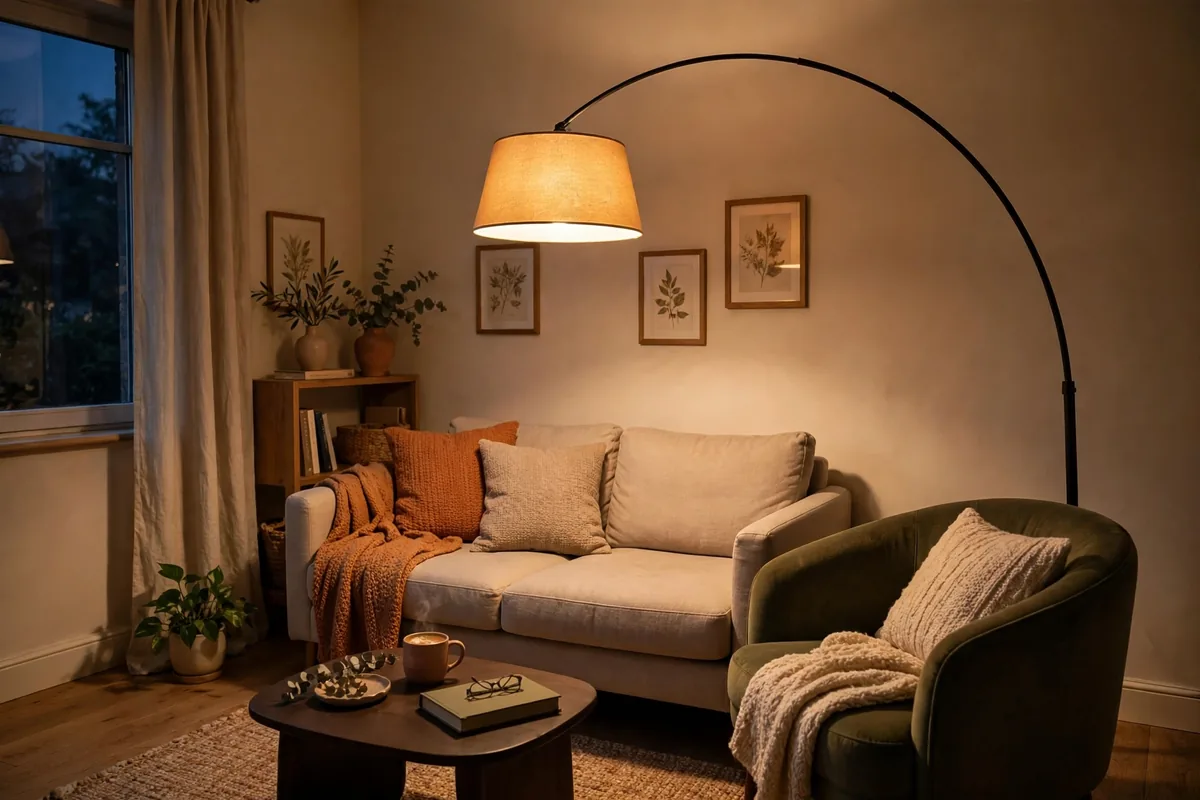
Seating light should sit close to where you use it. It should sit at about shoulder height when you're sitting. It should be warm enough that it flatters the room. An arc lamp over a sofa gives a pool of light for reading. A floor lamp beside an armchair does the same job in less floor space. A table lamp on a nightstand or side table works for a bed or a small sofa. Choose a shade that directs light downward and outward. Don't use a bare bulb at eye level. Glare is the fastest way to make a small room feel uncomfortable. This holds even when the bulb itself is warm.
Place the lamp on the side you actually read from. If two people read on opposite ends of a sofa, two small lamps beat one large lamp in the middle. Each reader gets light. Neither reader sits in shadow. Our guide to best paint colors for a small dark room is a useful pair for a bedroom version of this layer with no nightstand. Warm walls and warm lamps reinforce each other at night.
Layer 3: the small warm glow that makes it cozy
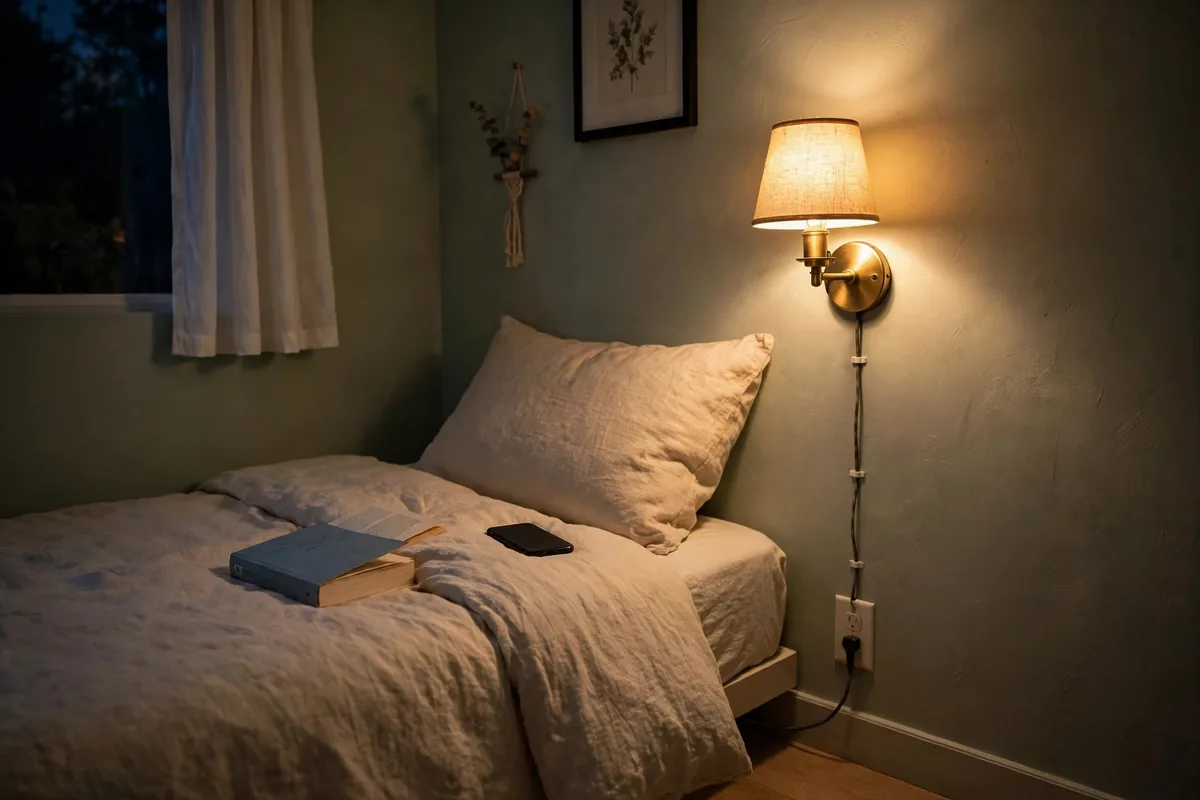
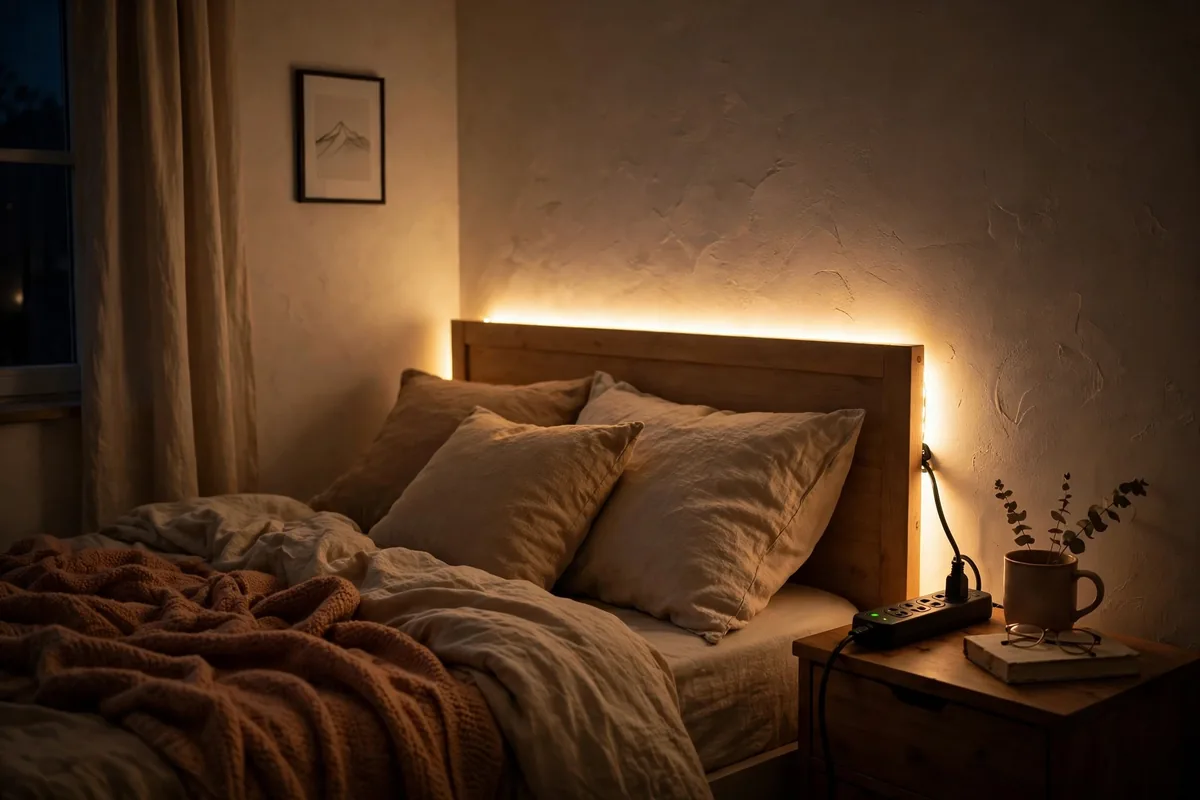
The third layer is small on purpose. Try a plug in sconce beside the bed. Try a tiny lamp on a dresser. Try a candle style LED on a shelf. Try a warm strip behind the headboard. Its job isn't to light work. Its job is to remove the last dark corner. It softens the edge of the bed or sofa. It gives the room a finished feeling when the brighter layers are dimmed or off. Turn this layer on last in the evening. You won'tice the room change from lit to cozy. The eye reads several small warm points as comfort. It doesn't read them as glare.
A plug in sconce is the most useful version of this layer in a small bedroom. Mount it slightly behind and above the shoulder for reading. Then light falls on the page, not in your eyes. Hide the cord with clips that stick to the wall. Or run the cord behind furniture. Check your lease rules for adhesive first. If your walls are textured or freshly painted, wait for paint to cure for 2 to 4 weeks or more. Do this before using adhesive cord clips. Use furniture to hide the cord instead.
Bulb colour: 2700K to 3000K, and why daylight bulbs fail here
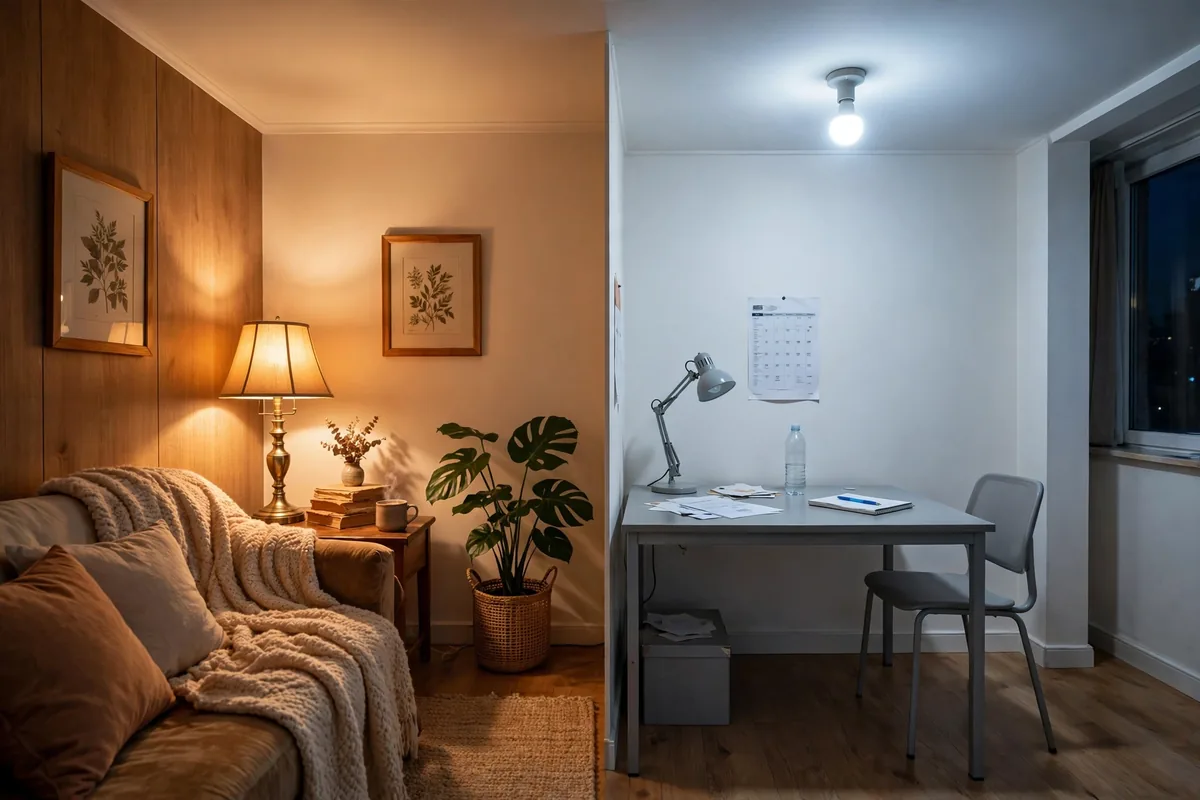
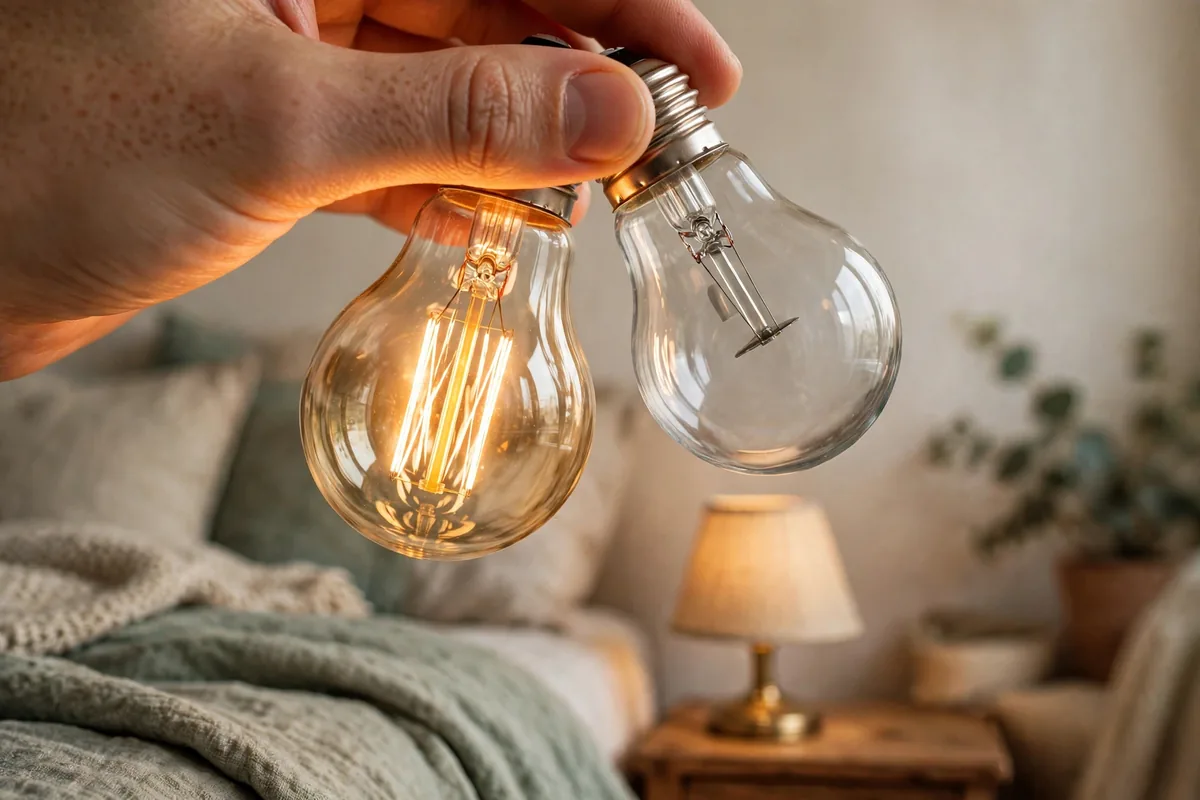
Bulb colour temperature is measured in Kelvin. It decides whether light feels warm or clinical. For cozy living spaces at night, use 2700K to 3000K. That reads as warm white. Avoid 4000K to 5000K daylight bulbs in bedrooms and living rooms at night. They make wood look grey. They make skin look washed out. They make a cozy room feel like an office or a garage.
Keep all three layers in the same warm range. If you don't, the room will feel patchy. A warm torchiere plus a cool table lamp reads as two different rooms. If you need brighter light for daytime work in the same room, use a dimmable warm lamp. Or use a second and separate task lamp you switch on only for work. Don't change every bulb to daylight. Dimmers help here, especially plug in dimmers that need no wiring. A warm lamp at full brightness works for reading. Dimmed low, it works for winding down. You get two moods from one lamp without touching the walls.
Layout by room
In a bedroom, put the torchiere in the corner farthest from the bed. Put a reading lamp on the side you sleep on. Put a small glow behind the headboard or on the dresser. With the bed in a corner, one plug in sconce on the open side plus the torchiere may be enough.
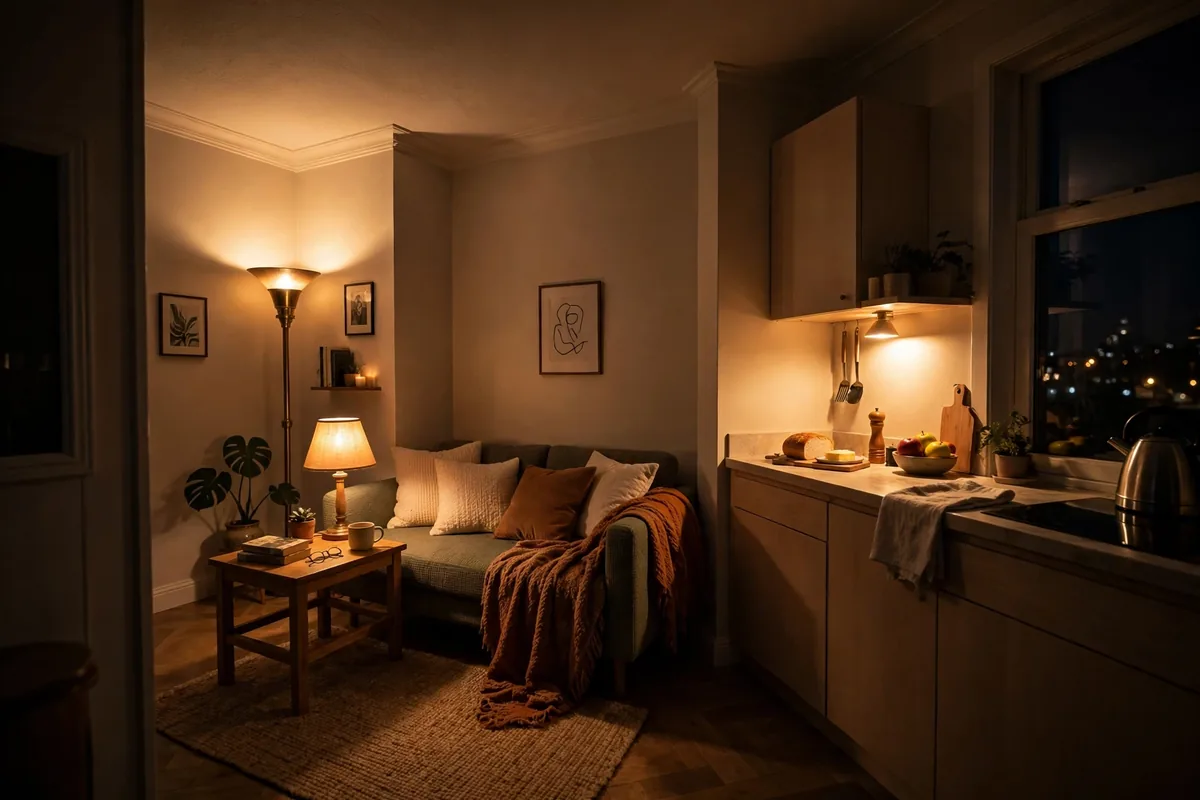
In a living room, anchor the torchiere in a corner near the seating. Add an arc or floor lamp beside the sofa. Finish with a table lamp or a strip on a tall shelf. In a studio, use light to mark zones, as in our guide to studio apartment layouts by shape. Use a warm lamp for the living zone. Use a small glow for the sleeping zone. Use a focused task lamp for the work corner. Then each zone feels separate even without walls. In all three rooms, light the farthest corner from the door first. A dark far corner makes the whole room feel smaller. A softly lit far corner pushes the boundary outward. That matches the mirror effect in our guide to make a small room look bigger with curtains, mirrors, and furniture placement.
When this doesn't work: the failure modes to check
The most common failure is one very bright lamp trying to do all three jobs. It creates harsh shadows. It creates a bright pool in one spot. It leaves dark corners everywhere else. The room feels both glaring and dim at once. The fix isn't a brighter bulb. Split the light into three smaller warm sources at different heights.
Another failure is bulb mismatch. One daylight bulb among warm lamps will dominate how the room feels at night. A bare cool bulb in a bedside lamp will do the same. Replace the odd bulb first.
Renter branch: plug-in only, cords, and switched outlets
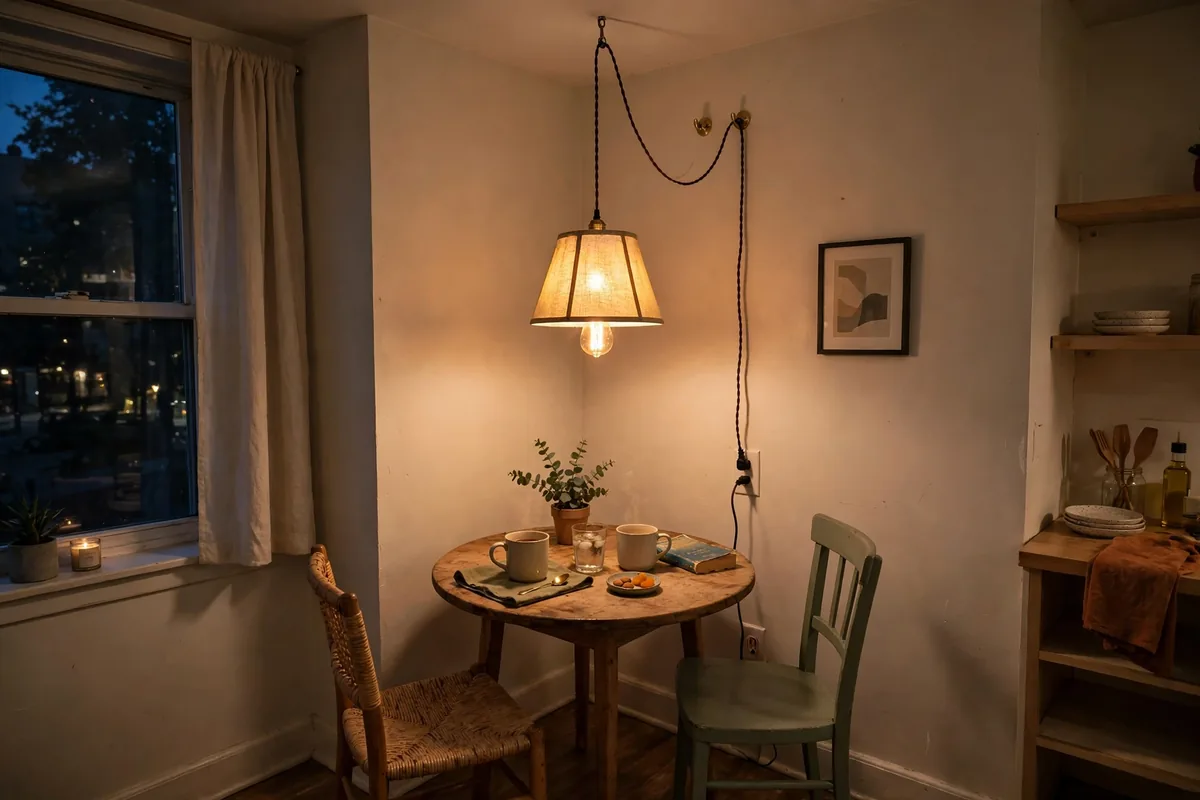
Everything in this guide is renter friendly because nothing needs wiring. Use floor lamps and table lamps and plug in sconces. Use plug in pendants that swag from a hook. Use LED strips stuck to furniture rather than walls. You don't need landlord permission for a floor lamp. You shouldn't need it for a plug in sconce that uses a small hook. But check your lease for adhesive and hook rules. Get permission in writing for anything that leaves a mark. Keep strips on furniture, not on painted walls, if your lease is strict. Avoid adhesive on fresh or flat or textured paint until it has cured and passed a hidden spot test. All of these layers belong in the paint and lighting guides. There, warm colour and warm light are planned together.
Many older rooms have a switched outlet. One wall switch controls one outlet. Plug a floor lamp into the switched outlet. Then you get a room switch without a ceiling light. If you have only one free outlet, use a power strip with a switch. Keep it accessible but out of the walkway. Don't overload it with heaters or high wattage appliances on the same strip. For the full set of renter safe ideas, start from the SmallRoomly homepage.
Frequently asked questions
Where exactly should a torchiere go in a small bedroom with no overhead light so it doesn't glare?
Put it in a corner, away from curtains and bedding. Its bowl should throw light up onto a light ceiling. A corner spreads the glow along two walls. It doesn't create a bright spot overhead. Keeping it out of your direct line of sight from bed prevents glare.
How do I light a small room with no ceiling light when there's only one free outlet?
Use that outlet for a power strip with a switch. Keep it out of the walkway. Plug the torchiere and one seating lamp into it. Prioritise the ceiling bounce lamp first, then the seating lamp. Keep lamps only on that strip, not heaters.
Why does my small room still feel dim at night even with a torchiere in the corner?
Check bulb colour and ceiling colour and layer count and wall and rug colour, in that order. A daylight bulb or a dark ceiling or one light layer will each make a torchiere feel weak. Fix those before you buy a brighter lamp.
What bulb should I use in a no-overhead bedroom that also has to work as a daytime workspace?
Use a dimmable warm bulb at 2700K to 3000K as the main bulb. Add a separate focused task lamp you switch on only for work. The room stays cozy at night. It stays bright enough by day. You don't need to change every bulb to daylight.
How do I hide plug-in sconce cords in a rental without drilling into the wall?
Run the cord behind furniture. Use adhesive cord clips only on smooth and fully cured paint after a hidden spot test. Avoid adhesive on fresh or flat or chalky or textured paint. On strict leases, hide the cord behind a bed frame or dresser instead.