 smallroomly
A Warm Small-Room Desk Setup for Winter Work From Home
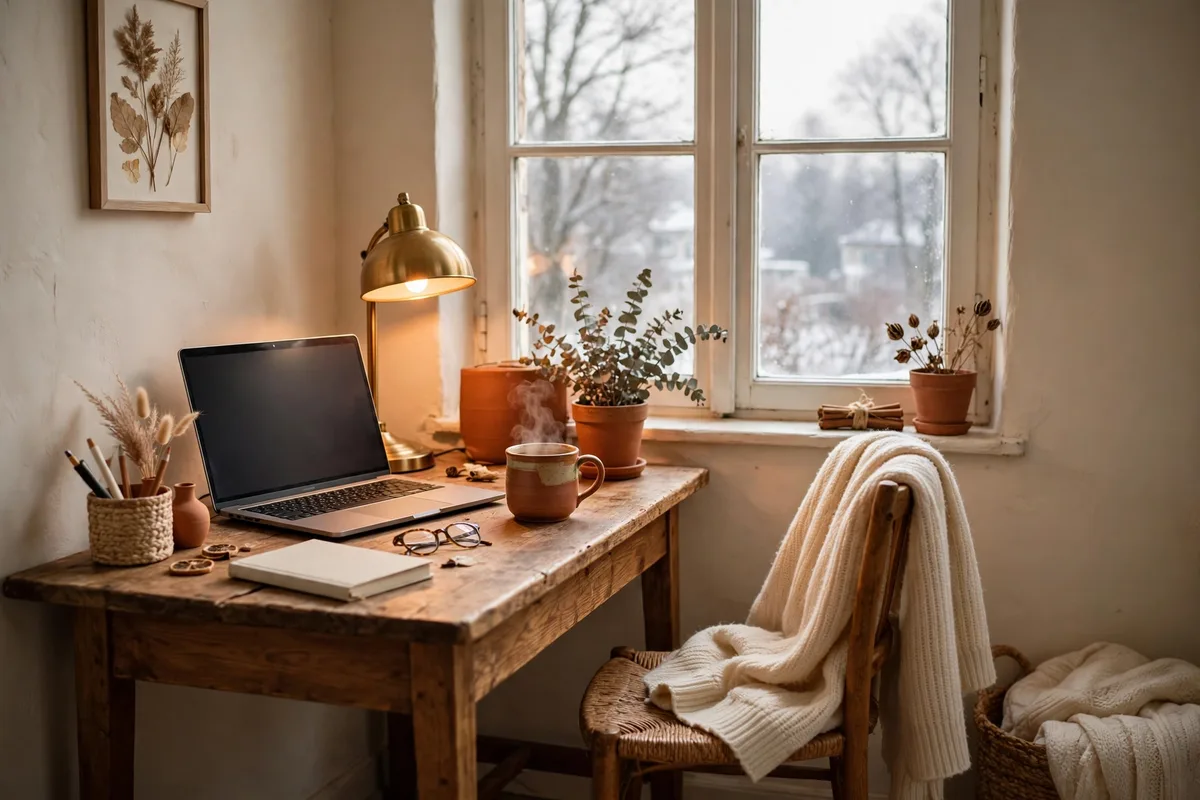
Winter work from home tests a small room. Days are short. Light is grey. The room must be an office by day and a home by night. You have no spare room. You may have only a corner. That corner can still work well. It needs warmth and focus and a clear end to the day. This guide is about a warm small-room desk setup for winter. You will pick a corner. You will layer light. You will close the desk down at night. No spare room is needed. No big desk is needed. A focused cozy corner is enough.
Pick the corner, not the room
You do not need a whole room for work. You need one corner that means work. A corner gives you two walls. One wall holds a shelf. The other wall blocks draughts. A corner also keeps work out of the main walkway. You do not trip over cables. You do not stare at work from the sofa all evening. A corner is a boundary. Boundaries help small rooms feel larger, since each zone has a job.
Look for a corner near a window. Winter daylight is scarce. A window corner catches what light there is. You also get a view to rest your eyes on. Do not face the bed if you can avoid it. A bed in view invites a nap. Do not face the television either. A screen in view steals focus. Face the wall or the window. Let the rest of the room stay out of sight while you work.
Test the corner before you commit. Sit there for one workday with a folding table. Notice the light at noon. Notice the draught at dusk. Notice the noise from the rest of the home. A corner that feels good at noon may feel cold at five. Winter corners change with the day. One test day saves a bad setup. Move the desk once, not three times.
Face the window, but dodge the glare
A desk by a window sounds perfect in winter. Daylight lifts your mood. Grey light still counts as daylight. It tells your body it is morning. It keeps the room from feeling like a cave. Yet a window desk can glare. Low winter sun hits the screen at noon. Bright snow light hits it too. Glare strains your eyes. It also tempts you to close the curtains all day. Closed curtains lose the daylight you wanted.
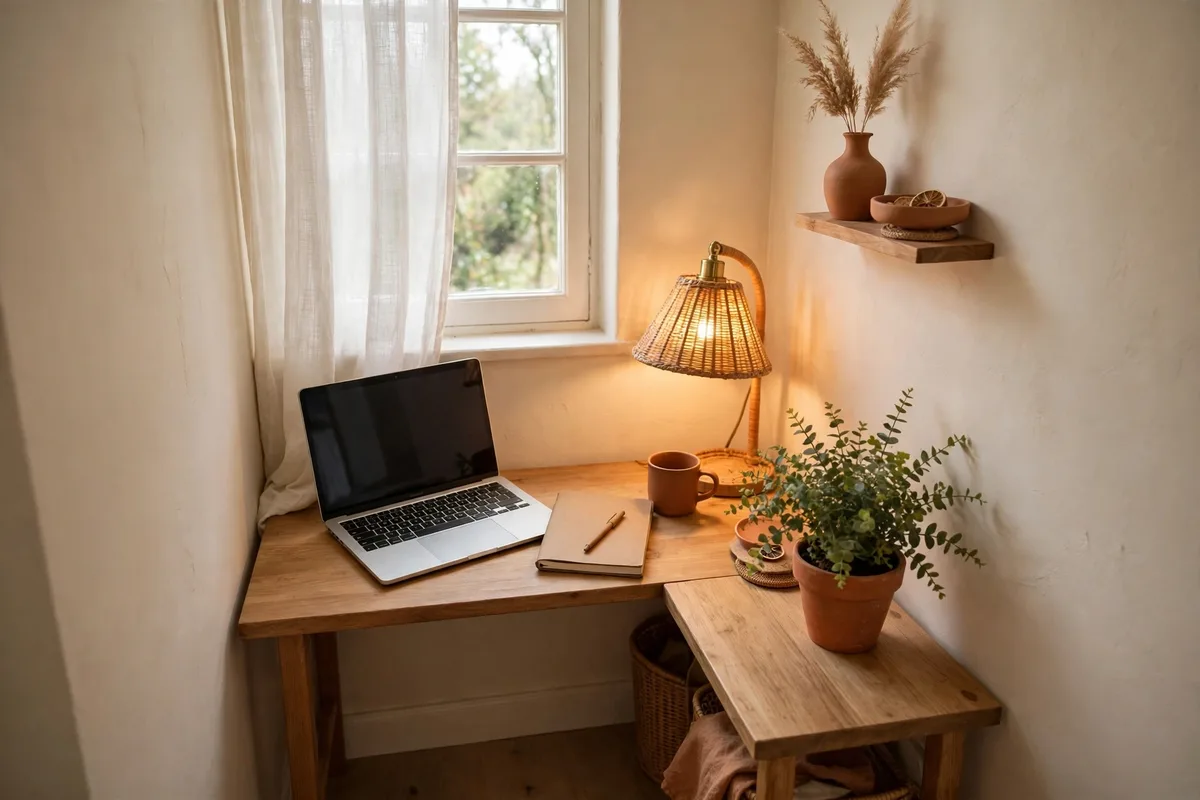
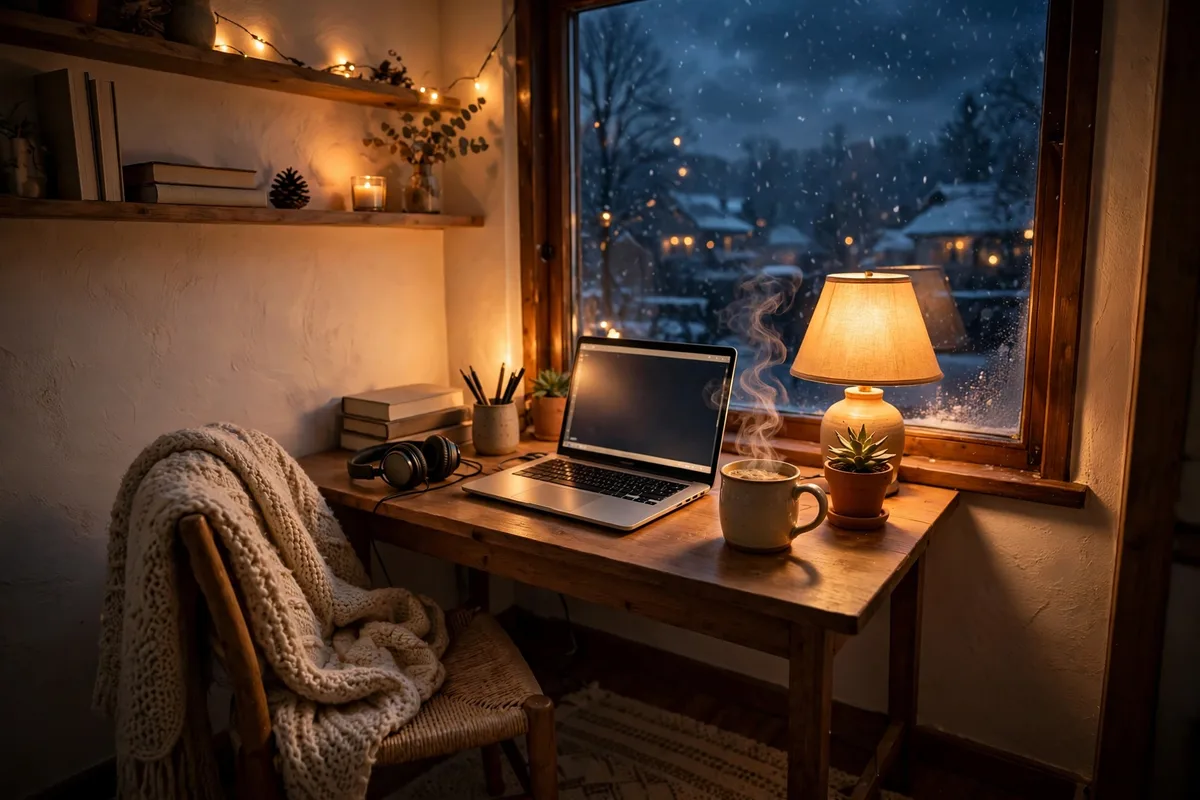
Sit beside the window, not facing it head on. Side light falls on your desk without hitting your screen. Sheer curtains soften harsh light while keeping daylight. Open them fully on grey days. Half close them when sun glares. A small plant on the sill marks the boundary between work and window. You get light and a view. Your screen stays readable.
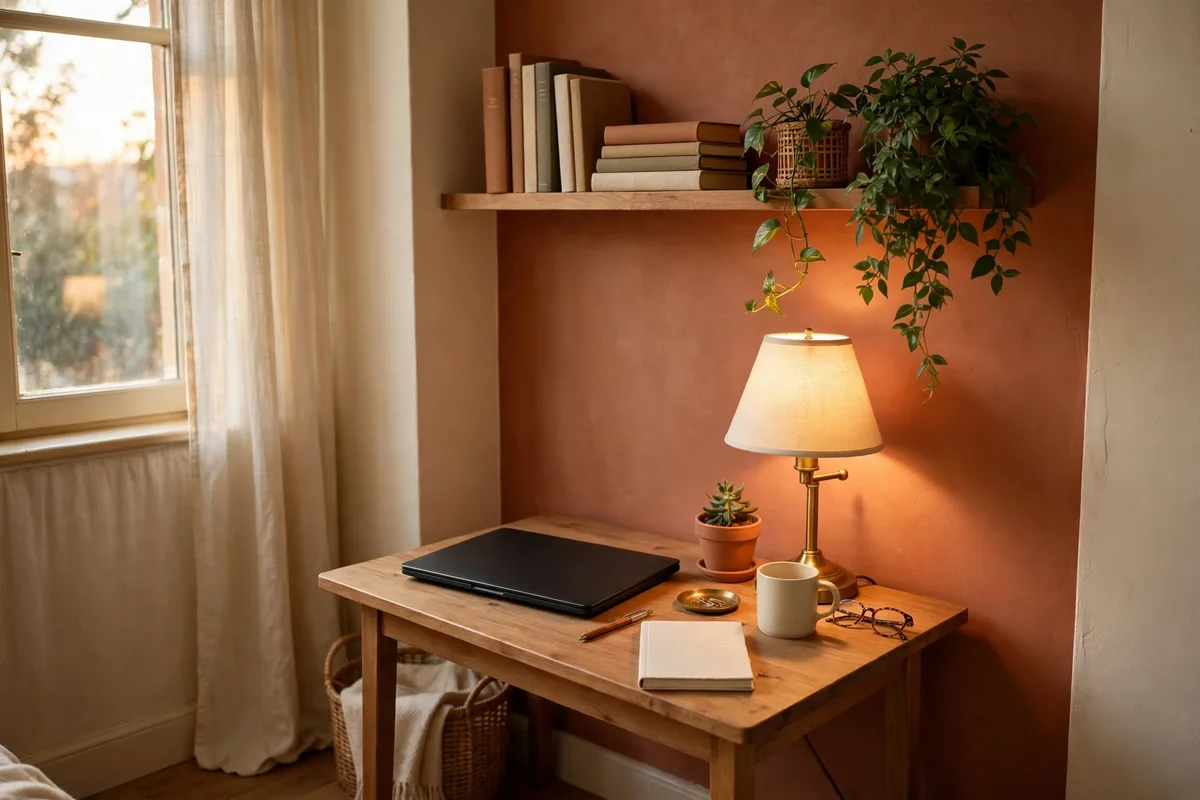
Watch the window at dusk too. Winter dusk comes early. The window turns dark by late afternoon. A dark window behind your screen strains your eyes. A warm lamp solves it. Light the desk before dusk, not after your eyes ache. Your corner should glow as daylight fades. That glow is the heart of a winter desk setup.
Layer warm light for dark afternoons
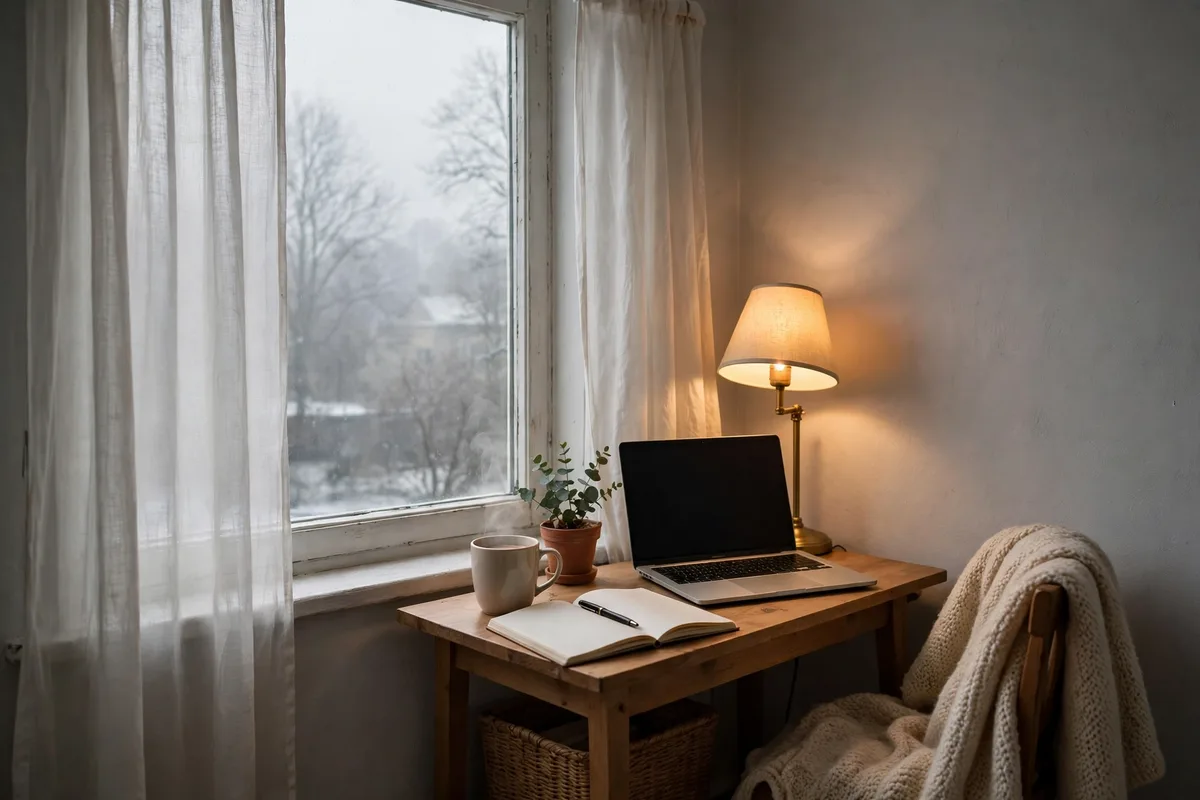
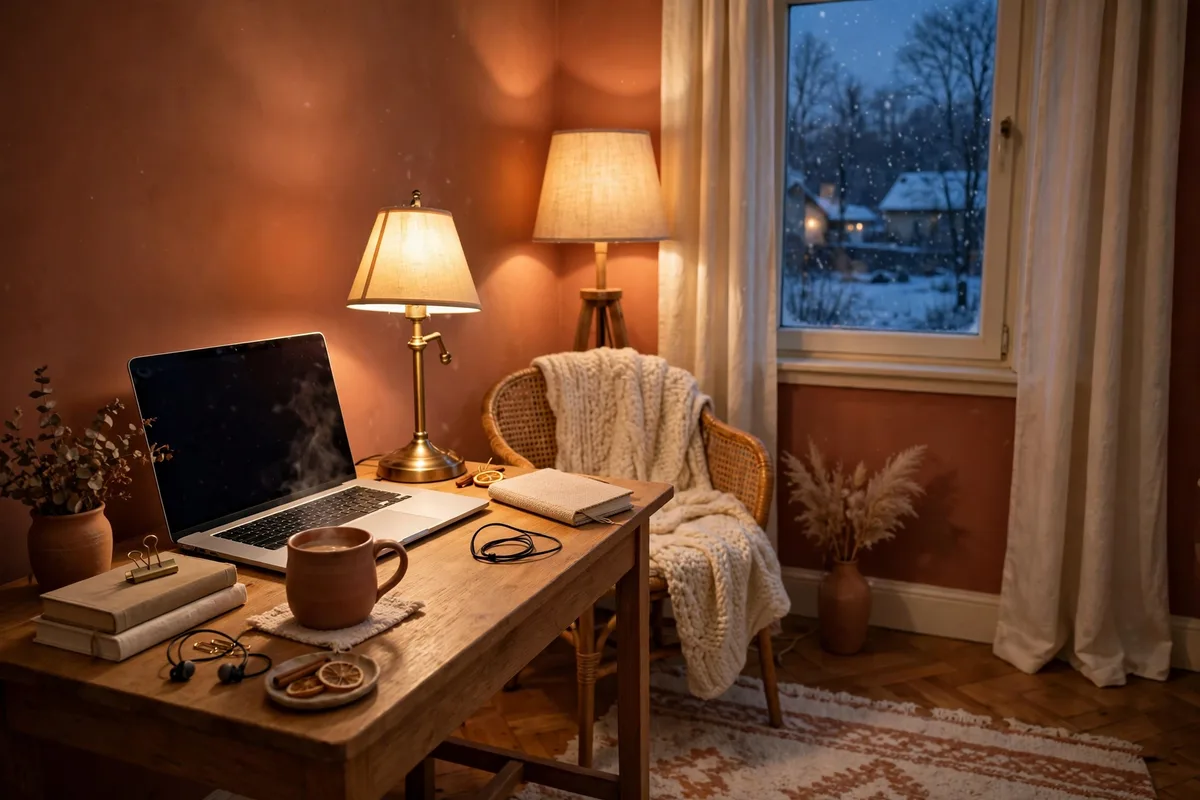
One ceiling light cannot carry a winter workday. It casts shadows on your desk. It makes the room feel flat. It also feels harsh at night. Layered light works better. A desk lamp lights your task. A soft lamp behind you lights the room. Two warm lights at two heights beat one bright light. The room feels deep, not flat. Your eyes relax, since no single light dominates.
Start with a desk lamp you can aim. Aim it at your notebook, not at your face. Warm bulbs suit winter evenings. They make wood and cream walls glow. Add a second lamp across the room. A floor lamp or a table lamp gives background glow. The guide to light a room with no overhead lighting shows plug in options for renters. You can layer light with no wiring changes.
Keep lights on a simple habit. Switch the desk lamp on when you start work. Switch the second lamp on at dusk. Switch both off when work ends. Light becomes a signal. Lamp on means work. Lamp off means home. That signal helps more than any gadget. It tells your brain when the workday starts and ends.
Comfort without a big chair
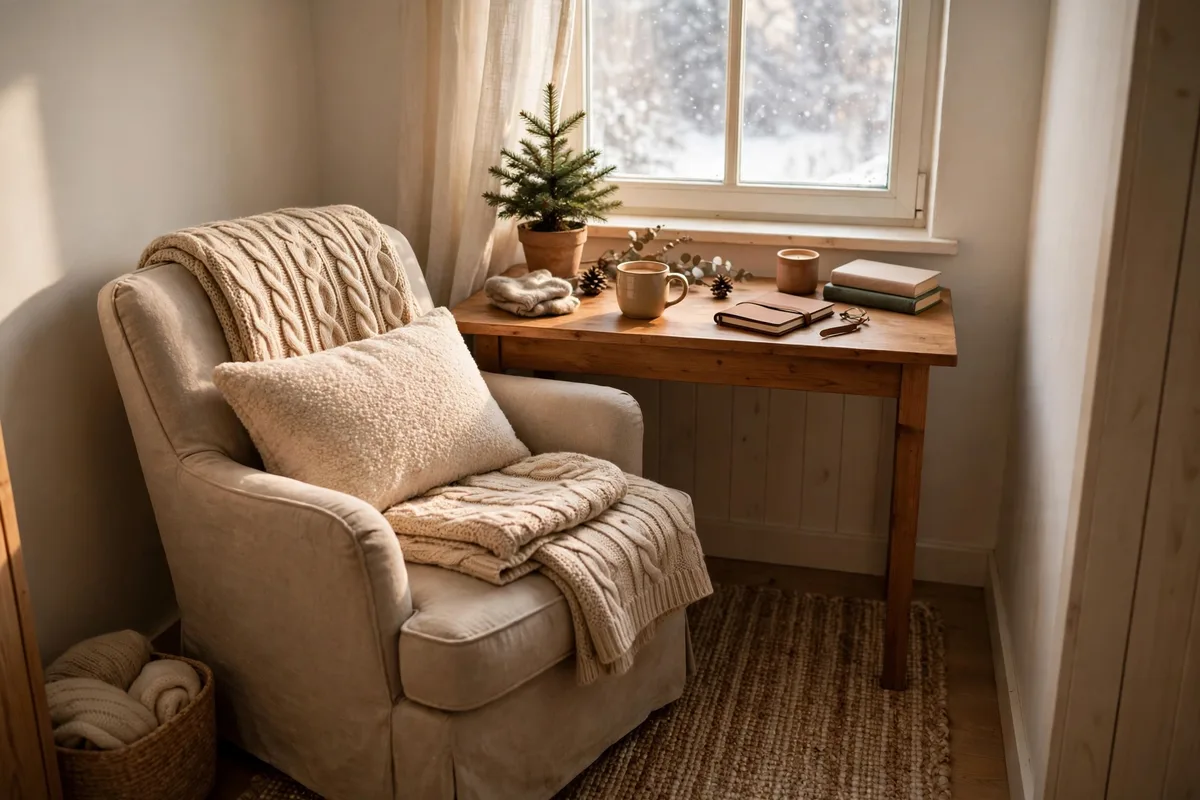
A small room cannot hold a huge office chair. A huge chair blocks the walkway. It also looks wrong beside a small desk. Comfort does not need size. It needs support. A chair with a firm back supports long days. A cushion adds softness. A throw adds warmth. A rug under your feet stops cold floors from chilling you. Small comforts add up to a full workday.
Pick a chair you can pull in close. Your elbows should rest near the desk edge. Your feet should rest flat on the floor or on a rug. A chair that is too low strains your neck. A chair that is too high strains your legs. Test the chair with your real desk. Sit for an hour, not a minute. An hour reveals what a minute hides. Your back will tell you the truth.
Move once an hour, even in winter. Stand up. Stretch. Walk to the window. Look outside for one minute. Movement beats any chair. A perfect chair still hurts if you sit still all day. Set a gentle habit. Tea at ten. Stretch at noon. A short walk before dark. Winter workdays feel longer when you never move. Small breaks keep them humane.
A desk that disappears at night
The hardest part of a small-room desk is the evening. Work stays visible after hours. The laptop glows from the corner. Papers spread across the desk. The room never feels like home. A close down ritual fixes that. Shut the laptop. Clear the desk top. Put papers in one drawer. The desk becomes furniture again. The room becomes home again.
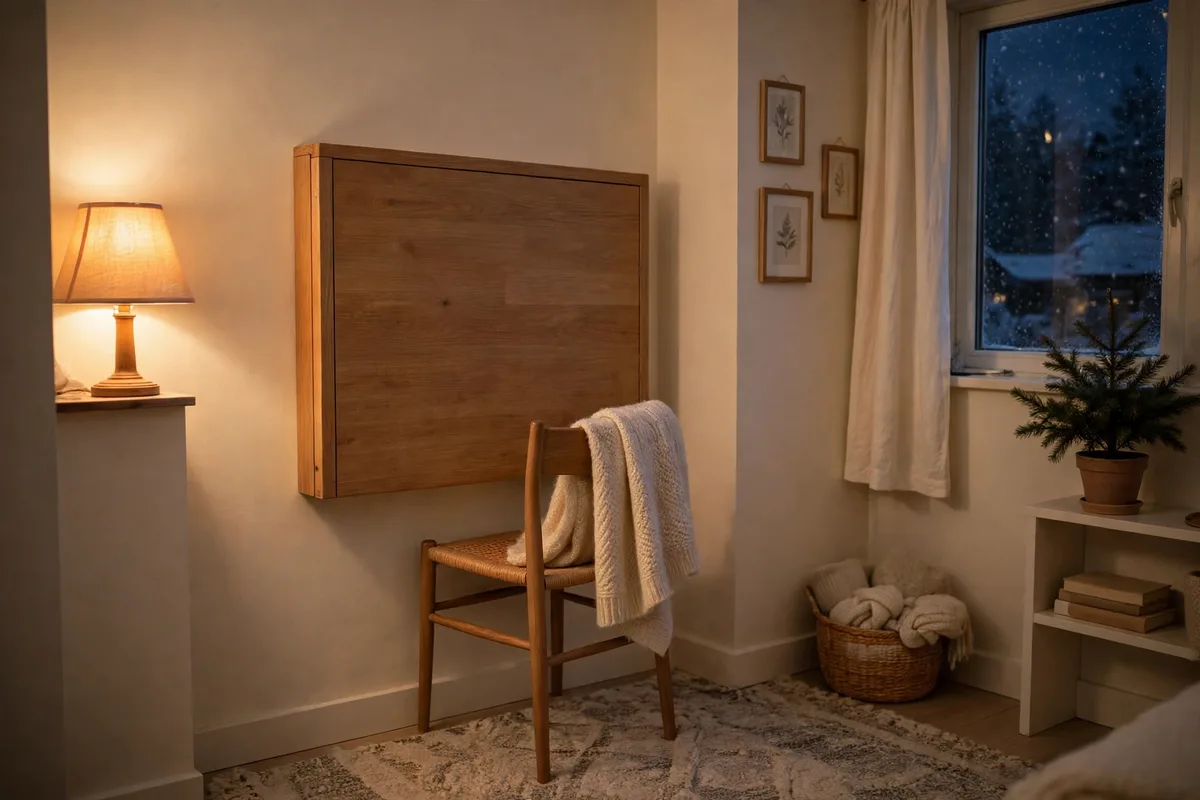
A fold down desk makes this ritual easy. It folds flat to the wall when work ends. The chair tucks underneath. The wall looks plain again. Fold down desks suit tiny rooms well. They need a solid wall and a careful fix. Renters should check the wall type first. The guide to studio layouts by shape shows how zones can share one room. A fold down desk is one zone that hides.
If you keep a fixed desk, use a tidy close instead. Clear the top each evening. Put work things in one tray or drawer. Cover the laptop with a cloth if it helps. Out of sight still counts. The goal is a room that welcomes you back. A desk that never closes makes evenings feel like overtime. A desk that closes gives evenings back.
Cables and clutter in one drawer
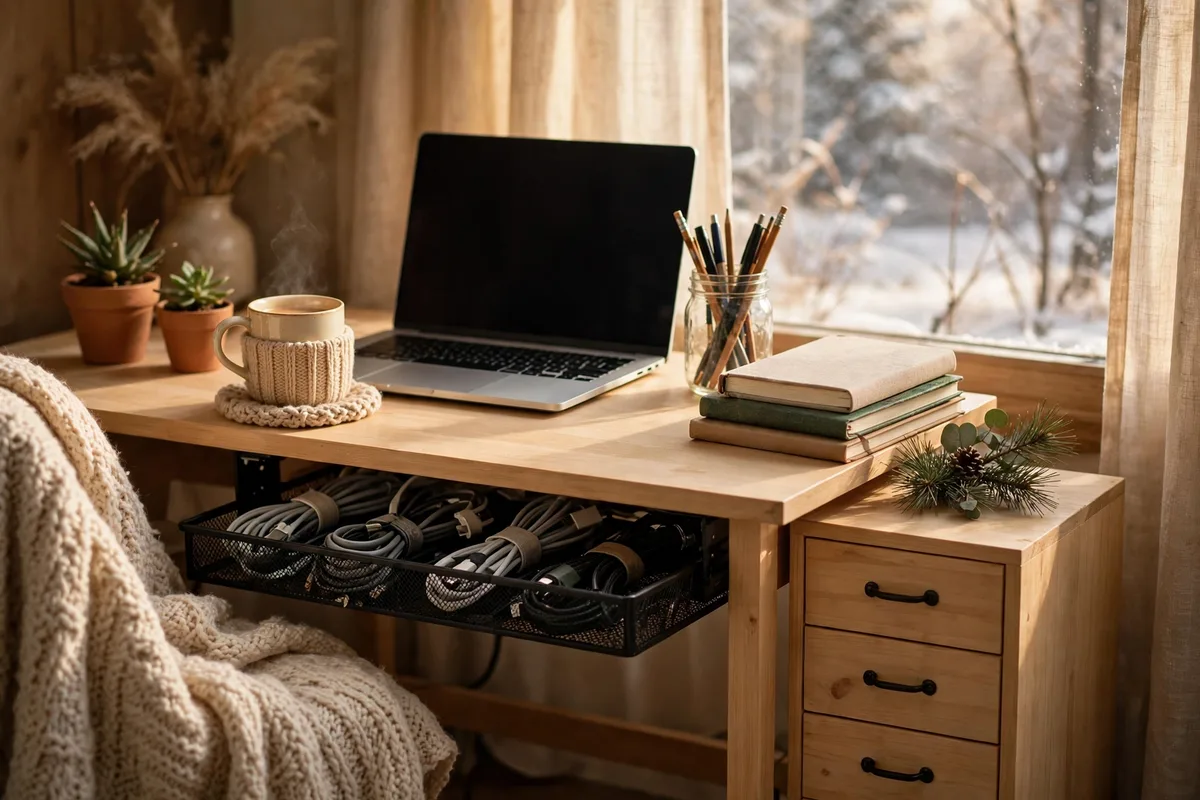
Cables ruin small desks fast. A charger here. A cable there. A spare cable you never use. Soon the desk looks tangled. The floor looks tangled too. Tangle feels like stress. One drawer or one tray tames it. Put chargers in the tray. Coil spare cables with a band. Keep one cable on the desk for daily use. The rest stay out of sight.
Clutter follows the same rule. Papers pile up in winter. Notes and bills and printouts stack on the desk. A small desk cannot hold a filing system. It can hold one tray. In tray for today. Out tray for done. Clear the in tray each Friday. File or recycle what remains. A desk with one tray stays calm. A desk with five piles does not.
Keep only daily tools on the desk top. A laptop and a notebook are the core tools. A pen and a mug complete the set. Everything else lives in the drawer or on the shelf. A clear top helps focus. It also makes the close down ritual fast. One minute clears a clear desk. Ten minutes clears a cluttered desk. You will keep the habit only if it stays fast. Keep the top clear, and the habit keeps itself.
Share a room without losing focus
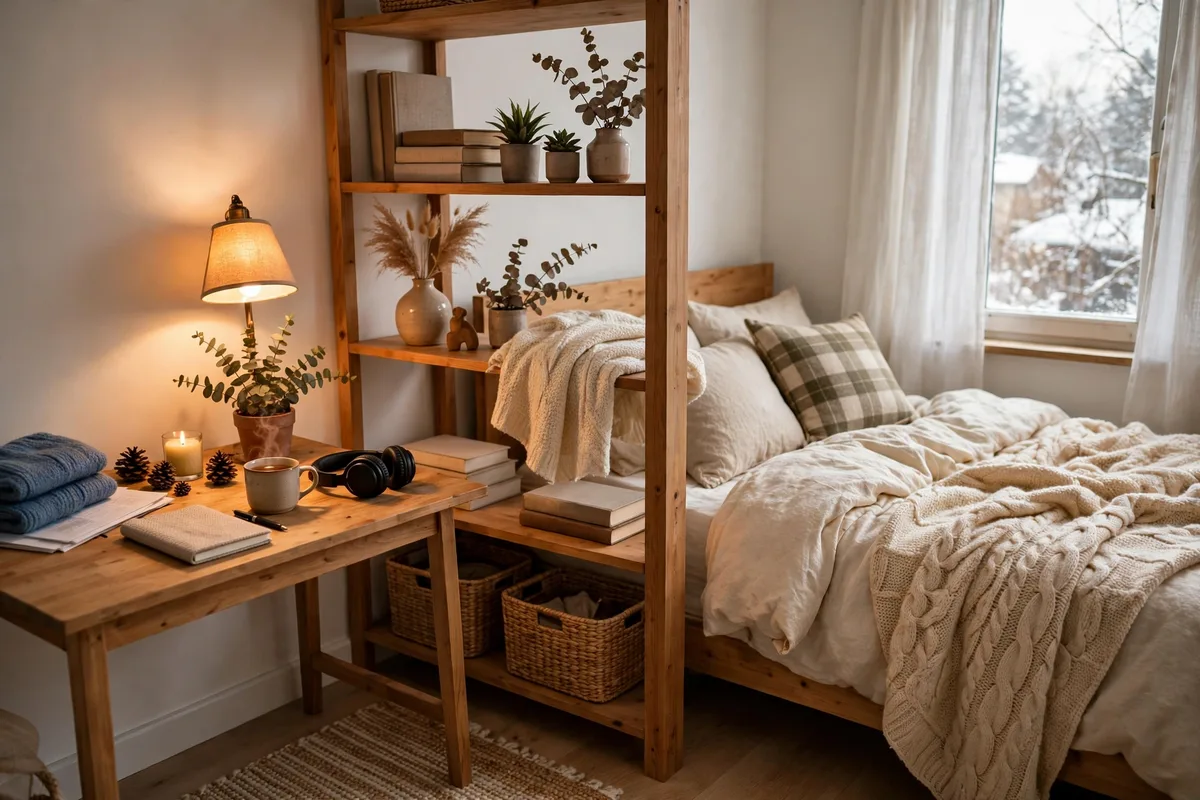
Many winter desks share a bedroom or a living room. Sharing a room tests focus. The bed invites rest. The sofa invites television. A partner or a flatmate walks past. Focus needs a mark. A rug marks the work zone. A shelf marks it too. A screen or a tall plant marks it best. The mark says work happens here. It also says work stays here.
Use time marks as well as space marks. Start work at the same time each day. End work at the same time each day. Tell housemates your hours. A closed door is not needed. A shared habit works. When the lamp goes on, you are at work. When the laptop closes, you are home. Housemates learn the signals fast. Signals beat rules in a shared home.
Check the layout with the free room planner. Enter your room size and test a desk, a chair, and a divider before you move furniture. The planner shows what fits beside a bed or a sofa. It stops you buying a desk that blocks the door. Measure first, then buy once. That order saves returns and regret.
Breaks that warm you up
Winter workdays need warm breaks. A break is not a scroll on your phone. A scroll keeps you at the desk. A warm break moves you. Make tea. Stand by the window. Step outside for one minute of cold air. Cold air wakes you up. Warm tea warms you up. The pair works better than either alone. You return to the desk sharper.
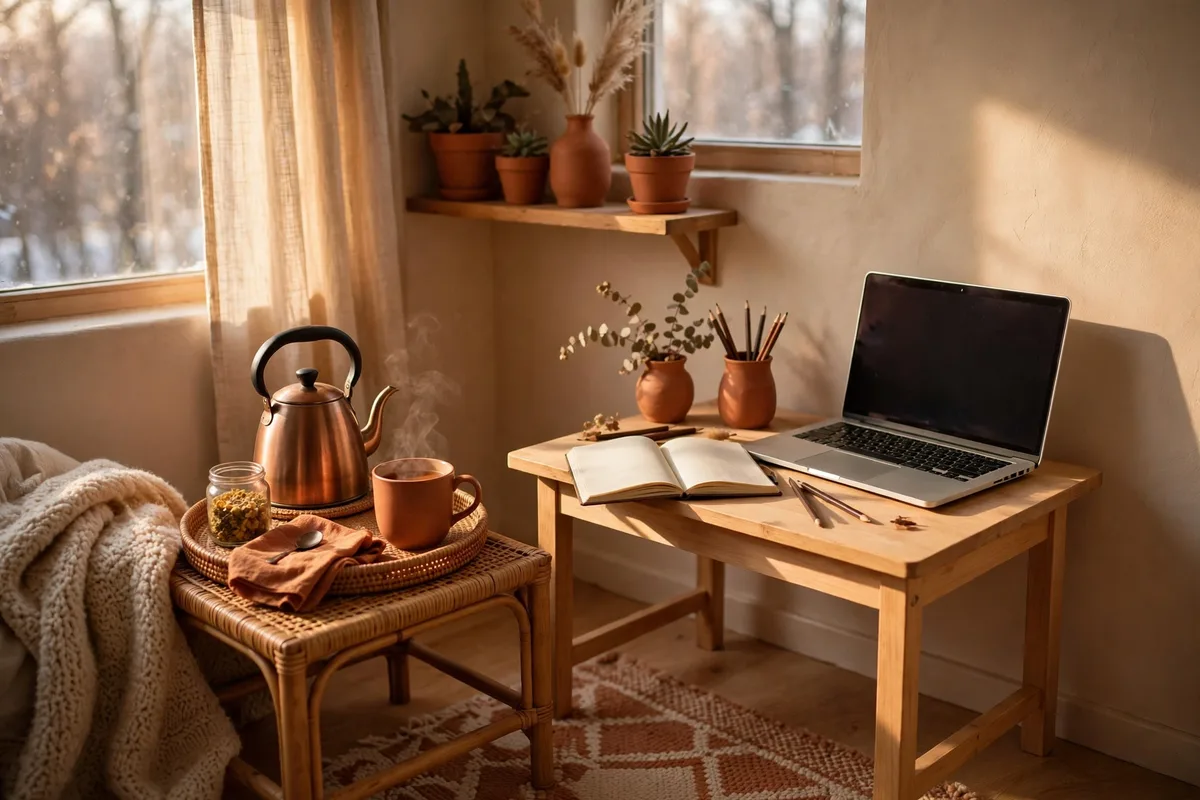
Keep a small tea station near the desk, not on it. A tray on a side table holds a mug and a kettle. Tea stays close but off the work top. Spills stay off the laptop. A tea break becomes a ritual. Put the kettle on and stretch while tea brews. Then sit back down to work. Rituals mark time in a small room. They split the day into parts. Parts feel shorter than one long day.
End the day with warmth too. A walk before dark clears your head. A warm lamp at home welcomes you back. A closed laptop says work is done. Winter evenings are long. A room that feels cozy at night makes winter work feel worth it. Your desk setup is not just for work. It is for the evenings after work too.
Frequently asked questions
Where is the best corner for a desk in a small room in winter?
Pick a corner near a window with a wall on one side. Daylight lifts your mood on grey days. The wall blocks draughts and gives you a place for a shelf. Avoid a corner that faces a bed or a television.
How do you light a small desk in winter without harsh glare?
Layer two warm lights instead of one bright light. Use a desk lamp for tasks and a soft lamp behind you for glow. Keep the desk lamp out of your eye line. Warm light at two heights feels cozy, not harsh.
How do you stop a work desk from taking over a small room?
Close the desk down each evening. Shut the laptop, clear the top, and put work things in one drawer. A fold down desk helps, since it closes flat to the wall. The room feels like home again once work is out of sight.
What makes a small desk chair comfortable for a full winter workday?
Pick a chair with back support and a cushion you can sit on for hours. Add a small throw for warmth and a rug under your feet. Stand and stretch once an hour. Comfort comes from support and movement, not from a large chair.
How do you stay focused when your desk sits in a bedroom or living room?
Mark the work zone with a rug, a shelf, or a screen. Start work at the same time each day. End work with a short ritual, like closing the laptop and making tea. A clear start and a clear end help your brain switch modes.