 smallroomly
Winter Cozy Layers for a Small Room
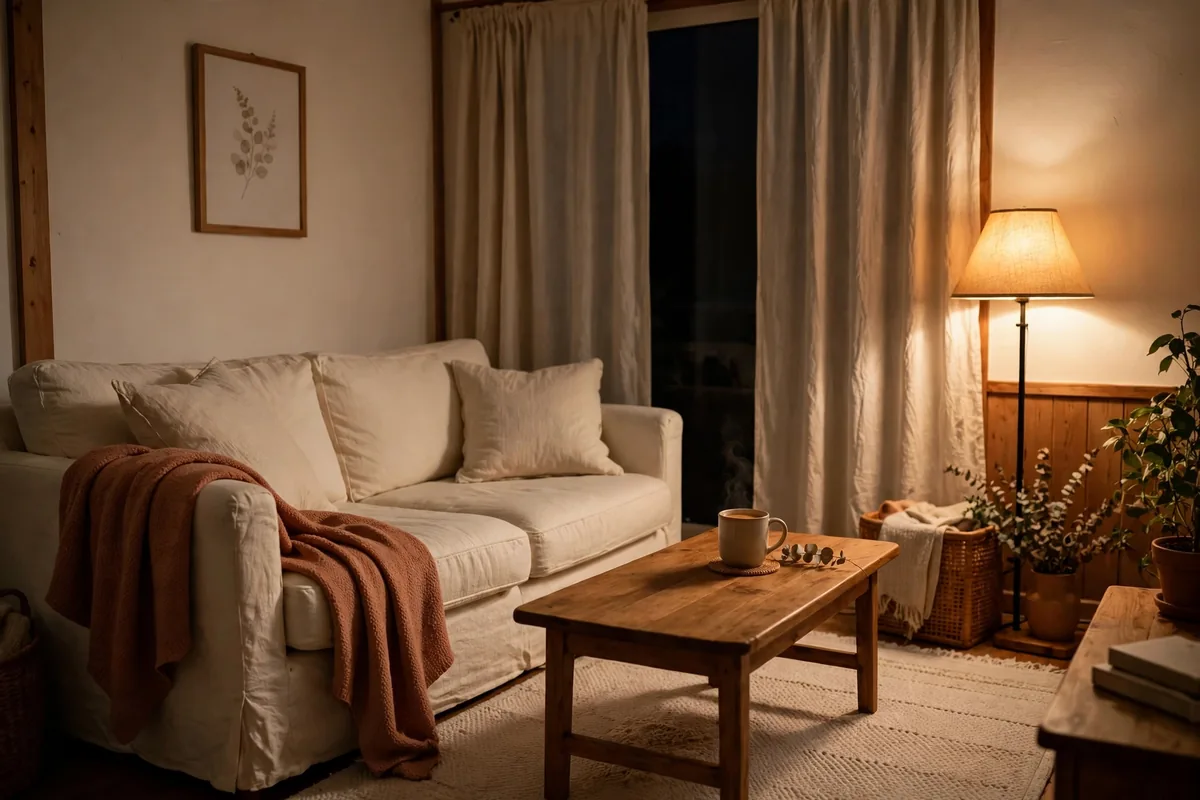
Winter nights change a small room fast. The light goes early. The room feels smaller. And the fix is rarely new furniture. Most small rooms already have what they need for winter. They just need it arranged for dark evenings instead of bright days. This note is about that feeling. It is not a shopping list. It is not a makeover plan. It is a way to look at the room you already have, and to add warmth in layers, one at a time.
Winter nights feel different in a small room
Daylight leaves a small room early in winter. One moment the room feels open. The next moment it feels shut in. That change is not only about darkness. It is about how the room is used after dark. In summer you move through a room. In winter you settle in it. You sit longer. You stay in one spot. So the room needs to work for sitting, not just for passing through.
A small room shows every change at night. A bright ceiling light can make it feel flat. A bare floor can make it feel cold. A chair without a throw can make it feel unfinished. None of these are faults. They are just signs that the room was set up for daytime. Winter asks for a different setup. It asks for soft edges and warm pools of light. It asks for places that invite you to stay.
Light first, not more light
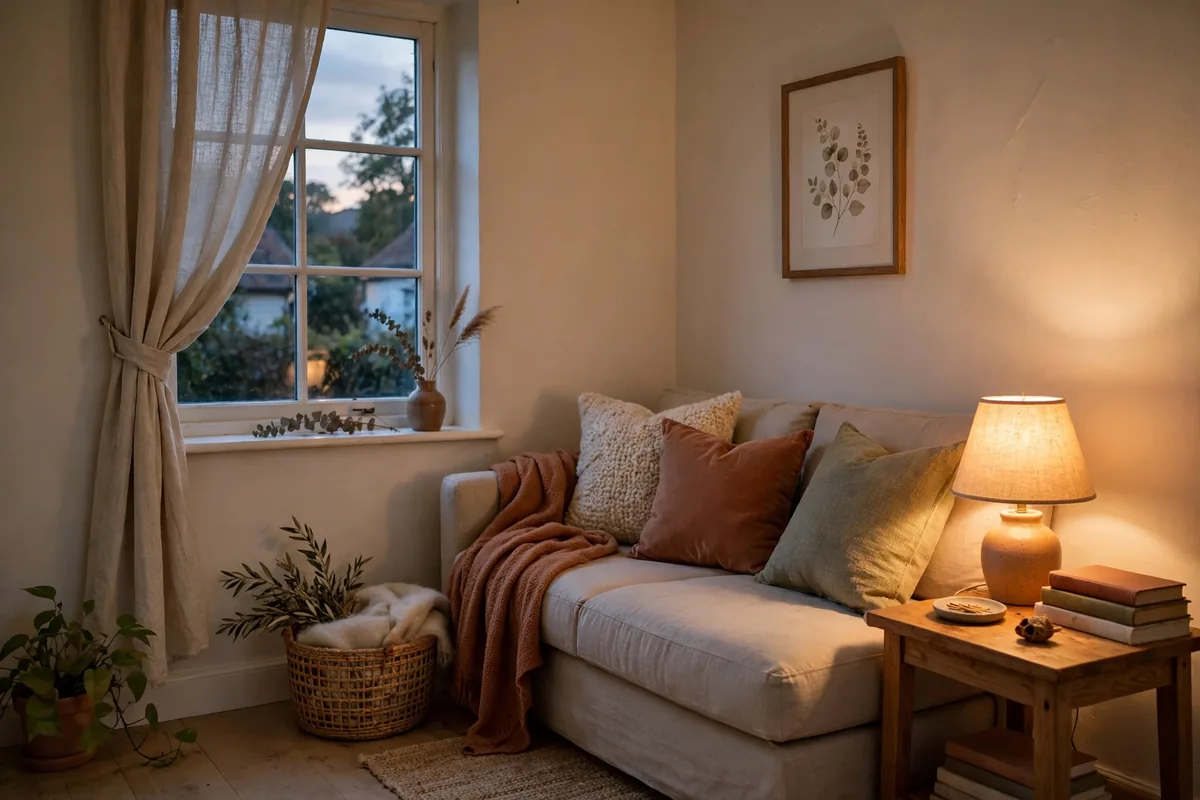
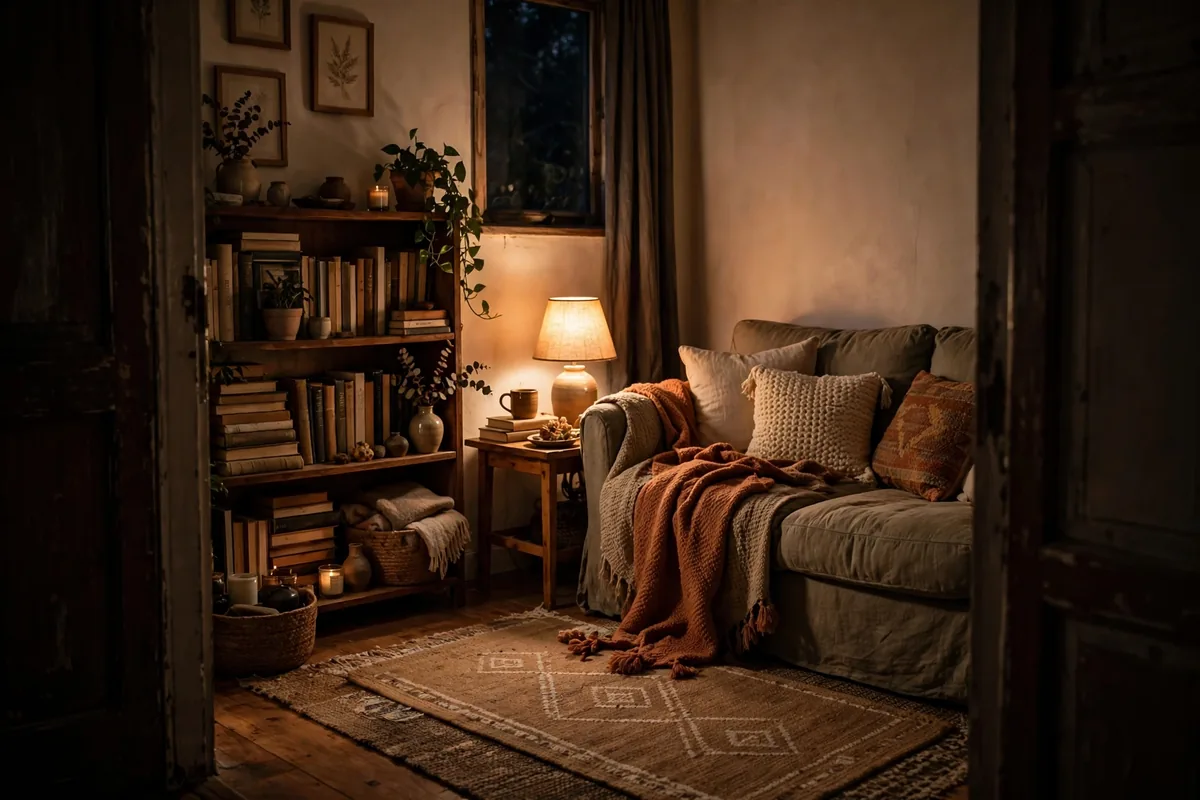
Start with light. One warm lamp beats a bright ceiling light at night. Put the lamp low and near where you sit. Let the corners stay soft. A room feels cozy when the light has somewhere to rest. Bright light fills every corner at once. Warm low light gives the eye a place to settle. That is why a small room can feel calmer with less light, not more.
Try this in your mind before you move anything. Picture the room at night with only one lamp on. The sofa glows. The table glows. The far corner fades into shadow. That shadow is not a problem. It makes the lit part feel closer and warmer. A small room does not need to be lit like a shop. It needs one warm centre and a soft edge around it.
If you want a fuller plan for lamps and layers, read the guide to light a room with no overhead lighting. It covers lamp types and placement in detail. This note stays with the feeling. Warm light low in the room. Soft corners. One place that glows.
One more check helps at night. Stand in the doorway and look in. If the first thing you see is a bright bulb, the light is too high or too harsh. If the first thing you see is a warm glow on a chair or a sofa, the light is doing its job. Move the lamp, not the furniture, and check again.
One soft layer at a time
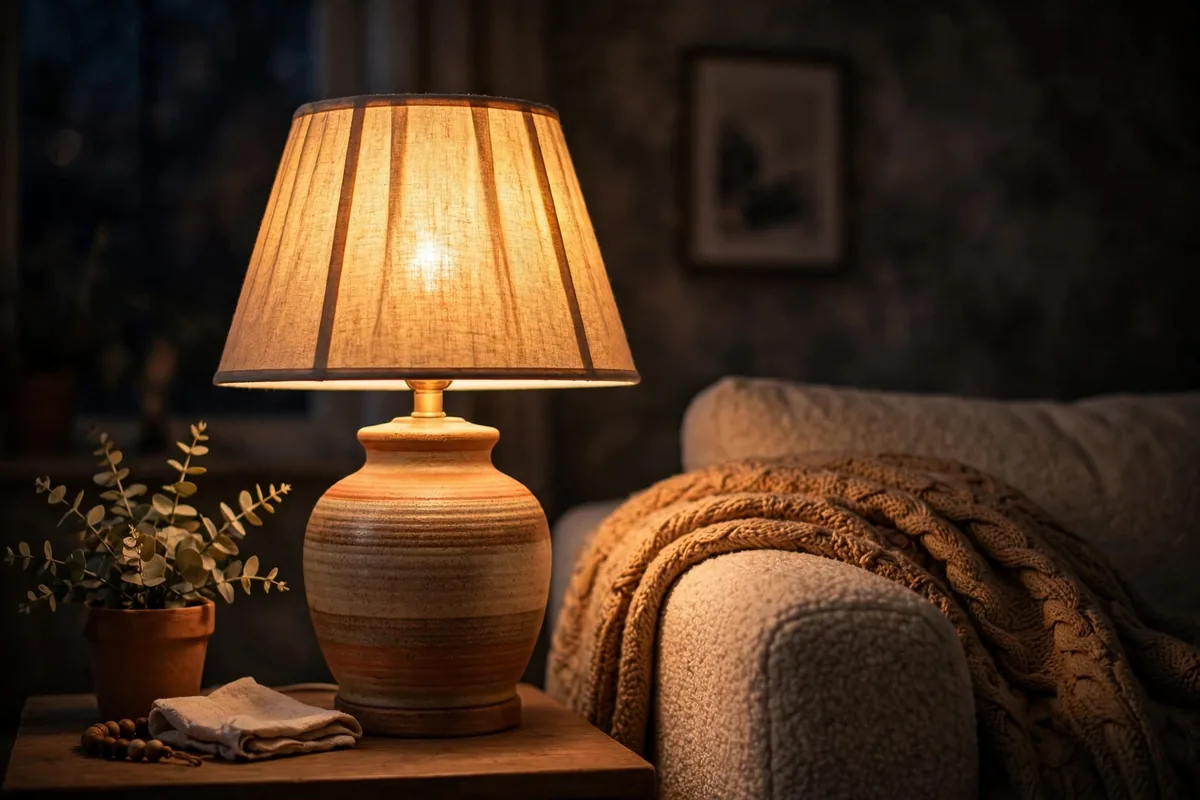
Next add one soft layer. A throw on the sofa does more than a new cushion set. It invites you to sit down. It also warms the room without heating the whole flat. Pick the throw you actually reach for. If it is soft and easy to grab, it will get used. If it is stiff or fussy, it will stay folded and neat, and it will do nothing.
One layer is enough to start. Add a second layer only if the first one feels thin. A blanket on the bed works the same way. A soft cover on a chair works the same way. The point is touch, not display. Winter coziness is felt with hands and feet before it is seen. So choose texture first. Choose a layer you want to pull close on a cold night.
Keep the layer where you use it. A throw that lives in a cupboard will not warm anyone. Keep it on the sofa arm. Keep it on the chair. Keep it folded at the foot of the bed. When a soft layer is in reach, you use it without thinking. When it is stored away, winter feels colder than it needs to feel.
Soft layers also change how a room sounds. A bare room echoes a little at night. A room with a throw and a rug sounds quieter and closer. That quiet helps a small room feel calm. It is a small effect, but you notice it once the house goes quiet for the evening.

Warmth underfoot
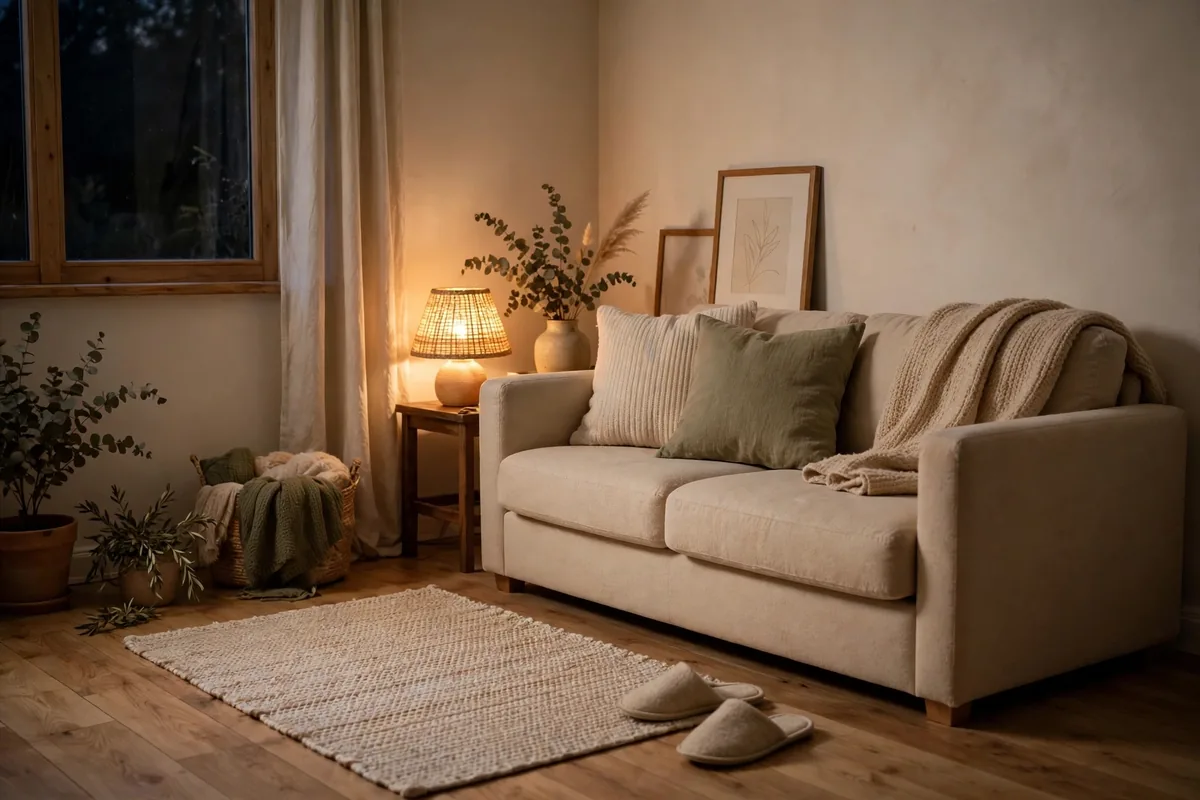
Then add warmth underfoot. A rug changes how a room feels the moment you step in. You do not need a big one. You need one that sits where your feet land at night. Step out of bed onto a cold floor and the whole room feels cold. Step onto a soft rug and the room feels cared for. That first step sets the tone for the evening.
Put the rug where you walk at night, not where it looks best in a photo. The path from sofa to kitchen matters. The spot beside the bed matters. The place where you stand to read matters. A rug in the middle of nowhere looks fine and feels like nothing. A rug under your feet feels like warmth, even if no one else notices it.
Scent and sound after dark
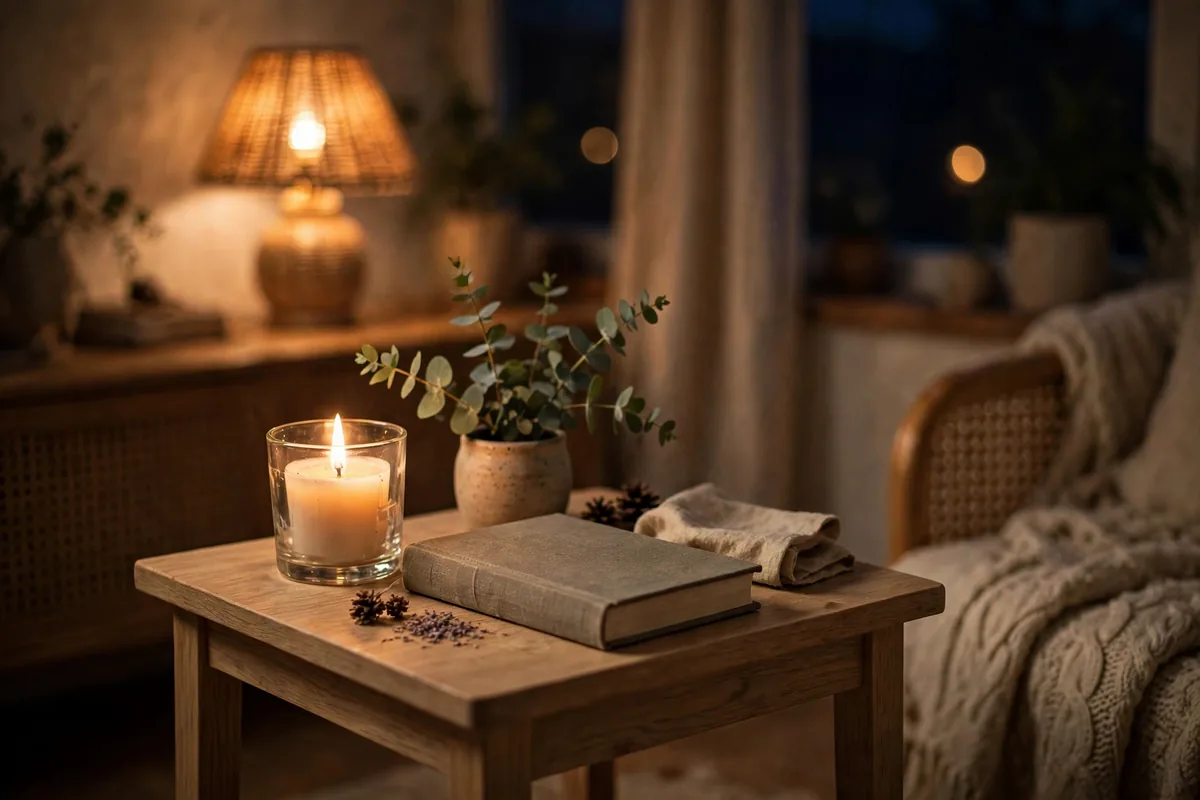
Winter layers are not only visual. Scent matters in a small room because the air stays close. A candle on a side table can change the evening. So can a pot of tea on the stove. Keep scent light. One gentle scent is enough. Two strong scents in a small room compete, and the room feels stuffy instead of cozy.
Sound matters too. A small room at night can feel very quiet, and quiet can feel lonely or calm. Music at a low level fills the room without filling it up. A familiar show at a low volume does the same. The point is background, not noise. Keep the sound soft enough that you can still hear the room. A cozy room has a hum. It does not have a roar.
When the room still feels flat
If the room still feels flat, check the light first. Bright white light at night makes a small room feel like a waiting room. Warm light makes it feel like home. Swap the harsh light for a warm lamp and see how the room changes. Often that one change is enough. Often the room was never cold. It was just lit cold.
Next check what you can see from your seat. A pile of laundry in view can undo warm light. A stack of boxes in the corner can do the same. You do not need a deep clean. Clear one surface you look at most. Put the pile out of sight for the evening. A small room feels calmer when the eye has one calm place to rest.
Paint plays a part here too, even in winter. Dark walls can feel rich at night with warm light. Pale walls can feel soft and close. If your room feels cold in daylight, the guide to paint colors for a small dark room may help. At night, though, light matters more than paint. Fix the light first. Leave paint for a brighter day.
Finally, give the room one evening only. Do not judge winter layers in daylight. Judge them at night, with the lamp on and the throw out. Daylight will flatten them. Night will show them. If the room feels good at night, the layers are working, even if they look plain by day.
What a cozy winter evening can look like
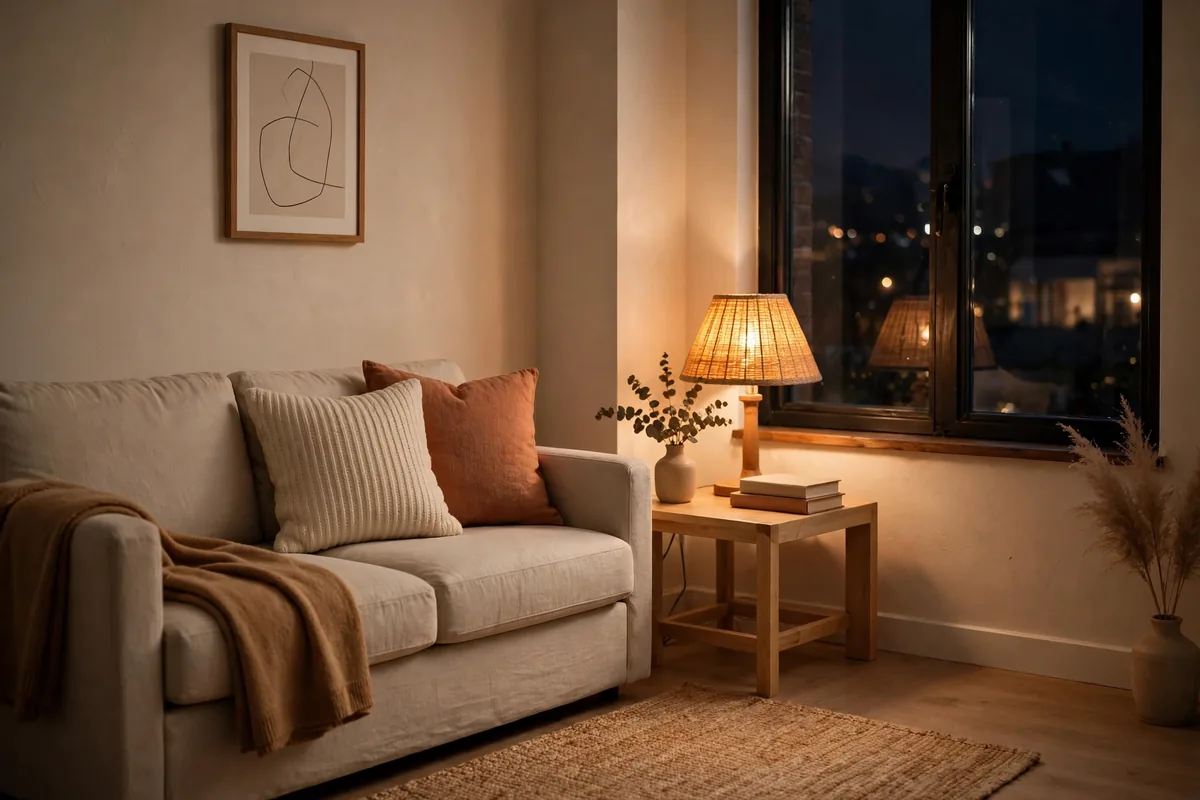
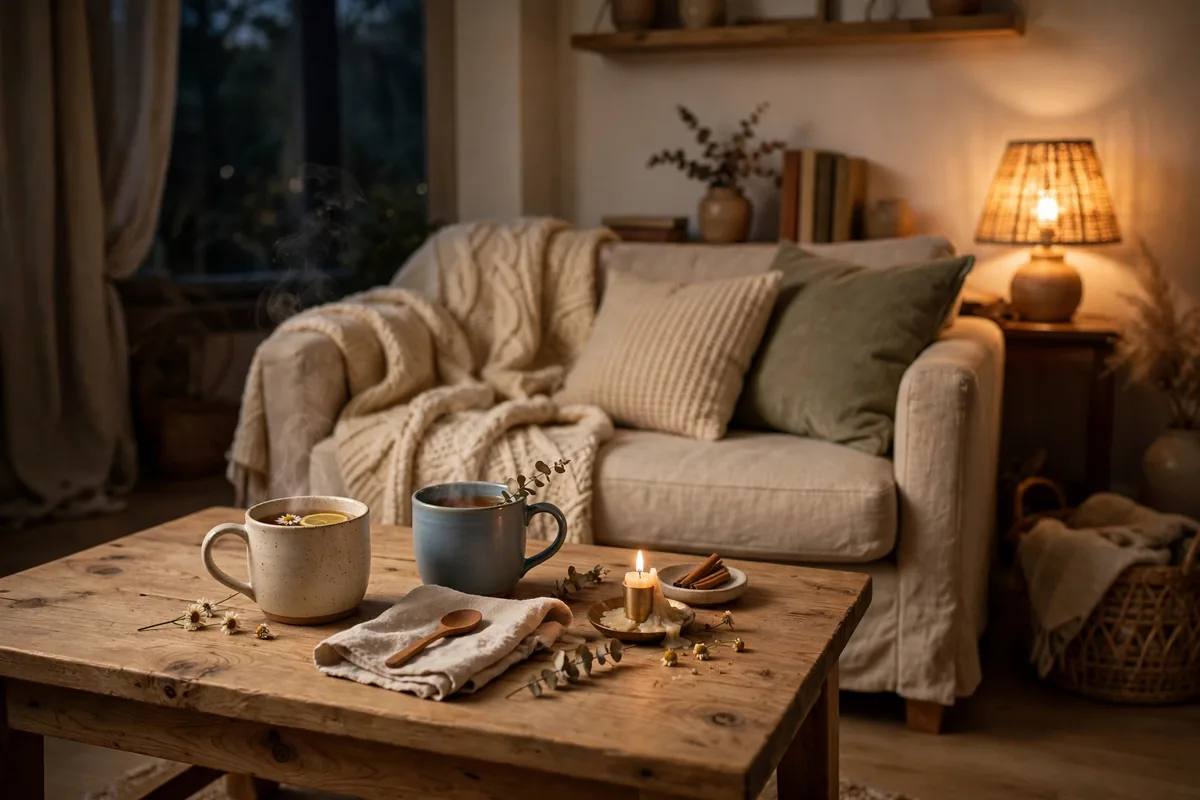
Picture a winter evening in a small room. You come home as the light fades. You switch on one warm lamp. You put the kettle on. You pull a throw over your knees. The room is not large. It does not need to be large. It needs to be warm in the places you use.
You sit for a while. You read, or you watch something gentle, or you talk with someone in the room. Your feet rest on a rug. The far corner stays soft and dark. The room feels close in a good way. It feels like a place that holds the evening, not a place that leaks it away.
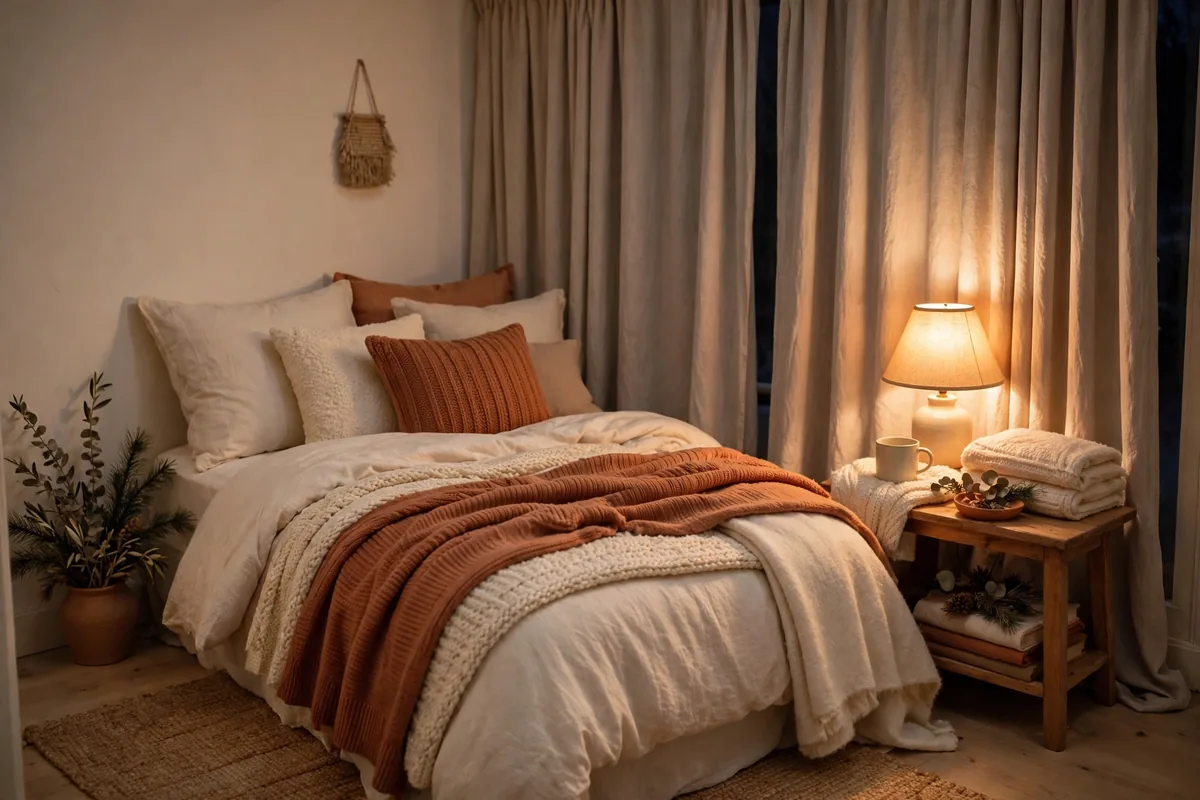
Later you move to bed. The bedroom holds the same idea. A warm lamp, a layered bed, a rug beside it. The day ends the way it started its evening. Warm light, soft layers, and a quiet room. That repeat is part of the comfort. Winter evenings feel better when they follow a pattern you can trust.
What winter layers are not
Winter layers are not a makeover. You do not need new furniture to feel cozy. You do not need a new sofa or a new bed. New furniture can even make a small room feel worse in winter. It takes up floor space. It needs to be arranged. It creates a project in the coldest weeks of the year. Layers work because they are small and easy.
Winter layers are not clutter either. More cushions do not mean more coziness. More throws do not mean more warmth. At some point the sofa disappears under soft things, and there is nowhere left to sit. Stop at the point where the room still works. One throw, one rug, one warm lamp. Add more only if you still feel cold.
Winter layers are also not permanent. They are for the dark months. In spring you will put the heavy throw away. You will open the curtains wider. You will let daylight back in. That is fine. Layers are meant to change with the seasons. Their job is to carry you through winter, not to define the room for good.
When you want a full plan, use the Guides. They give you the order and the sizes before you buy anything. This note is just the feeling to aim for. Warm light, one soft layer, and warmth underfoot. Start there, and let the rest of winter follow.
Frequently asked questions
Does a small room need more lamps in winter, or just warmer light at night?
Warmer light at night. One low warm lamp near your seat beats three bright lamps spread around the room. More lamps can make a small room feel busy. One warm glow makes it feel calm.
What is the first layer to add when a small room feels cold at night?
Start with light. Then add one throw where you sit. Add a rug last, where your feet land. Light first, touch second, warmth underfoot third.
Can a small room feel cozy in winter without buying new furniture?
Yes. Warm light, one soft throw, and a rug where your feet land can change a room without new furniture. Coziness comes from how the room feels at night, not from what is new in it.
Should curtains stay open or closed on a winter evening in a small room?
Close them once it is dark outside. Open curtains at night show a dark window and a cold reflection. Closed curtains keep the warm light inside the room. They also make the room feel smaller in a good way, like a nest.
How do you keep a small room cozy in winter without making it feel cluttered?
Stop at one layer per spot. One throw on the sofa, one rug on the floor, one lamp glowing. Clear the surface you look at most. If you cannot sit down without moving soft things aside, you have added too much.