 smallroomly
A Quiet Small Living Room Reading Nook You Will Actually Use
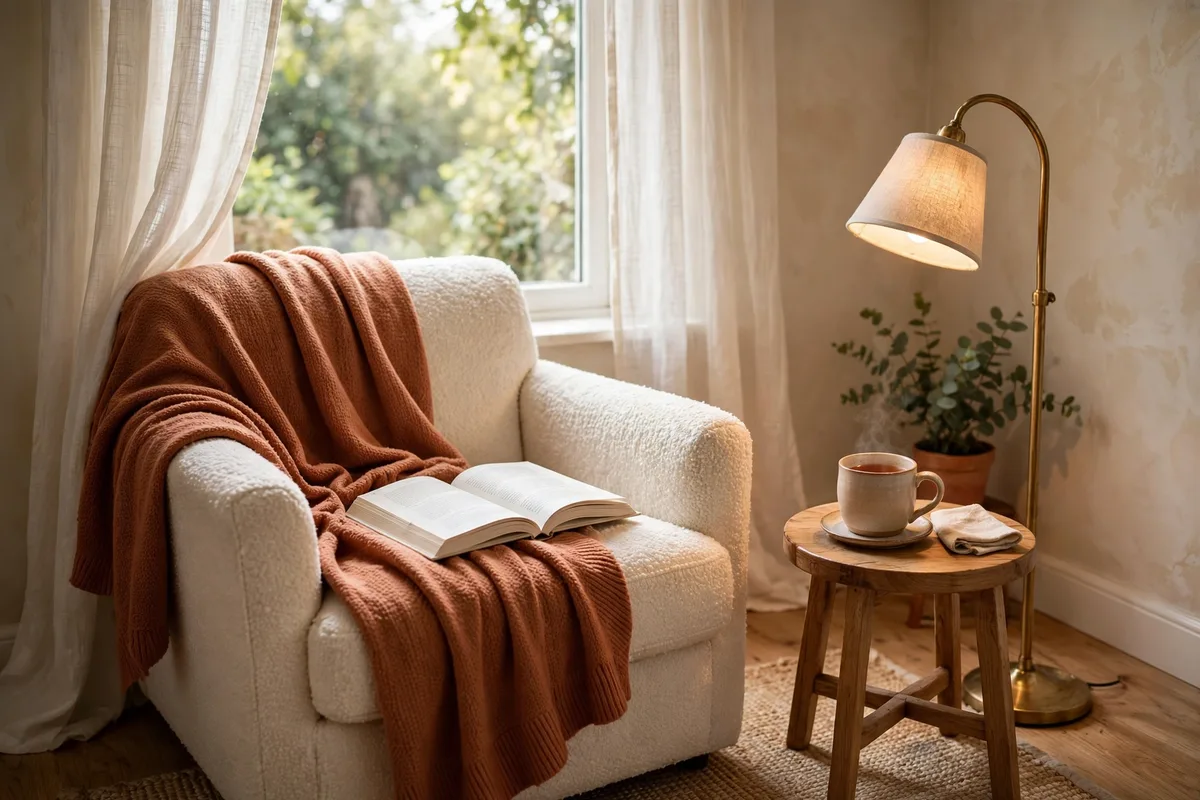
Most reading nooks fail quietly. You build a pretty corner. You sit in it twice. Then it holds laundry. A nook you actually use works differently. It starts with comfort, not with styling. It sits where light already falls. It holds the book you are reading now. It gives you tea within reach. This guide is about a quiet small living room reading nook you will actually use. You will pick the chair first. You will light it for evenings. You will mark it with a rug. The nook will stay small. It will earn its place every day.
Start with daylight and a quiet corner
Daylight decides whether a nook gets used in the daytime. A chair in a dark corner feels gloomy by noon. A chair near a window feels inviting. You get light on the page and a view to rest your eyes on. Pick the quietest corner near a window you have. A wall on one side helps too. The wall holds a shelf and blocks draughts. A corner also keeps the nook out of the main walkway. You will not be bumped every time someone crosses the room.
Face away from the television when you can. A screen in view pulls your attention even when it is off. Face the window or face into the room at an angle. You should see the door without facing it head on. A view of the room feels safe. A view of a screen feels like a task waiting. Small rooms need that distinction. A nook faces reading. A sofa faces watching. Keep those jobs apart.
Test the corner before you buy anything. Sit there with a dining chair and a book for half an hour. Notice the light in the afternoon. Notice the noise from the kitchen. Notice whether the sun glares on the page. Sheer curtains soften harsh sun while keeping daylight. A plant on the sill marks the nook without a wall. One test sit saves a chair you never use.
Pick the chair before anything else
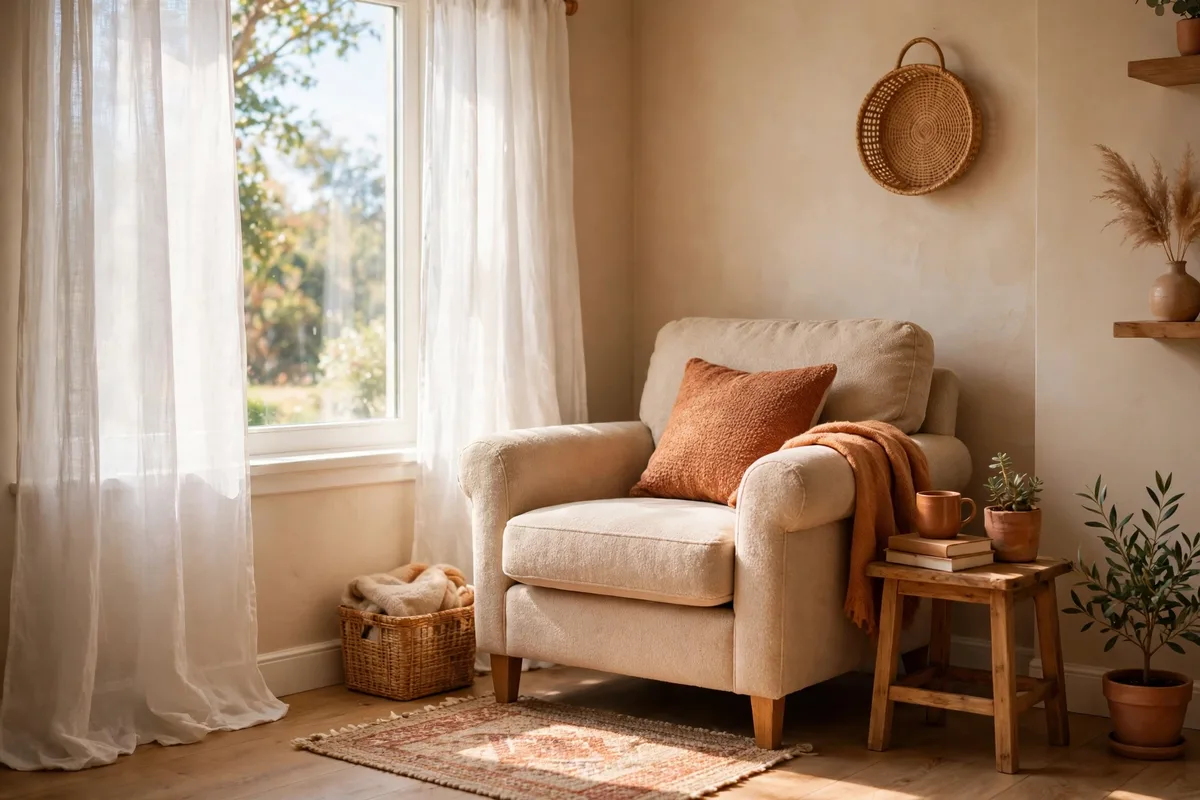
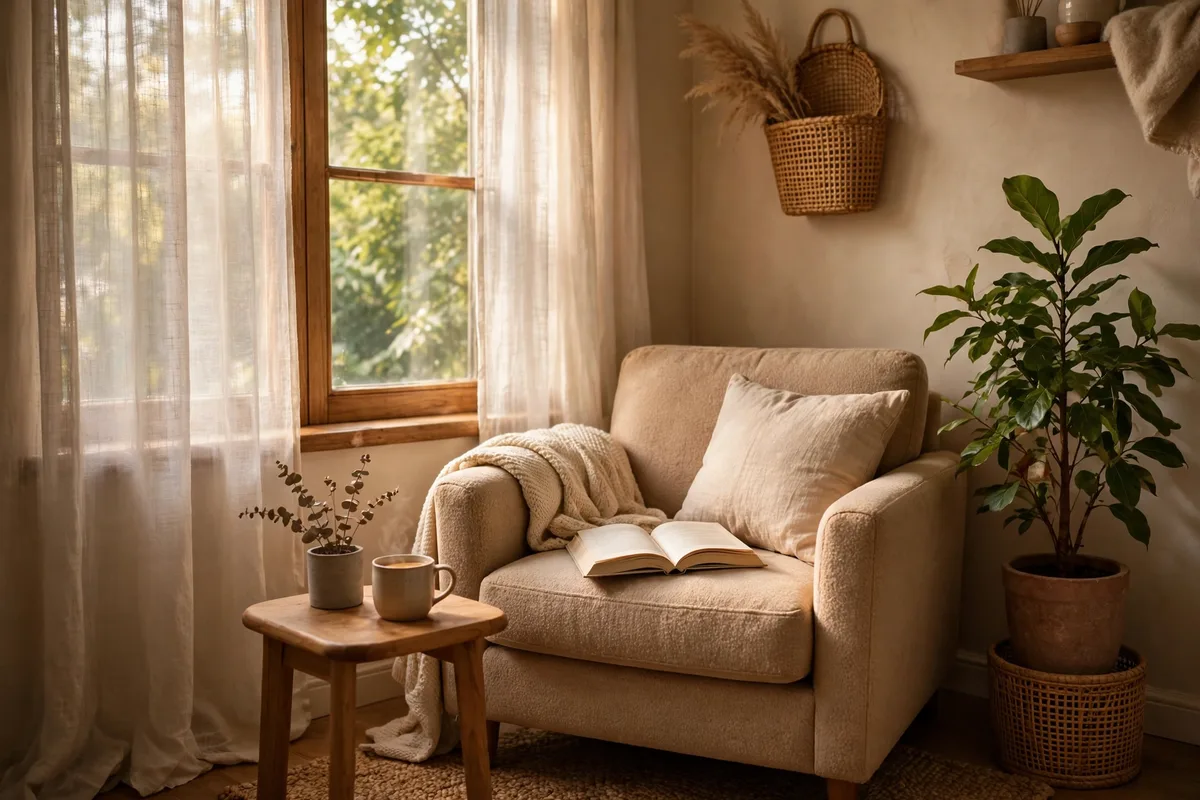
The chair is the nook. Everything else supports it. A chair that hurts after twenty minutes will never become a habit. A chair that invites you to sink in will. Sit in the chair for a full hour before you buy it. Read in it. Put your feet up in it. Notice your back and your neck. An hour reveals what a minute hides. Your body will tell you the truth.
Look for back support and arms at a comfortable height. Arms hold a book steady and help you stand up. A seat that is too deep makes short legs dangle. Add a cushion behind your lower back if the chair needs it. A chair that fits your body beats a chair that looks good in a picture. Comfort is what brings you back.
Size matters in a small living room. A huge recliner blocks the walkway and dominates the room. A compact armchair leaves room to pass. Measure the corner first. Leave space to pull the chair out and to walk past it. The guide to narrow living room layouts shows how a chair can sit without blocking a path. Measure first, then buy once. A chair that fits the room gets used. A chair that blocks the room gets moved.
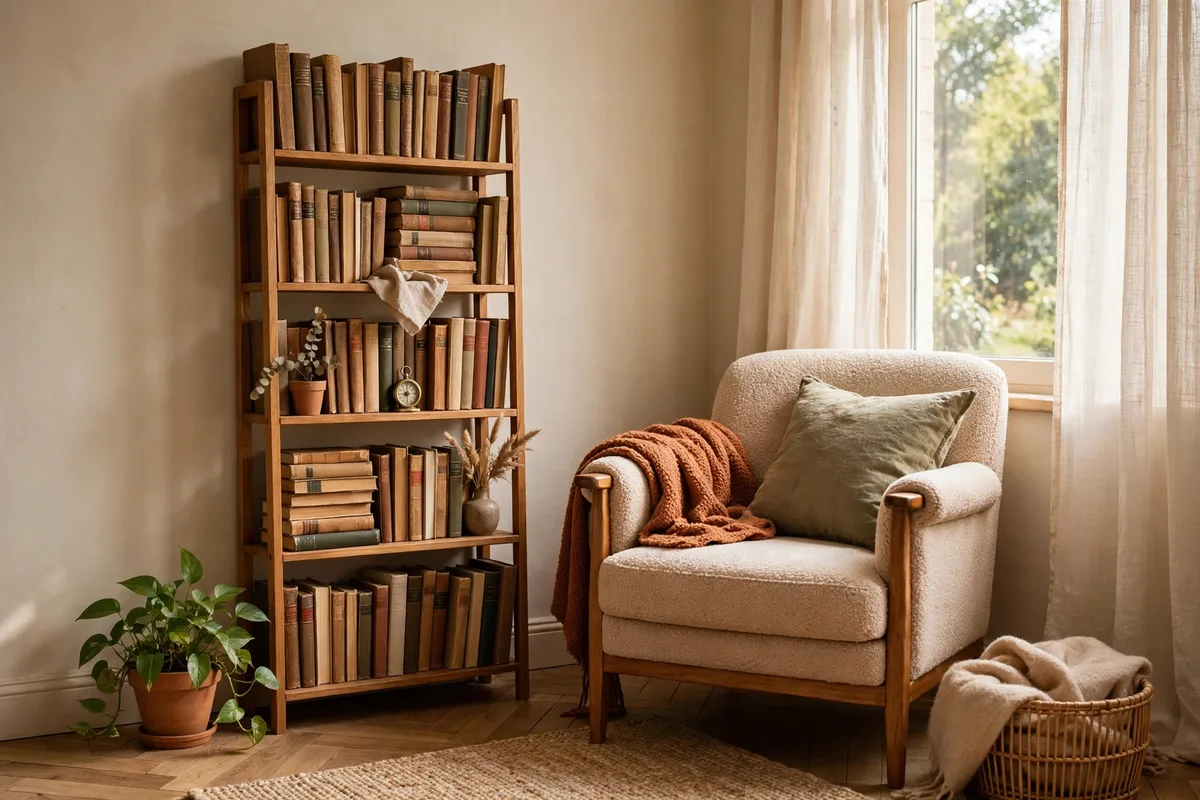
Books within reach, not in a pile
A nook without books nearby is just a chair. You need the next book within reach. A small shelf beside the chair does that job. A narrow shelf holds more than it looks like it holds. It also keeps books upright and visible. Visible books invite you to pick one up. Books in a closed cupboard stay forgotten. Put the shelf where your hand falls naturally when you sit down.
Keep only a few books in the nook itself. The book you are reading now. The book you will read next. The rest live on the main shelf. A pile on the floor grows fast in a small room. When you finish a book, return it to the shelf the same day. The nook stays ready for the next sit. That readiness is what makes it a habit.
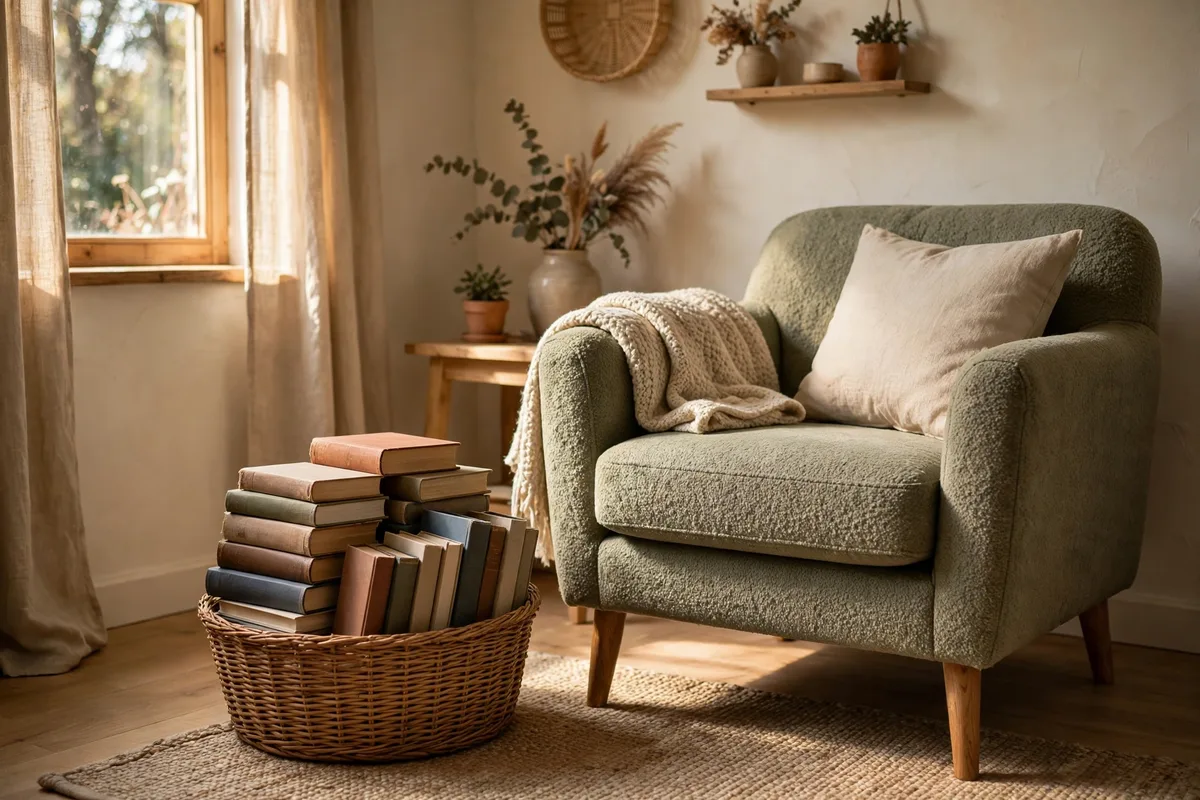
A small basket helps when shelf space runs out. A basket beside the chair holds a book and a magazine without spreading. It also hides a charging cable and a notebook. Choose a basket that fits under the side table or beside the chair leg. It should hold two books, not ten. Ten books in a basket is a pile with handles. Two books in a basket is a nook that stays tidy.
Warm light for evening reading
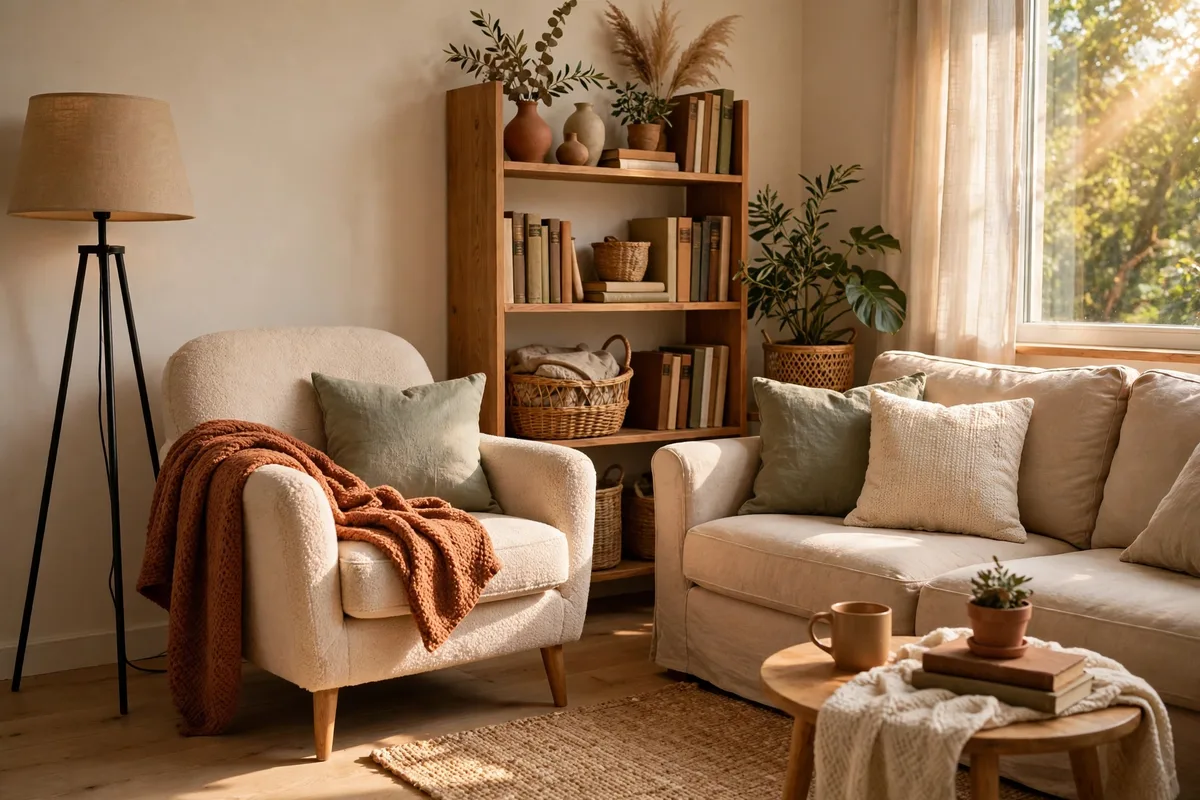
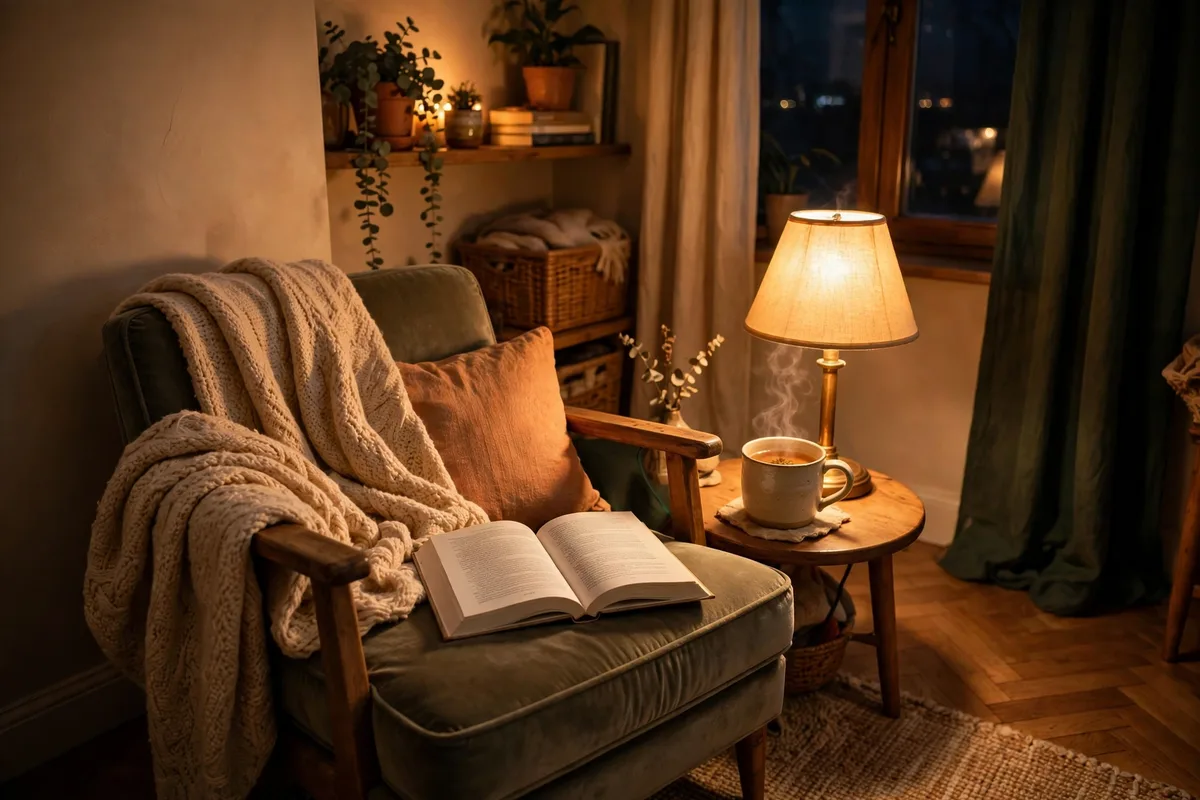
Evening is when most reading happens. Evening light decides whether the nook works after dark. One ceiling light cannot light a page well. It casts your shadow onto the book. It also lights the whole room harshly. A floor lamp behind the chair works better. It shines over your shoulder onto the page. The rest of the room stays soft. The nook glows without glaring.
Place the lamp behind the chair and slightly to one side. Light should fall on the page, not into your eyes. A warm bulb suits evening reading. It makes wood and cream walls glow. Keep a second soft glow across the room. A table lamp on a far shelf stops the nook from feeling like a spotlight. The guide to light a room with no overhead lighting shows plug in options for renters.
Test the lamp at night with your real book. Sit down after dark and read for ten minutes. Notice glare on glossy pages. Notice shadows from your head. Move the lamp a few inches until the page reads clearly. Small moves matter here. A lamp in the wrong spot strains your eyes in a week. A lamp in the right spot disappears. You notice the story, not the light.
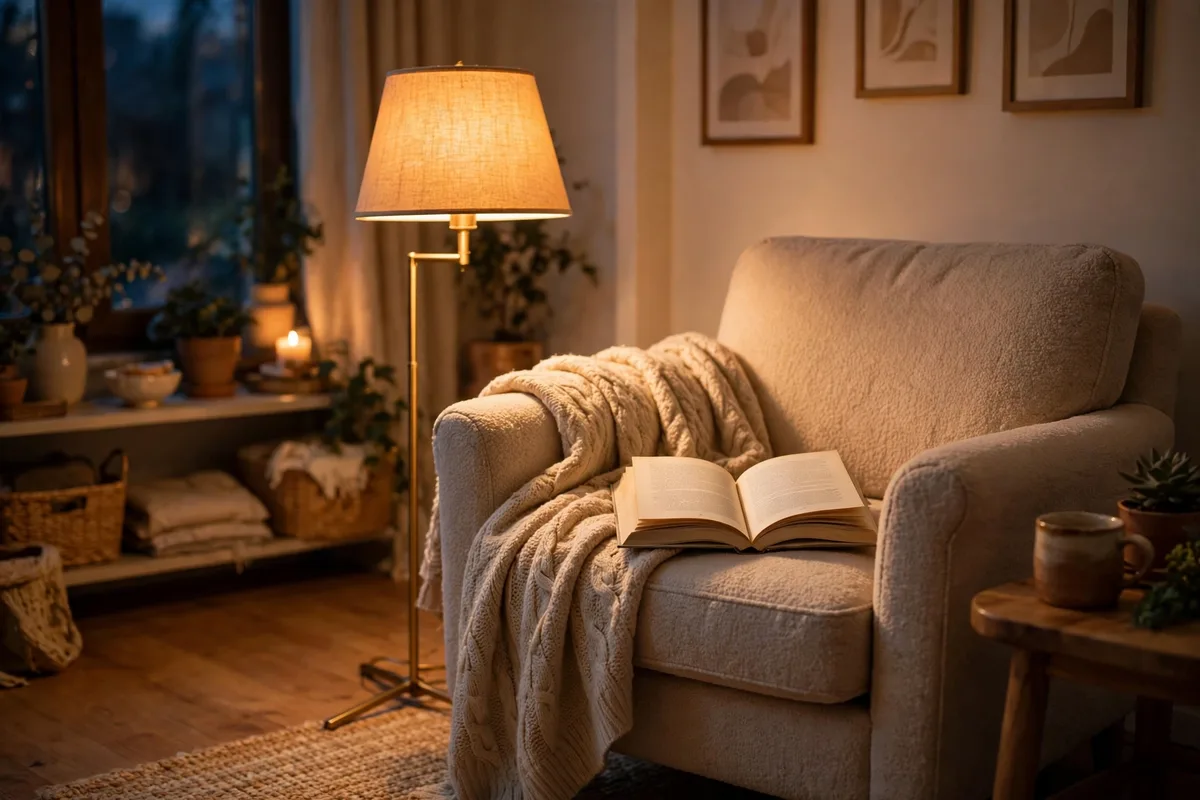
Softness that invites you back
Comfort is not only the chair. It is the throw on the chair. It is the cushion behind your back. It is the rug under your feet. Soft layers tell your body this spot is for rest. A cold chair with hard arms feels like a waiting room. A chair with a throw feels like an invitation. Keep the layers light in a small room. One throw and one cushion are enough. More layers start to look like storage.
Pick a throw in one warm colour that repeats elsewhere in the room. Terracotta suits a cream sofa and wooden floors well. Fold the throw over the chair arm when you are not reading. A folded throw looks tidy. The fold is a small ritual. It says the nook is ready. Ready spots get used.
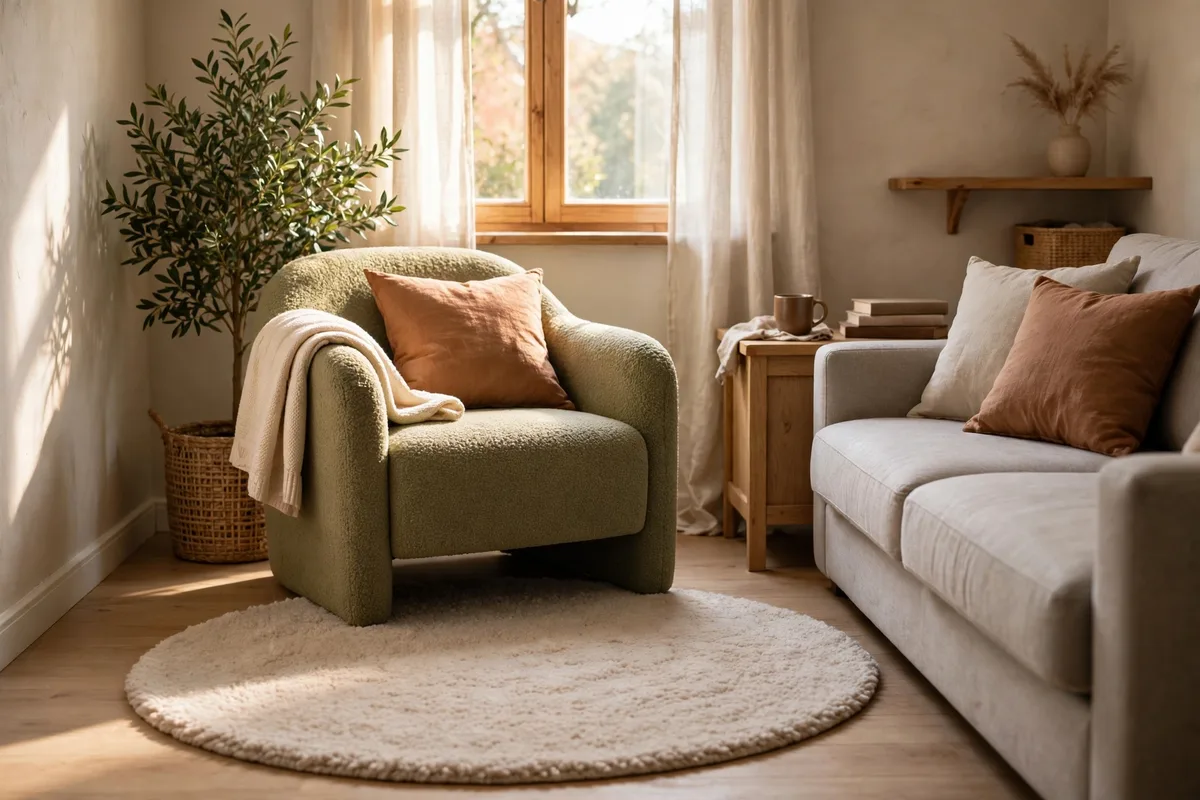
A rug under your feet completes the softness. Cold floors make feet restless. A rug warms them and marks the zone. Choose a rug that fits under the chair front legs and extends a little beyond. It should not block the walkway. The right rug says this chair has its own ground. That ground is the nook.
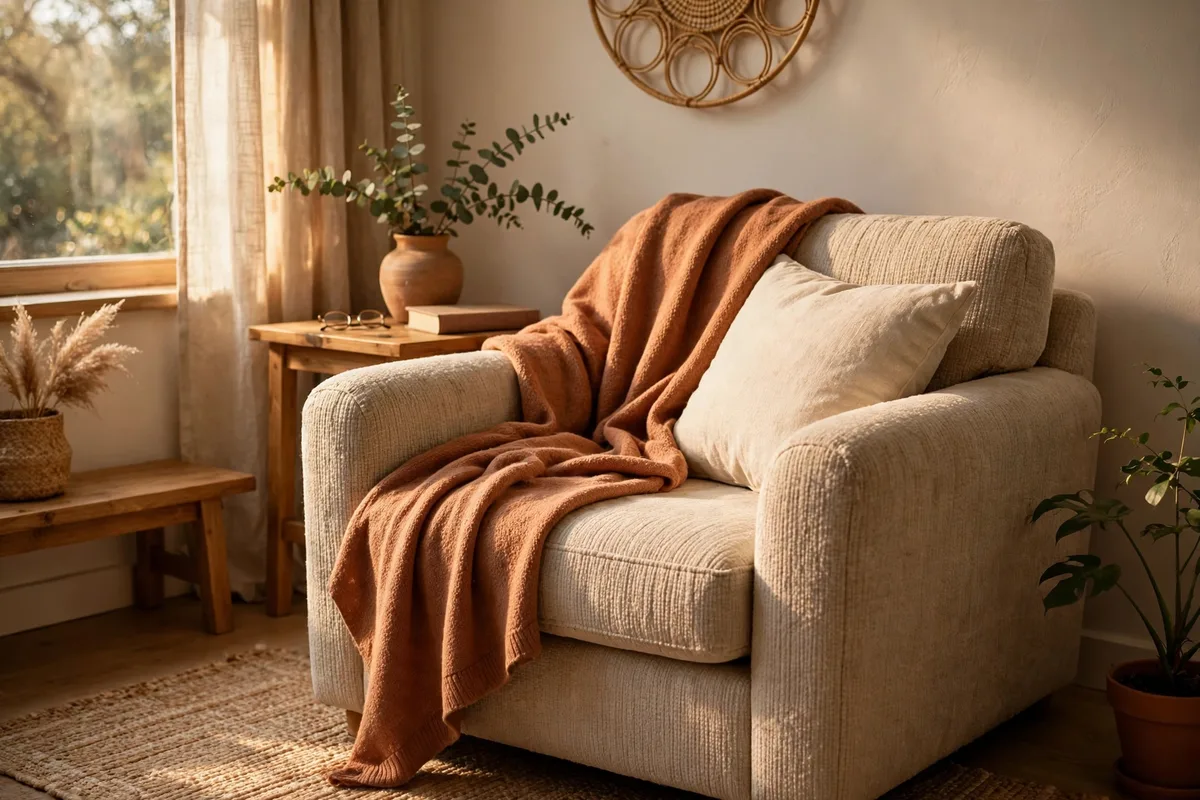
A small table for tea and a book
Tea belongs in a reading nook. A mug in your hand while you read is a small joy. A mug with nowhere to sit is a spill waiting to happen. A small side table solves it. The table should sit at arm height beside the chair. It holds a mug and a book. It holds reading glasses too. Nothing else needs to live there. A table with one job stays tidy.
Pick a table that fits the corner, not a table that fills it. A small round table tucks beside a chair well. A square table with a shelf below holds a second book out of sight. Keep the top clear except for the mug and the current book. A table crowded with candles and jars leaves no room for tea. Tea is the point. Clear space for it first. Decoration can wait.
Make tea part of the reading ritual. Put the kettle on. Sit down with the mug. Read until the mug is empty. The ritual marks the nook as a pause in the day. Rituals build habits faster than willpower. You will read because tea time means chair time. That link turns a corner into a nook you use.
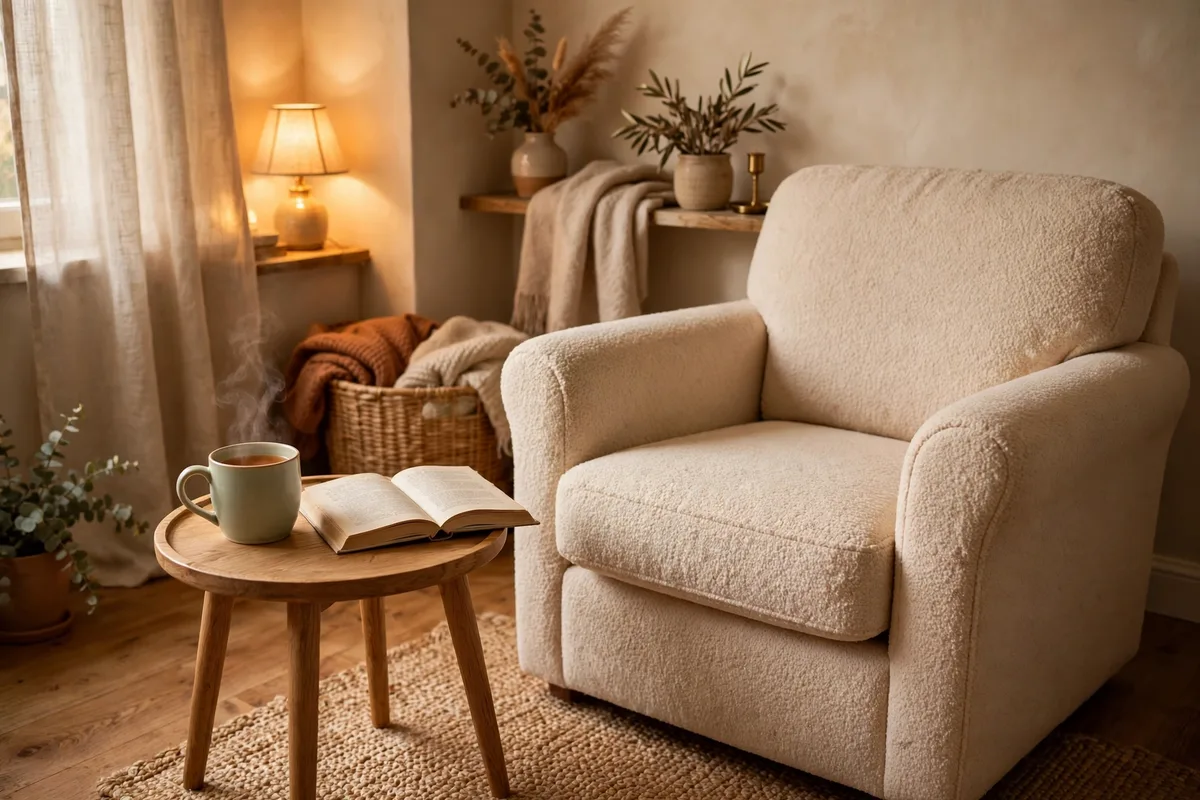
Mark the nook with a rug
A nook needs a mark. Without a mark it melts back into the living room. A rug is the simplest mark. It draws a boundary without a wall. The chair and the table sit on the rug. The rest of the room sits off it. Your eye reads the rug as a zone. Zones help small rooms feel ordered. Each zone has a job. Reading has this rug.
A round rug suits a corner nook well. It softens the square lines of the room. It also fits under a chair without reaching the sofa. A rectangular rug suits a nook along a wall. Either shape works when the size is right. The rug should sit under the chair front legs and the table. It should stop short of the walkway. A rug that blocks a path trips people and annoys them. A rug that stays clear invites people to sit.
Keep the rug pattern calm. A busy pattern fights with book covers and cushions. A plain rug in a warm neutral lets the chair shine. Shake the rug out once a week. A rug that smells fresh invites bare feet. Small care keeps the mark working.
Share the room without losing the nook
Most small living rooms are shared. Someone watches television. Someone talks on the phone. A nook in a shared room needs quiet rules, not walls. Agree on reading time when the room is calmer. Mornings often suit readers. Late evenings suit readers too. Tell housemates when you read. A shared habit beats a closed door. Housemates learn the signals fast.
A chair beside the sofa can still feel separate. The floor lamp marks it. The rug marks it. The side table marks it. Three marks together say this chair is a nook, not spare seating. Guests will still sit there sometimes. That is fine. Guard the habit, not the chair.
When the room has no spare corner, use one end of the sofa as the nook. Add the lamp and the table at that end. Keep a cushion there that lives for reading. The end of the sofa becomes the reading spot by habit. You do not need a separate chair when one seat has its own light and table. Small rooms reward that kind of sharing. One seat can hold two jobs at different times.
Keep it tidy and close the day well
A nook stays used only when it stays tidy. Books pile up fast. Throws slide to the floor. Mugs collect on the table. A two minute close each evening stops the slide. Return the book to the shelf or the basket. Fold the throw over the chair arm. Take the mug to the kitchen. The nook greets you ready in the morning. Ready spots get used. Messy spots get avoided.
A basket beside the chair is the tidy secret. It holds the current book and the throw when guests arrive. A woven basket also warms the corner. When the basket fills, empty it. A basket with room to spare keeps helping. Check it once a week and it never fills.
Check the layout with the free room planner. Enter your living room size and test a chair, a lamp, and a rug before you buy anything. The planner shows what fits beside the sofa and the window. It stops you buying a chair that blocks the door. Measure first, then buy once. End each day with the nook ready. A ready nook invites tomorrow. That invitation is the whole point. A quiet corner becomes a daily habit one ready morning at a time.
Frequently asked questions
Where is the best spot for a reading nook in a small living room?
Pick a quiet corner near a window with a wall on one side. Daylight suits daytime reading and a wall gives you a place for a shelf. Avoid a spot that faces the television. A corner that faces away from screens invites reading.
What chair works best for a small reading nook?
Pick a chair you can sit in for an hour without shifting. It needs back support, arms at a comfortable height, and room for a cushion. A chair that is too deep swallows a small room. A chair that is too upright feels like a waiting room.
How do you light a reading nook for evening reading?
Use one warm floor lamp that shines over your shoulder onto the page. Keep the lamp behind the chair and slightly to one side. Add a soft glow across the room so the nook does not feel like a spotlight. Warm light suits evenings best.
How do you keep a reading nook tidy in a shared living room?
Keep only the current book and the next book in the nook. Store the rest on a shelf or in a basket. Return each book to the shelf when you finish it. A small basket beside the chair holds a book and a throw without spreading.
Can a reading nook work in a living room with no spare corner?
Yes, if you mark one end of the sofa as the reading spot. Add a floor lamp, a small table, and a cushion that lives there. The lamp and the table mark the zone. You do not need a separate corner when one chair has its own light and table.